
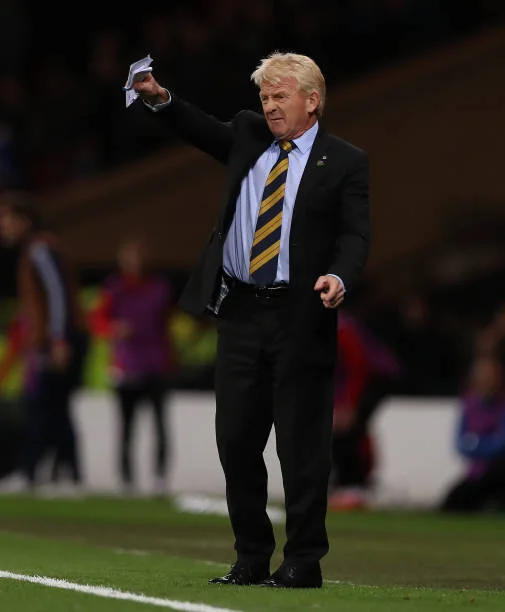
Scotland manager search: The hunt for Steve Clarke's successor begins
Scotland is searching for a new national team manager after Steve Clarke's sudden resignation following the country's group-stage exit at the 2026 World Cup. The Scottish Football Association (SFA) now faces a pivotal decision that will shape the nation's footballing future, with a crowded field of candidates ranging from elite club managers to surprise self-nominations.
Clarke, 62, stunned the football world by stepping down just weeks after signing a four-year contract extension. His decision came after Scotland failed to advance beyond the group stage in the United States, despite ending a 36-year wait for a World Cup victory with a 1-0 win over Haiti in Boston. Back-to-back defeats to Morocco and Brazil, however, extinguished hopes of reaching the knockout rounds for the first time in the nation's history.
The SFA had appeared committed to Clarke for the long term, but the manager's abrupt departure has left the governing body scrambling. Bookmakers have installed 15 candidates at odds no longer than 10/1, reflecting a wide-open race that includes Scottish football royalty, Old Firm alumni, and international coaches.
Key contenders emerge from a diverse field
Among the leading names is Tottenham Hotspur manager Ange Postecoglou, the Australian who previously led Celtic to domestic dominance and has strong ties to Scottish football. His attacking philosophy and track record of success make him a dream candidate, though prying him away from a Premier League club would be costly.
David Moyes, the former Manchester United and West Ham manager, is another realistic option. The Scot has vast experience at the highest level and remains unemployed after leaving West Ham in 2024. His pragmatic style could appeal to an SFA seeking stability.
Denmark's former national coach Kasper Hjulmand is also in the mix, offering international pedigree after leading Denmark to the European Championship semifinals in 2021. His availability following his departure from the Danish job makes him an intriguing foreign contender.
However, the most unexpected name to enter the fray is Bobby Williamson, the 64-year-old former Hibernian and Kilmarnock manager who has been out of football management for a decade. Williamson, who previously coached Kenya and Uganda, has proposed a dream team of Ally McCoist, Scott Brown, and Kevin Thomson as his backroom staff.
"I tried to get through to [SFA chief executive] Ian Maxwell and the president, but it's not happened," Williamson told BBC Radio Scotland. "I am not going to excite the Tartan Army, I know that for a fact, but maybe with these future international coaches getting a go at it, that might excite them."
Williamson's pitch combines his own international experience in Africa with the legendary status of McCoist and the recent playing pedigree of Brown and Thomson. Critics, however, question whether a manager who has been out of the game for a decade can command respect in the modern era.
Why Clarke's departure matters: The stakes for Scottish football
Clarke's resignation is not merely a personnel change; it represents a crossroads for Scottish football. Under Clarke, Scotland qualified for three consecutive major tournaments—Euro 2020, Euro 2024, and the 2026 World Cup—ending a painful 23-year drought between 1998 and 2021. His tenure was defined by pragmatism, defensive solidity, and an ability to maximize a limited player pool.
"History should treat Clarke fondly," wrote Ewan Murray in The Guardian. "He ended his nation's painful wait to appear at major tournaments. This was done three times, despite massive limitations on playing resources."
But the World Cup exit exposed lingering issues. Scotland's performances in the United States were timid and lacking creativity, particularly in key defeats to Morocco and Brazil. Captain John McGinn, usually a talisman, struggled to impose himself, while the team's attacking output was meager.
The SFA's credibility is on the line
The timing of Clarke's extension—just weeks before the World Cup—has drawn criticism. The SFA appeared to tie itself to a manager whose long-term viability was uncertain, a decision that now looks premature. The governing body must now avoid a parochial approach, according to analysts.
"Small-minded SFA must ditch parochial mentality if Scotland are to thrive," Murray wrote, arguing that the search must look beyond Scotland's borders. The danger is that the SFA, historically insular, opts for a safe domestic appointment rather than a bold international hire.
Neil Lennon, the current Dunfermline Athletic manager and a former Celtic boss, has defended Clarke against what he calls a "hysterical" backlash. "I thought the aftermath was awful," Lennon told BBC Sportsound. "Scotland get there and they get the Group of Death as Scotland always do. What are people expecting?"
Lennon's comments highlight a broader tension between ambition and realism. Scotland's player pool is undeniably shallow. The team's top talents—McGinn, Andy Robertson, Kieran Tierney—are aging, and few young prospects have emerged to replace them. Any new manager will face the same structural constraints Clarke wrestled with.
The intriguing self-nomination of Bobby Williamson
Bobby Williamson's bid for the Scotland job is the most unusual development in the search. The 64-year-old, who last managed in 2016, has been out of the game for a decade but believes his CV "stacks up very well" against the favorites.
Williamson's pitch is built on his backroom team. Ally McCoist, the Rangers legend and former Scotland assistant under Walter Smith, would bring tactical nous and charisma. Scott Brown, who captained Celtic to multiple trophies, and Kevin Thomson, a former Rangers midfielder, would provide youthful energy and recent playing experience.
"So my first text message was to Alistair McCoist and I said I am thinking about doing this and he said 'I'm in'," Williamson revealed. "I'm thinking long term for Scotland's benefit—bring in some younger coaches so they get the international experience."
Critics, however, question whether Williamson's decade-long absence from management is a liability. Football has evolved significantly since he led Kilmarnock in the early 2000s. Modern tactics, sports science, and data analysis have transformed the game. Williamson's experience in Africa—where he managed Uganda and Kenya—is relevant but hardly comparable to a UEFA-level job.
The reaction from the football community
The response to Williamson's bid has been mixed. Some fans appreciate his ambition, while others see it as a publicity stunt. The SFA has not commented publicly, but sources indicate that Williamson's approach has not been formally considered.
Lennon, meanwhile, has emerged as a potential candidate himself. The Dunfermline boss has managed Celtic, Hibernian, and Bolton Wanderers, and his passionate defense of Clarke suggests he understands the pressures of the job. Lennon's availability and familiarity with Scottish football make him a plausible contender, though his controversial history may count against him.
Broader implications: What this means for Scotland's footballing future
The managerial search comes at a critical moment for Scottish football. The game faces systemic challenges: a small population, limited funding, and an increasing reliance on English clubs for player development. The SFA's ability to attract a top-tier manager will signal whether it can break from its insular traditions.
The international coaching market is competitive
Scotland is not the only nation searching for a new coach. The post-World Cup landscape includes openings or potential changes at several federations, creating competition for the best candidates. Managers like Postecoglou and Moyes would command high salaries, likely exceeding the SFA's budget. Hjulmand, meanwhile, may prefer a role with a stronger squad.
The SFA's financial constraints cannot be ignored. Clarke's salary was modest by international standards, and the governing body struggled to fund competitive wages. The next manager will likely earn less than the top Premier League or international coaches.
The player pool is aging, but young talent is emerging
Scotland's golden generation—Robertson, Tierney, McGinn, McTominay—is nearing its peak window. The next manager must blend experience with youth. Promising players like Billy Gilmour, Aaron Hickey, and Ben Doak represent the future, but they lack the depth of the current squad.
Whoever takes over will need to rebuild confidence after a disappointing World Cup. The Tartan Army, known for their passionate support, will expect improvement. But expectations must be tempered: Scotland is unlikely to compete with football's elite nations anytime soon.
A lesson from history
Scotland's managerial history is littered with promising appointments that failed to deliver. The challenge for the SFA is to avoid repeating past mistakes. The search must be transparent, thorough, and open to external candidates. A safe, parochial choice—such as a Scottish club manager with no international experience—risks stagnation.
The situation shares parallels with the aftermath of the 1998 World Cup, when Scotland failed to build on qualification for France '98 and endured a long barren spell. The SFA must learn that lesson and act decisively.
In the meantime, the speculation will continue. The SFA's next move will define the direction of Scottish football for years to come. As the July 4th fireworks fade—and as severe thunderstorms wreaked havoc on Chicago's celebrations—the focus shifts to Hampden Park, where decisions are being made that could either ignite a new era or deepen the gloom.
For now, the Tartan Army waits, hopeful but wary. The right appointment could transform Scotland's trajectory; the wrong one could set the team back another generation.
Comments