
Armed Russian LNG Carriers Patrol the Baltic Sea
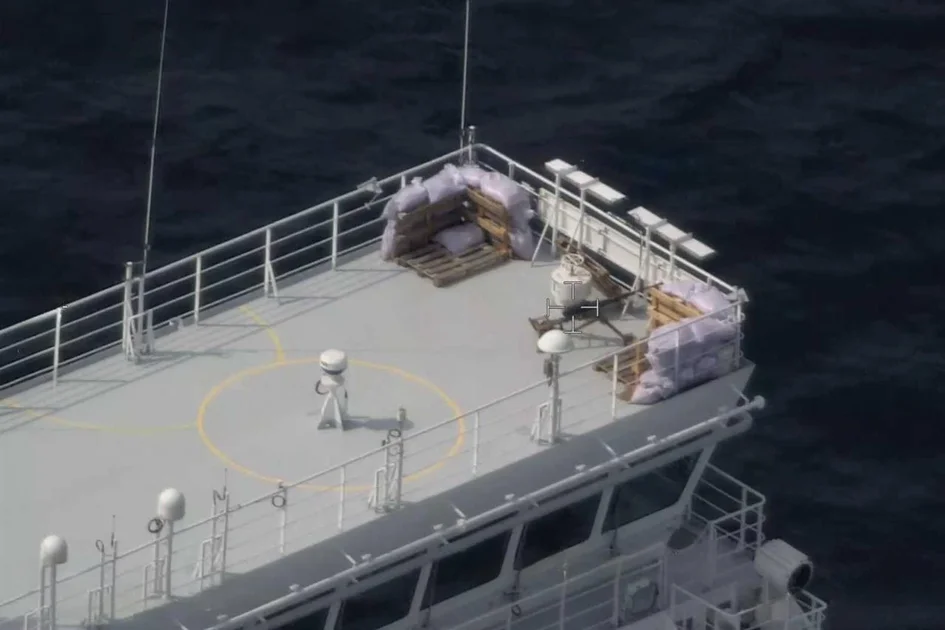
Estonian border guards have released surveillance photographs showing heavy machine guns and sandbagged firing positions mounted on a Russian-flagged liquefied natural gas (LNG) carrier in the Baltic Sea, marking what analysts describe as a brazen new tactic by Moscow to protect its civilian fleet from potential Western interference.
Photographic Evidence of Militarized Shipping
The images, taken by an Estonian Police and Border Guard aircraft in May 2026, depict the civilian vessel Marshal Vasilevskiy — whose home port is Kaliningrad — equipped with Kord heavy machine guns on its bridge roof. The Estonian authorities released the photos on June 30, stating they were captured within Estonia's area of responsibility.
"The images show a firing position on board the vessel Marshal Vasilevskiy, showing a Kord heavy machine gun," a spokesperson for the Estonian Police and Border Guard service confirmed. The photographs reveal sandbagged emplacements, suggesting a fortified defensive posture rather than merely a transportable weapon.
An Unprecedented Move in the Baltic
While armed guards are routine on vessels transiting piracy-prone waters such as the Gulf of Aden or the Malacca Strait, their appearance in the Baltic Sea is unprecedented. Yoruk Isik, a geopolitical analyst at the Bosphorus Observer consultancy, described the move as "crazy" and a direct challenge to European Union and NATO member states.
"This is a hostile move by Russia to send a message to European Union and NATO nations that it will actively oppose any attempt to detain or inspect its ships," Isik told Reuters. "There is no justification for a self-defense posture like a machine gun in the Baltic. This clearly shows that the high seas are becoming increasingly lawless."
Why Russia Is Arming Its Civilian Fleet
The militarization of Russian LNG carriers comes amid a broader escalation of tensions in the region, driven by Ukraine's increasingly effective drone campaign against Russian infrastructure and Moscow's desperate attempts to protect its economic lifelines.
Protecting LNG Revenues Amid War
Russia's LNG exports are a critical source of hard currency, especially as Western sanctions continue to squeeze its oil and gas revenues. The Marshal Vasilevskiy is one of several specialized carriers used to transport liquefied natural gas from Russian terminals to international buyers. By arming these vessels, the Kremlin appears to be signaling that it will resist any attempt by Western navies or coast guards to board, inspect, or seize its ships — a scenario that has become more plausible as the war in Ukraine drags on.
Analysts note that the move also serves a psychological purpose: it projects strength and defiance at a time when Putin faces mounting military and economic pressure.
Ukraine's Drone Offensive Brings War Home to Russia
The backdrop to this naval standoff is Ukraine's intensifying drone campaign against targets deep inside Russian territory. On the night of June 29-30 alone, Russian air defenses claimed to have shot down 419 drones over Moscow and Crimea, according to the Russian Defense Ministry. Moscow Mayor Sergei Sobyanin reported multiple waves of drone strikes targeting the capital.
Ukrainian President Volodymyr Zelensky has dubbed these operations "long-range sanctions," emphasizing their role in disrupting Russia's war machine. On Tuesday, Zelensky confirmed that a drone strike had targeted a satellite communications center in the Dubna area of the Moscow region, approximately 500 kilometers from the Ukrainian border.
"This is a special satellite communications facility used, in particular, for reconnaissance and for coordinating the activity of Russia's occupation contingent in Ukraine," Zelensky posted on X. "Step by step, we are implementing our plan of long-range sanctions and making it as difficult as possible for the aggressor state to carry out its invasion operations."
The Economic Toll on Russia
The cumulative effect of Ukraine's drone strikes is beginning to show in Russia's domestic economy. Attacks on oil refineries and other key infrastructure have led to widespread fuel shortages, with long lines at gas stations becoming a regular occurrence across the country.
Refineries Under Fire
Ukraine has systematically targeted Russia's oil refining capacity, which is essential for funding the war effort. A devastating large-scale attack on June 18 killed at least 17 people in the Moscow region and caused significant damage to fuel storage facilities. The ongoing disruption to fuel supplies is stoking public discontent and adding to the economic pressure on Putin's government.
In his overnight address to the Ukrainian people, Zelensky said the drone campaign was "bringing the reality of the war back to Russia." He added: "We are ensuring the results Ukraine needs so that the aggressor state cannot keep the war 'somewhere over there.'"
A New Front in the Shadow War at Sea
The arming of Russian merchant ships in the Baltic Sea represents a significant escalation in what has been termed the "shadow fleet" strategy — the use of ostensibly civilian vessels to circumvent sanctions and maintain trade routes. This approach has been particularly pronounced in the energy sector, where Russia has relied on aging tankers and opaque ownership structures to keep oil and gas flowing.
The Shadow Tanker Fleet
Western intelligence agencies have long tracked a fleet of hundreds of tankers that Russia uses to transport crude oil and refined products, often with disabled transponders or falsified documentation. The LNG carrier Marshal Vasilevskiy is part of this network, and the addition of heavy weaponry marks a new, more aggressive phase in its operations.
By openly mounting machine guns on these vessels, Russia is daring NATO to respond. Any attempt by European navies to stop and search an armed Russian-flagged ship would carry the risk of armed confrontation — a prospect that NATO members have been eager to avoid.
Estonia and the Frontline Baltic States
Estonia, a NATO member that shares a border with Russia and a maritime boundary in the Baltic, has been at the forefront of documenting these activities. The release of the surveillance images is part of a broader effort by Baltic states to draw attention to Russia's increasingly provocative behavior in the region.
The Estonian Police and Border Guard spokesperson confirmed that the photographs were taken within Estonia's area of responsibility, underscoring the proximity of these armed vessels to NATO waters.
Broader Implications for European Security
The combination of armed Russian civilian ships in the Baltic and Ukraine's relentless drone strikes on Russian soil is reshaping the security landscape in Europe. The conflict, now in its fifth year, shows no signs of abating, and both sides are seeking new ways to gain advantage.
The Risk of Escalation
The presence of heavy machine guns on a civilian LNG carrier raises the stakes for any potential incident. A miscalculation at sea — a warning shot, a collision, or a mistaken identification — could quickly escalate into a broader confrontation between Russia and NATO. Analysts warn that the Baltic Sea, already one of the most militarized waterways in the world, is becoming even more dangerous.
Putin's Strategic Dilemma
For Vladimir Putin, the twin pressures of Ukraine's drone campaign and the need to protect economic assets are creating a strategic dilemma. Arming civilian ships may deter Western inspections, but it also invites closer scrutiny and potential retaliation. Meanwhile, the growing list of Ukrainian drone attacks on Russian soil — from Moscow to Crimea — is undermining the narrative of a distant war that does not affect ordinary Russians.
Privately, some Russian officials have acknowledged the effectiveness of Ukraine's strikes. The fuel shortages and the psychological impact of drones reaching the capital are eroding public confidence in the government's ability to protect its citizens.
Looking Ahead: A Dangerous Summer
As July 2026 begins, the conflict shows every sign of intensifying. Ukraine has promised to continue its "long-range sanctions" campaign, targeting military and economic infrastructure across Russia. Moscow, in turn, is fortifying its civilian fleet and deploying air defenses to protect key assets.
For the international community, the situation in the Baltic Sea is a reminder that the war in Ukraine is no longer confined to the front lines. It has spilled into the maritime domain, threatening the freedom of navigation and the stability of European energy markets.
What This Changes
The arming of Russian LNG carriers blurs the line between civilian and military vessels, potentially setting a dangerous precedent that other nations could follow. It also complicates the already difficult task of enforcing sanctions and maintaining maritime security in European waters.
Meanwhile, Ukraine's drone offensive continues to demonstrate that it can strike at will inside Russian territory, keeping the pressure on Putin and his war machine. As the summer progresses, the world will be watching to see whether these twin pressures — at sea and in the skies over Russia — are enough to force a change in Moscow's strategy.
This article provides analysis based on publicly available information from Estonian border guard sources, Turkish media reports, and statements from Ukrainian and Russian officials. The views expressed are those of the author and do not necessarily reflect the position of any government or institution.
Comments