
Russia's Pacific Fleet Conducts Bulava Test Launch
Generalissimo Suvorov Fires SLBM from Submerged Position
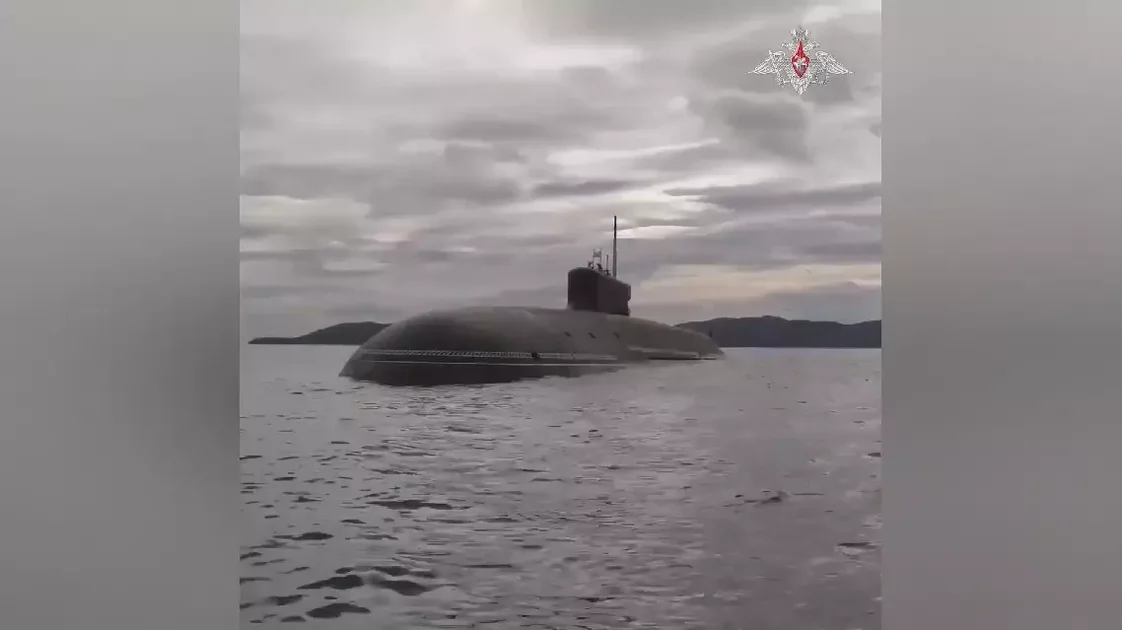
The Russian Ministry of Defense announced on October 28, 2026, that the Pacific Fleet's Project 955A Borei-A nuclear-powered submarine Generalissimo Suvorov successfully test-fired a Bulava submarine-launched ballistic missile (SLBM) from the Sea of Okhotsk. According to the ministry statement carried by TASS, the missile was launched from a submerged position toward the Chizha test range in Russia's Arkhangelsk Region. Monitoring data confirmed that the missile's warheads reached the designated area at the expected time, though the ministry did not specify the exact date of the launch.
The exercise was conducted as part of the crew's combat training plan, and the ministry released footage showing the submarine at sea, crew members operating control systems, and a nighttime launch of the missile streaking skyward. The flight path took the missile from Russia's Far East to the far north of its European territory, a route the Pacific Fleet uses to test the readiness of its strategic submarines. RT reported that the missile hit a target approximately 6,000 kilometers away on the Kanin Peninsula.
Technical Specifications of the Bulava Missile
The R-30 Bulava (NATO designation SS-N-32) is a solid-fuel submarine-launched ballistic missile designed as one of the mainstays of Russia's sea-based nuclear deterrent. Developed by the Moscow Institute of Thermal Technology and officially adopted into service in May 2024, the missile has a reported maximum range varying between sources: the Center for Strategic and International Studies estimates 8,300 kilometers (approximately 5,160 miles), while RT cites around 9,300 kilometers. The missile weighs approximately 37 tons and is designed to carry multiple independently targetable reentry vehicles (MIRVs).
Each Borei and Borei-A submarine carries 16 Bulava missiles, providing a significant portion of Russia's seaborne nuclear strike capability. The Generalissimo Suvorov, hull number K-553, is one of Russia's newest strategic submarines and the third of the upgraded Borei-A class. The Sevmash shipyard laid it down in December 2014, and the Russian Navy commissioned it on December 29, 2022. The submarine measures around 558 feet long and displaces approximately 14,720 metric tons on the surface.
Context: A Recurring Strategic Signal
Previous Bulava Launches and Submarine Deployment
This is not the first Bulava launch for the Generalissimo Suvorov. On November 3, 2022, during state trials, the submarine fired a Bulava from the White Sea toward the Kura range in Kamchatka, in the opposite direction to the latest firing. In October 2023, the submarine completed its transfer from the Northern Fleet to the Pacific Fleet along the Northern Sea Route, arriving at its permanent base in Vilyuchinsk on Kamchatka on October 16, 2023.
The Sea of Okhotsk has featured in previous Russian strategic missile exercises. In October 2024, the Pacific Fleet's Knyaz Oleg launched a Bulava from the same sea as part of a broader strategic deterrence exercise that also involved the Northern Fleet's Novomoskovsk and a land-based Yars intercontinental ballistic missile. Russia conducted another strategic nuclear forces exercise on October 22, 2025, involving a Yars launch from Plesetsk, a Sineva missile fired by the submarine Bryansk from the Barents Sea, and cruise missile launches by Tu-95MS strategic bombers. Four days later, Moscow announced a test of its Burevestnik nuclear-powered cruise missile.
Strategic Implications of the Launch
The timing and location of the launch underscore Russia's continued emphasis on its sea-based nuclear deterrent, particularly in the Pacific theater. The ability to launch ballistic missiles from submerged submarines gives Russia greater flexibility than fixed land-based launch sites, as submarines can operate covertly at sea and are harder to track. The Generalissimo Suvorov's deployment to the Pacific Fleet reflects Russia's ongoing military buildup in the Far East, a region of increasing strategic importance amid heightened tensions with the West.
The launch also serves as a demonstration of the Borei-A class's operational readiness. These submarines are designed to replace older Soviet-era ballistic missile submarines and are a key component of Russia's nuclear triad. The successful test-fire is likely intended to signal to both domestic and international audiences that Russia's strategic forces remain capable and modernized, even as the country continues to face economic sanctions and military commitments elsewhere.
Perspective: Broader Trends in Naval Nuclear Deterrence
The Bulava launch is part of a broader pattern of Russian strategic missile tests that have continued despite international tensions. These exercises are routinely framed as scheduled combat training, but they also serve as political messaging tools. By showcasing the reliability of its submarine-launched ballistic missiles, Russia aims to reinforce its status as a major nuclear power and deter potential adversaries.
The Pacific Fleet's role in these tests is particularly significant. With the Arctic and North Atlantic increasingly monitored by NATO forces, the Pacific offers Russia a less contested avenue for strategic submarine operations. The Sea of Okhotsk, largely enclosed by Russian territory, provides a relatively secure bastion for ballistic missile submarines, allowing them to launch missiles without venturing far from home waters. This bastion strategy reduces the risk of detection and interception.
As global tensions persist, such launches are likely to continue. The successful test of the Bulava from the Generalissimo Suvorov reaffirms Russia's commitment to maintaining a credible sea-based nuclear deterrent and signals that its Pacific Fleet remains a key instrument of national strategy. Whether this will influence broader security dynamics in the Asia-Pacific region remains to be seen, but it is a development that will be closely watched by military analysts and policymakers alike.
Comments