
Rocket Lab Stock Skyrockets as Wall Street Bets Big on Space Infrastructure
Investors have sent Rocket Lab (NASDAQ: RKLB) stock on a breathtaking rally, with shares surging approximately 265% over the past twelve months, vastly outperforming the S&P 500's 24% gain. The company, often overshadowed by SpaceX, is now at the center of a heated debate: is the smaller space player a better bet than the newly public $1.77 trillion giant?
On June 11, 2026, a comparison by The Motley Fool highlighted the stark contrast between SpaceX's colossal valuation and Rocket Lab's growth potential. The catalyst is clear: Rocket Lab reported record revenue of $200 million in Q1 2026, exceeding management's guidance, and a backlog of future contracted revenue that has exploded to more than $2 billion — up 108% year-over-year.
The $2 Billion Backlog: A Vote of Confidence from the Pentagon
National Security Drives the Order Book
What was once viewed as a niche small-launch provider is now being treated as a critical piece of U.S. space infrastructure. The backlog is not just commercial; nearly one-third of it comes from the HASTE hypersonic testing program for the Pentagon. Rocket Lab's management noted that the company booked more launches in the first three months of 2026 than it did in all of 2025.
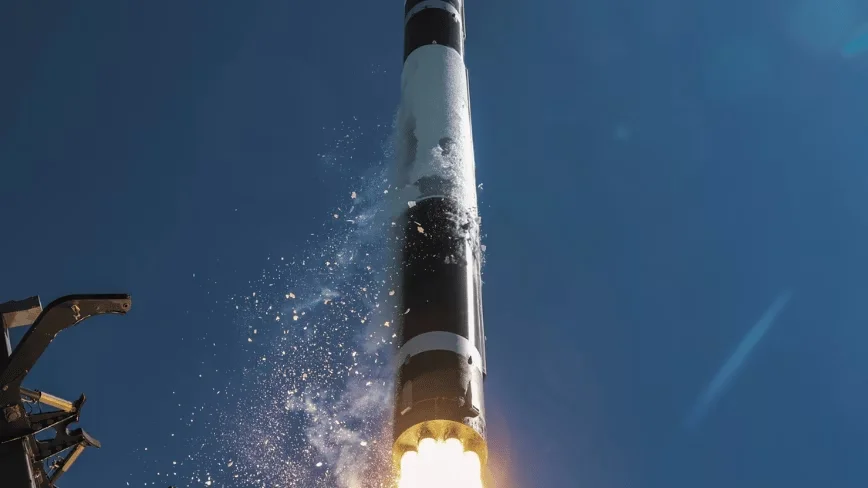
This surge in defense contracts aligns with a broader trend: governments are racing to secure access to space for national security purposes. Rocket Lab's Electron rocket, which can carry payloads of up to 300 kilograms, perfectly serves this growing demand for rapid, responsive launches.
Record Revenue and Path to Profitability
Rocket Lab reported total revenue of approximately $602 million in 2025, up 38% year over year. The company's backlog now exceeds $2 billion, positioning it for a run at $1.59 billion in revenue by 2028, according to analyst estimates. Although the company is still not profitable, analysts project it could turn profitable by that year. The stock currently trades at about 68 times trailing sales, a steep premium that investors are willing to pay for its growth trajectory.
Beyond Rockets: Building an End-to-End Space Company
The Neutron Rocket Gamble
Investors are not just betting on the proven Electron rocket; they are also pricing in the success of Neutron, a medium-lift vehicle designed to carry up to 13,000 kilograms. Crucially, Rocket Lab is already signing major contracts for Neutron before its first flight. This unusual move both de-risks the capital-intensive project and creates enormous pressure on the engineering team to deliver.
If Neutron succeeds, it will allow Rocket Lab to compete for larger payload contracts, opening up a much larger market. If it stumbles, the entire long-term financial model — one that promises fatter margins and bigger scale — could be at risk.
Expanding the Ecosystem
Rocket Lab is aggressively expanding beyond launch services. It recently acquired Mynaric, a leading laser communications provider, to accelerate its satellite-building capabilities. The company also secured its largest-ever contract, valued at $816 million, with the Space Development Agency (SDA) to design and manufacture 18 satellites for a missile-defense constellation.
This end-to-end strategy — from designing spacecraft to launching them — mirrors the ambition of larger peers but on a more focused scale. Customers now look to Rocket Lab for complete mission solutions, not just a ride to orbit.
Valuation vs. Value: The SpaceX Comparison Heats Up
A Tale of Two Stocks
The recent SpaceX IPO, priced at $135 per share and valuing the company at roughly $1.77 trillion, has refocused attention on space stocks. For context, that valuation exceeds the GDP of Saudi Arabia. To double, SpaceX would need to be worth more than $3.5 trillion — a high bar by any measure.
Rocket Lab, with a market cap of roughly $63 billion, is much smaller and offers a different risk-reward profile. While SpaceX is the dominant player with Starlink and Starship, Rocket Lab offers exposure to the same industry at a fraction of the price — but with higher operational risk and no profitability yet.
What This Means for Investors
The market is currently rewarding growth over profitability. Rocket Lab's stock movement reflects a broader shift where investors are prioritizing revenue expansion and contract wins over near-term earnings. However, as seen in other high-growth sectors, this enthusiasm can reverse quickly if execution falters.
Interestingly, the same speculative fervor that has driven Rocket Lab's stock has also affected other areas of the market. For context on how sentiment can shift rapidly, consider the recent Salesforce layoffs that hit its Agentforce AI team as the stock plunged 30% in 2026, a reminder that even established companies can see valuations reset when growth expectations are not met.
The Bigger Picture: Space as a New Infrastructure Asset Class
Rocket Lab's rise is part of a broader transformation. Governments and private companies are no longer treating space as a science project but as a critical infrastructure domain. Defense budgets are increasingly directed toward satellite constellations, hypersonic testing, and resilient launch capabilities.
This shift benefits companies that can offer reliable, cost-effective solutions. While SpaceX dominates heavy lift, Rocket Lab has carved out a profitable niche in responsive launch and satellite manufacturing. The emergence of a two-tier space economy — with giants like SpaceX and agile players like Rocket Lab — suggests healthy competition rather than a winner-take-all market.
Rocket Lab still faces significant hurdles: it must successfully launch Neutron, continue to expand profit margins, and manage a valuation that leaves little room for error. But for now, the market is voting with its dollars. The stock's 265% run over the past year tells the story of a company that has convinced Wall Street it is not just a rocket company — it is the future of space infrastructure.
As the space race accelerates, investors are betting that smaller, focused players can deliver outsized returns. The next year will be critical: can Rocket Lab turn its $2 billion backlog into sustainable profits, or will the stock prove to have overshot the runway?
Comments