
FIFA Admits VAR Error in World Cup 2026’s First Major Scandal
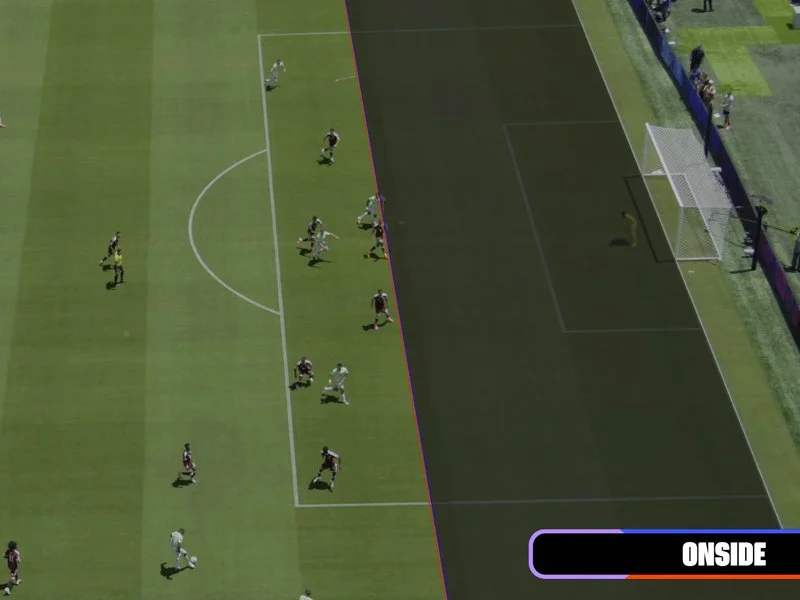
The 2026 FIFA World Cup, now in its group stage across the United States, Canada, and Mexico, has already been rocked by its first major controversy. On June 14, the match between Qatar and Switzerland ended in a 1-1 draw, but the result was overshadowed by a disputed penalty that gave the Swiss the lead. FIFA later confirmed that a technical glitch prevented the broadcast of VAR graphics, fueling accusations of corruption and bias on social media.
The Incident: Qatar vs. Switzerland
Switzerland opened the scoring in the 17th minute through a Breel Embolo penalty, awarded after a contentious buildup involving Remo Freuler. Qatar players and fans protested vehemently, claiming Freuler was in an offside position before the foul. The VAR review, which should have been displayed on screens, never appeared due to what FIFA described as a technical error. In an emergency statement, the world governing body assured that the offside check was conducted correctly and that no attacking player was in an offside position in the two relevant phases.
Despite FIFA’s clarification, the lack of graphical evidence led to widespread backlash. Commenters on FIFA’s official communication called the decision "disgusting" and accused the organization of protecting Switzerland. The incident has cast a shadow over the tournament’s technological credibility, especially given FIFA’s promotion of advanced 3D offside technology for this edition.
Qatar’s Historic Point
For Qatar, the draw was historic—it marked the nation’s first point ever in a World Cup finals. Boualem Khoukhi scored the equalizer in stoppage time, initially credited to him, but FIFA later adjusted the scorer, adding a layer of confusion. The point keeps Qatar’s slim hopes alive in Group B, but the penalty controversy may have lasting implications for their campaign. The match also highlights the growing pressure on referees and VAR officials in a tournament that expanded to 48 teams for the first time.
Romanian Referee Istvan Kovacs: A Unique Snub
While controversy swirls around Qatar-Switzerland, another story has emerged from the refereeing ranks. Istvan Kovacs, Romania’s sole central referee at the 2026 World Cup, has yet to be assigned a match after 32 games. The 40-year-old official, who made history by officiating the Champions League final in 2025, finds himself in an unprecedented situation: he is the only referee ever to have presided over a UCL final and not been delegated to a World Cup match at this stage.
Kovacs’s Impressive Resume and Current Status
Kovacs is a standout figure in European refereeing. He has officiated the finals of all three UEFA club competitions—the Europa Conference League (2022), Europa League (2024), and Champions League (2025)—a unique triple crown. His presence at the 2026 World Cup was expected to cement his legacy, but FIFA has not included him in the first 24 group-stage matches nor the next eight second-round games. Only three other European referees—Espen Eskas (Norway), Sandro Scharer (Switzerland), and Michael Oliver (England)—share his lack of game time, but Oliver was initially assigned a match before being replaced due to injury.
Kovacs’s situation mirrors his 2022 World Cup experience in Qatar, where he served solely as a fourth official for eight matches, earning $20,000 in fees plus a $70,000 participation bonus. This time, he is guaranteed $100,000 just for being on the list, with $3,000 per group-stage appearance and $10,000 for knockout rounds. Despite the financial certainty, the professional snub is puzzling, especially given his pedigree. Some speculate that FIFA may be saving him for high-stakes knockout matches, but the delay risks repeating the 2022 pattern of underutilization.
The Stakes: Technology, Trust, and the Expanded Format
The Qatar-Switzerland scandal and the Kovacs situation are not isolated incidents; they reflect deeper tensions in this historic World Cup. The 2026 tournament is the first to feature 48 teams, spread across 12 groups of four, with 104 matches scheduled over 39 days. The expanded format has already led to longer travel distances and concerns about fairness, especially with the new 32-team knockout phase that includes the best third-placed teams.
VAR and the Trust Deficit
FIFA’s technical failure during a high-profile match undermines the very promise of VAR: transparency. The organization prides itself on cutting-edge technology, including semi-automated offside detection and connected ball technology, which were meant to reduce controversies. Yet, the failure to broadcast key evidence has revived skepticism about decision-making in football. The social media backlash, with users calling the episode "corruption" and comparing FIFA to "North Korea," shows that trust is fragile. If similar glitches recur in crucial knockout matches—such as the round of 16 or quarterfinals—the integrity of the entire competition could be questioned.
What This Means for the Tournament
These early controversies set a tense tone for the remainder of the group stage and beyond. For fans and analysts, the focus will now shift to how FIFA handles pressure. The organization’s quick response to the VAR issue was commendable, but the damage to its reputation may linger. Meanwhile, Kovacs’s absence from the referee list raises eyebrows: is FIFA overlooking a top official for political reasons, or is it strategically deploying him for later matches? Either way, the Romanian’s patience will be tested.
As the tournament progresses, these stories will continue to unfold. The 2026 World Cup promised to be the biggest and most technologically advanced ever, but it is already proving that human error and institutional missteps can still dominate the narrative. For now, all eyes are on upcoming matches like Austria vs. Jordan and Portugal vs. DR Congo, where refereeing decisions will be scrutinized more than ever.
For more on the World Cup’s unique history, see our World Cup Winners List: Only Eight Nations Have Lifted the Trophy as 2026 Tournament Unfolds.
Stay updated with the latest from the group stage, including Egypt Draws with Belgium in World Cup 2026 Opener, Setting Up Crucial Group Stage Showdown.
Comments