
Fraudulent RingGo Texts Threaten Driver Finances
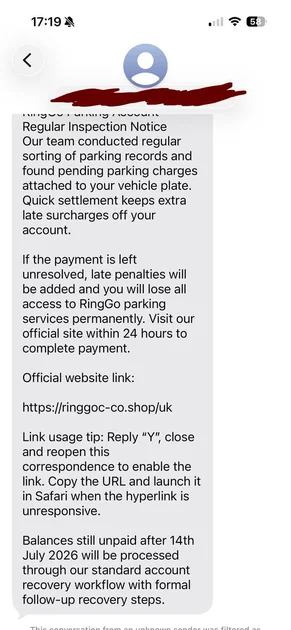
Drivers across the UK are being warned to stay alert as a new wave of phishing scams impersonating the popular parking payment service RingGo continues to spread. Fraudulent text messages, claiming to be from RingGo, are informing recipients of an “outstanding parking payment” or an “unpaid parking session,” and urging them to settle the amount promptly to avoid further charges or administrative action.
These messages are entirely fake, according to Norfolk County Council’s Trading Standards team, which issued an alert after receiving reports from concerned motorists. The scammers behind the texts are attempting to steal login credentials, personal information, and financial details by directing victims to counterfeit websites that closely mimic the official RingGo platform.
In Derry City and Strabane District Council, local authorities have also confirmed that a number of residents have received the fraudulent messages. A council spokesperson said: "We are aware of a number of parking scams currently circulating, with fraudulent text messages being sent to members of the public about parking fines or outstanding transactions." The council stressed that neither its Car Parking Team nor its partners ever send text messages requesting payment for parking fines or transactions.
How the Scam Works: The Anatomy of a Phishing Attack
The scam typically begins with a text message that claims to be from RingGo. One version reads: "A routine review of open parking charges has identified an amount that is still due. To reduce the risk of further financial charges and any administrative action within our parking services, please arrange settlement promptly." The message includes a link that, when clicked, leads to a convincing but fraudulent webpage designed to capture sensitive data.
Graham Conway, managing director of leasing firm Select Car Leasing, explained: "The link is key because it sends you to a counterfeit page that almost mirrors the real RingGo site. If you then put in your username, password or card details, it goes directly to the criminal gangs, who can drain accounts or sell on your personal information."
Security experts note that the scammers are using sophisticated tactics to bypass common safeguards. Serpil Hall, a security expert from Datos Insights, pointed out: "The moment someone replies, even with a single letter, iMessage reclassifies the sender as known, and the link becomes active. The scammers are not guessing at this – they know the mechanics and are engineering around it deliberately."
Hall also highlighted why RingGo is such a prime target: "Parking payment services are a well-worn target because the notification is plausible to almost any driver, the amounts involved are small enough not to trigger immediate scepticism, and there is a genuine sense of consequence attached to ignoring it."
Why This Matters: The Widespread Impact on Drivers
The scam has been reported in multiple regions, including Norfolk, Yorkshire, Birmingham, and Northern Ireland, indicating a coordinated nationwide campaign. The impact on victims can be severe: financial loss from drained bank accounts, identity theft, and the long-term hassle of rectifying fraudulent transactions.
Even those who do not fall for the scam may be affected. The sheer volume of fraudulent messages creates confusion and distrust, leading some drivers to accidentally ignore legitimate parking reminders and incur real fines. Councils and trading standards teams are urging drivers to remain vigilant and to verify any suspicious correspondence through official channels.
The public is being advised to forward suspicious texts to 7726, a free shortcode used to report phishing attempts. This service helps mobile network operators identify and block fraudulent numbers, potentially preventing others from becoming victims.
How to Protect Yourself: Official Advice and Safe Practices
If you receive a message claiming to be from RingGo, do not click on any links or engage with the message. Instead, verify your account directly by opening the official RingGo app or navigating to myRingGo.co.uk. Log in and check your Receipts or History section. If your parking session appears as paid there, your account is secure.
Trading Standards officials have shared several red flags to help identify scam messages:
- Messages sent from generic or personal email addresses rather than official domains
- Suspicious web links that do not match the official RingGo URL
- Requests to reply with a letter or copy a link into a browser, which are often attempts to bypass security filters
- Urgent language threatening additional charges or legal action if you do not act immediately
Derry City and Strabane District Council also reminded drivers that legitimate authorities do not send text messages requesting payment for parking fines or transactions. If you have any concerns, contact your local council’s parking team directly using official phone numbers listed on their websites.
Broader Implications: The Rising Threat of Phishing Scams
This RingGo scam is part of a broader trend of phishing attacks targeting everyday services that people use without thinking twice. From banking to shopping, and now parking, scammers are constantly adapting their methods to appear more legitimate. The success of such campaigns depends on a combination of social engineering and technical trickery, often exploiting urgency and fear of missing out.
The fact that the scam has hit multiple regions and has been reported by several local authorities underscores its effectiveness. It also highlights the need for increased public awareness and education about cybersecurity. As more services move online, the risk of such impersonation scams grows, and drivers are urged to be cautious about unsolicited messages requesting financial action.
Industry experts suggest that these scams are unlikely to disappear soon. According to Hall, "The scammers are not guessing at this – they know the mechanics and are engineering around it deliberately." This level of sophistication means that even tech-savvy individuals can be fooled, making vigilance all the more critical.
For those who may have already fallen victim, it is essential to act quickly. Contact your bank or credit card provider to report any unauthorized transactions, and consider changing passwords for any accounts you may have entered into the fraudulent website. Additionally, report the incident to the National Cyber Security Centre by forwarding the original text to 7726.
Staying Safe Beyond RingGo: General Phishing Prevention Tips
While the current scam targets RingGo users, the same principles apply to any unsolicited message that asks for personal information or payment. Always be skeptical of messages that create a sense of urgency, especially those that threaten fines, fees, or legal action. Remember that legitimate companies will rarely ask you to click on a link in a text message to make a payment.
Instead, go directly to the official website by typing the address into your browser or using a bookmarked app. If you are unsure whether a message is genuine, contact the company directly using a known phone number or customer service channel. Do not use the contact details provided in the suspicious message.
It is also wise to enable two-factor authentication on your accounts where possible, as this adds an extra layer of security even if your username and password are compromised. Finally, consider using mobile security software that can detect and block malicious websites.
As the digital landscape evolves, so do the tactics of cybercriminals. Staying informed and cautious is your best defense against these increasingly sophisticated scams. For now, the message is clear: if you receive a RingGo parking text, don't click—verify.
Comments