
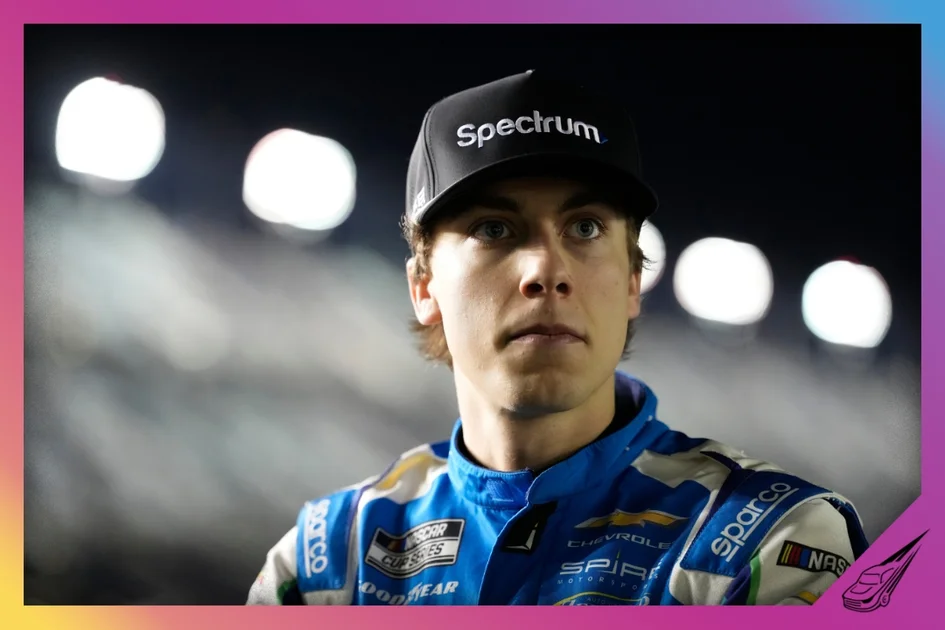
RFK Racing Prepared to Compete Without Charter to Preserve Three-Car Lineup
LEBANON, Tenn. — RFK Racing has signaled it will go to extreme lengths to maintain its current three-car NASCAR Cup Series operation, even if it means racing without a charter next season. Team president Chip Bowers confirmed during a recent appearance on Dirty Mo Media that the organization is prepared to run as an open team in 2027 should negotiations for a permanent charter fall through.
The team’s third entry, the No. 60 Ford driven by Ryan Preece, currently operates under a leased charter from Rick Ware Racing. That agreement expires at the end of the 2026 season, and RFK has yet to secure a long-term arrangement. According to Bowers, the organization will not downsize to two cars as a fallback option.
“We are committed to fielding three cars in the Cup Series next year, one way or another,” Bowers said. “If that means running as an open team, we are prepared to do that.”
The Charter Dilemma and Its Implications for RFK Racing
Charters guarantee a starting spot in each of the 36 points-paying races, as well as a fixed share of the sport’s revenue. Open teams, by contrast, must qualify for every race on speed and receive no guaranteed purse distribution.
Running as an open entry adds financial risk and logistical complexity. Open teams earn significantly less from race winnings and lack the security of a locked-in grid position. For a team like RFK, which competes for race wins but typically operates outside NASCAR’s powerhouse organizations, the open route would require consistent on-track performance to ensure race day participation.
RFK’s commitment to three cars reflects a broader strategy of growth and stability under the leadership of co-owners Brad Keselowski and Jack Roush. Since Keselowski joined the ownership group in 2022, the team has invested heavily in infrastructure, personnel, and performance. The No. 60 entry, which debuted in 2024, gave the team a third competitive platform and allowed it to expand its driver development program.
Ryan Preece, who drives the No. 60, has delivered solid results this season, earning top-20 finishes in several races and keeping the car inside the top 35 in owner points. However, without a charter, those results would reset, and every race weekend would become a qualifying battle.
Charter Market Tightens Across NASCAR
The charter system, introduced in 2016, has become a valuable asset in NASCAR’s modern era. With only 36 charters available, demand regularly exceeds supply, and recent transactions have pushed prices into the tens of millions. Legacy Motor Club, which owns the charter currently leased by RFK, has shown interest in selling it outright, but negotiations remain ongoing.
Team owner Rick Ware has been a frequent lessor of charters in recent years, leasing entries to other organizations as he consolidates his own operations. His No. 51 entry has often fielded a rotating cast of drivers, making the charter available for short-term agreements.
For RFK, acquiring a charter permanently would stabilize its long-term outlook. A charter would allow the team to plan budgets, attract sponsors, and develop drivers with certainty. Running open, by contrast, introduces uncertainty that could deter potential partners.
Broader Trends: Open Teams as a Viable Path in NASCAR
RFK’s willingness to run open is not without precedent. Several teams in recent years have operated without charters, with varying degrees of success. In 2025, for instance, two open entries qualified for multiple races, proving that smaller teams can still compete on merit. The emergence of the Next Gen car in 2022, which reduced costs and narrowed the performance gap, has made the open route more feasible for well-funded organizations.
Still, the economics of running open remain challenging. NASCAR’s revenue distribution heavily favors chartered teams, with open teams receiving a fraction of the prize money. Sponsors also tend to favor guaranteed race participants, making it harder for open teams to secure backing.
But for RFK, the decision to maintain three cars is as much about identity as economics. The team traces its lineage to Roush Racing, which once fielded five Cup cars and dominated the sport in the 2000s. Reducing to two entries would represent a step backward, and the current ownership group is determined to build momentum.
“This is about sending a message that RFK Racing is here to compete at the highest level,” Bowers said. “We have the resources, the people, and the will to make three cars work.”
What This Means for the 2027 Season
If RFK fails to secure a charter by the end of 2026, its No. 60 team would enter each race weekend knowing it must be faster than at least four other non-chartered cars to make the field. That pressure could drive performance, but it also raises the stakes for every qualifying session and practice run.
Preece, who joined RFK from Stewart-Haas Racing, has embraced the challenge. In recent interviews, he has expressed confidence in the team’s preparation and his ability to deliver when it counts.
The situation also highlights the ongoing tension in NASCAR between the charter system and the desire for open competition. While charters provide stability for the sport’s business model, they also limit entry for new teams and put pressure on organizations like RFK to either buy in or risk being left out.
As the 2026 season continues, all eyes will be on the charter negotiations between RFK Racing and Legacy Motor Club. A resolution before the season’s end would remove the uncertainty. But if talks stall, RFK Racing has made its position clear: three cars, no matter the cost.
Additional reporting on the business of motorsports can be found in the analysis of Rheinmetall Stock Stuck at 35% Below Peak Despite €1.9 Billion Order Blitz, which explores how corporate commitment can defy market expectations.
Comments