
Rheinmetall’s €1.9 Billion Order Blitz Fails to Reignite Stock Momentum
Europe’s largest defence contractor, Rheinmetall, has secured more than €1.9 billion in new orders within a single week, yet its share price remains stubbornly tethered to technical resistance levels, still trading roughly a third below the peak it touched last September. The disconnect between a swelling order book and a stock that refuses to recapture former highs has become the defining puzzle for investors in the Düsseldorf-based group.
The latest additions to the tally come from two major European defence contracts. On 29 May, the Romanian defence ministry signed a €920 million deal with NVL B.V. & Co. KG — the shipbuilding specialist Rheinmetall acquired on 1 March 2026. The order covers two maritime patrol vessels and two diver-intervention boats, marking the first major test of the group’s fledgling naval systems division. The Romanian deal falls under the European SAFE procurement programme ("Security Action for Europe"), which aims to bolster EU and NATO maritime borders, particularly in the geopolitically sensitive Black Sea region.
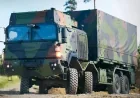
Barely days earlier, the Bundeswehr placed two separate orders on German soil. One is a framework agreement for more than 2,000 military transport vehicles worth just over €1 billion, with initial deliveries scheduled for the first half of 2026. The other is a six-figure quantity of LLM-VarioRay laser-light modules, with a net value in the hundreds of millions of euros and deliveries running through to 2032. Combined, the two German contracts comfortably exceed a billion euros.
Yet the stock, which closed at €1,291.60 on Friday, has shed roughly 31% over the past year and sits nearly 20% below its end-2024 level. From the 52-week high of €1,995 reached in late September 2025, the shares are more than 35% off the peak. The recent rebound — a 16% recovery from the mid-May trough of €1,118 — has pushed the relative strength index to 84, a classic overbought reading that often precedes a pullback.
Technical Headwinds and Market Skepticism
Despite the flurry of positive catalysts, Rheinmetall’s stock remains stuck in what analysts describe as technical no-man’s land. Charts show the 50-day moving average at €1,376.98 — a gap of 6.20% — while the 200-day average stands at €1,634.17, leaving a chasm of 20.96%. The stock still trades 21% below its 200-day average, and the 50-day line at €1,377 represents the next resistance. A failure to hold €1,300 could invite renewed selling pressure.
Adding to the caution, the relative strength index has climbed to 84.1, flashing an overbought signal after the recent rally. A 30-day volatility of over 51% underscores the risk of sudden reversals. Technically, the picture remains fragile, and the gulf between operational momentum and market sentiment has rarely been wider.
Bond Market Confidence vs. Equity Languor
The bond market has already voted with confidence. Rheinmetall’s newly issued €500 million corporate note, carrying a 3.375% coupon and maturing in 2031, was oversubscribed 7.8 times, indicating that institutional investors back the company’s financing strategy even as the equity languishes. That cash injection came alongside the major European defence contracts and progress on a joint venture with OHB for satellite programmes.
Deutsche Bank has reiterated its buy recommendation with a €2,100 price target, implying roughly 63% upside from current levels. The consensus analyst target stands at €1,886, while 2026 earnings per share are forecast at €38.00 and dividends are expected to climb to €15.18 from €11.50 last year. First-quarter results provided a solid foundation for these projections, yet the stock refuses to respond proportionally.
The Production Capacity Bottleneck
Behind the concrete deals looms an even bigger pipeline, but the real bottleneck is no longer demand — it is production capacity. Rheinmetall has told steelmakers such as Salzgitter and Dillinger that it needs higher delivery volumes for armour plate, as its own steel consumption has doubled in two years. Failure to secure supply could delay deliveries despite a full order book.
One potential workaround emerged from an unlikely source: Volkswagen works council chief Daniela Cavallo signalled openness to using the Osnabrück plant for defence production. If realised, such a conversion could dramatically increase output capacity for armoured vehicles and components, addressing one of the sector’s most pressing constraints.
European Defence Orders Keep Filling the Pipeline
Media reports indicate Defence Minister Boris Pistorius is planning to procure up to 1,000 Leopard 2 main battle tanks and 2,500 GTK Boxer wheeled armoured vehicles — a package estimated to be worth as much as €25 billion, to be executed jointly with partner KNDS. No timeline has been set, but the direction is unmistakable.
On the corporate development front, the cartel office approved a joint venture between Rheinmetall and OHB for satellite programmes, while the company added its first major US partnership for autonomous combat vehicles. American Rheinmetall will integrate mission systems onto Harbinger’s scalable hybrid platform, with vehicles designed for both logistics and direct combat roles. The Pentagon is seen as the primary customer, and public demonstrations are scheduled for summer 2026.
Rheinmetall is using the current week to showcase its portfolio at two international venues: the Sea Power for Africa Symposium in Lagos (running until 3 June) and the HEMUS defence fair in Plovdiv, Bulgaria (2–6 June). No specific announcements have been trailed for either event, but such platforms have historically paved the way for additional contract wins.
Strategic Buildup Accelerates Amid Market Skepticism
The defence contractor’s strategic buildup is accelerating on multiple fronts. The Bundeswehr’s latest call-off under a framework agreement signed last year covers 2,000 military trucks, with half being heavy 8x8 transporters with a 15-tonne payload and the other half lighter 4x4 and 6x6 configurations. Production will run through the Rheinmetall MAN Military Vehicles joint venture, and the entire order will be booked in the current second quarter, significantly improving visibility for the military vehicle division.
Across the Atlantic, the fresh tie-up with US-based Harbinger targets one of the defence sector’s fastest-growing segments: unmanned ground vehicles. The move dovetails with a broader capacity play in Europe: rival KNDS has signalled interest in taking over Mercedes-Benz’s Ludwigsfelde plant to ramp up Boxer armoured vehicle production. Since Rheinmetall and KNDS co-operate closely on the Boxer programme — the Bundeswehr envisages up to 3,000 units — any capacity expansion there could shorten delivery times and cut fixed costs for both partners.
The defence sector’s momentum was also reflected in Renk, the propulsion specialist, which jumped more than 6% on news of the Rheinmetall contracts, underscoring the spillover effects across the European defence supply chain.
Broader Implications and the Road Ahead
The chasm between operational momentum and market sentiment raises important questions about how defence stocks are being valued in the current environment. Rheinmetall’s order book is bulging, its strategic positioning in European and NATO defence is strengthening, and its financing capabilities are robust. Yet the equity market remains sceptical, punishing the stock for factors that appear disconnected from the company’s fundamental performance.
Part of the disconnect may stem from broader market rotations away from defence stocks after the initial post-Ukraine invasion surge. Investors who piled into the sector in 2022-2024 may now be taking profits or rotating into other themes. Additionally, concerns about production bottlenecks and execution risk weigh on sentiment, even as the company takes steps to address capacity constraints.
The overbought RSI reading suggests that the recent 16% rebound from the mid-May low may be running out of steam in the near term. Technical analysts will be watching key support at €1,300 closely; a break below that level could trigger further selling pressure. On the upside, a sustained move above the 50-day moving average at €1,377 would be the first sign of genuine technical improvement.
Looking further ahead, the medium-term outlook remains compelling if Rheinmetall can execute on its production expansion plans. The €25 billion potential Leopard 2 and Boxer order, combined with the already secured contracts, points to years of elevated revenue visibility. The company’s ability to secure financing at favourable terms — as evidenced by the oversubscribed bond — provides the financial firepower needed to invest in capacity.
For context on similar market dynamics, it’s worth noting that other stocks have recently experienced sharp rebounds driven by strategic news announcements. For instance, Palantir Stock Jumps 8% as Drone News and Bucket Hat Hype Fuel Rebound demonstrates how sentiment can shift quickly in the technology and defence space when catalysts align.
What Investors Should Watch
In the coming weeks, investors should monitor several key factors:
- Production capacity announcements: Any concrete progress on the VW Osnabrück plant discussions or similar expansions could be a major catalyst.
- Technical levels: The behaviour of the stock around the €1,300 support and €1,377 resistance will set the near-term tone.
- Further contract wins: The HEMUS and Sea Power for Africa events could yield additional orders, particularly in naval systems.
- Second-quarter earnings: With the Bundeswehr truck order booked in Q2, the company’s revenue and margin performance will be closely scrutinised.
Beyond the immediate technical picture, the broader trend remains positive for European defence spending. EU member states continue to increase budgets, and programmes like SAFE provide a framework for multinational procurement that benefits companies like Rheinmetall. The Romanian naval contract, coming just three months after the NVL acquisition, validates the group’s naval strategy and opens a new growth avenue beyond its traditional land systems focus.
The joint venture with OHB for satellite programmes positions Rheinmetall in another high-growth defence segment, space-based capabilities. As European nations seek greater autonomy in space-based surveillance and communications, this venture could become increasingly important.
Conclusion
Rheinmetall’s €1.9 billion order blitz demonstrates that the company’s operational momentum is undeniable. The defence contractor continues to win major contracts across multiple domains — land, naval, and increasingly space — and has access to ample financing to support its growth. Yet the stock remains stuck in a technical rut, 35% below its 52-week high and flashing overbought signals after a modest recovery.
The disconnect between operational strength and market scepticism may persist until the company demonstrates it can overcome production bottlenecks and deliver earnings growth that justifies a higher valuation. For patient investors with a long-term horizon, the current valuation may represent an opportunity, given analyst price targets implying substantial upside. But in the near term, technical headwinds and market sentiment are likely to keep the stock range-bound, testing both the patience and conviction of shareholders.
Comments