
Rachel Burden Exits BBC Breakfast as Sunday Edition Is Axed
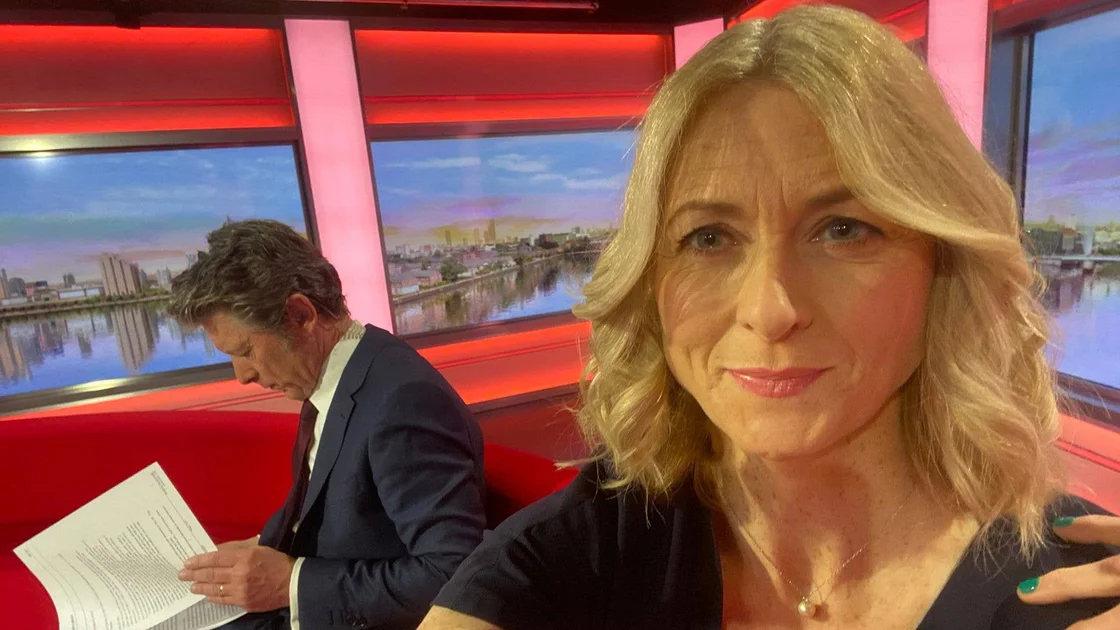
Rachel Burden, a familiar face on BBC Breakfast for more than a decade, has announced her departure from the programme just as the corporation confirms that the Sunday morning edition will be discontinued. The 51-year-old presenter shared the news on Instagram, posting a carousel of behind-the-scenes photographs and thanking colleagues for their support over what she described as a 10-plus-year run.
“This is my last Sunday on the @bbcbreakfast sofa before the schedule changes in September – no complaints there, we have to cut our cloth,” Burden wrote. She went on to express gratitude to the production team who work through Saturday nights, her co-presenters Roger Johnson and Ben Thompson, and the make-up artist who “puts me together most weeks.” Signing off with a note of wry relief, she added: “Thanks for watching. Here’s to a guaranteed Sunday lie-in.”
Burden began presenting on BBC Breakfast in 2015, after a career that included stints on BBC Radio 5 Live and other news programmes. Over nearly eleven years, she became a staple of the weekend roster, anchoring the Sunday broadcast alongside a rotating cast of co-hosts. Her departure, however, is not a simple retirement or a move to another channel; it is a direct consequence of the BBC’s decision to drop the Sunday edition of Breakfast entirely from September onward.
Colleagues and fans quickly filled the comments section with tributes. Weather presenter Matt Taylor wrote: “Noooooo!! I didn’t realise it was your last one Rachel. Glad I got to share it with you though – whether it’s ont’telebox or over the airwaves you’re a joy to work with.” Veteran broadcaster Nicky Campbell added a succinct “You are brilliant.” Viewers echoed the sentiment, with one writing: “Well done Rach! What a shift! You have been exemplary!”
The End of Sunday Breakfast
The BBC has confirmed that from September, BBC One will no longer broadcast Breakfast on Sunday mornings. The slot will be replaced by output from the News Channel, a shift that effectively eliminates the weekend presenting role Burden has occupied since 2015. The change is part of a much larger restructuring at the corporation, driven by a mandate to save £500 million over two years.
While Burden’s exit is the most personal and visible face of the cuts, the axing of the Sunday edition affects an entire production team—camera operators, directors, producers, make-up artists, and runners—many of whom worked overnight on Saturdays to bring the programme to air. Burden acknowledged that sacrifice in her post, thanking “the team who’ve worked through their Saturday nights.”
BBC Budget Cuts: The Bigger Picture
Burden’s departure is just one ripple in a wave of cost-saving measures announced by the BBC’s new director-general, Matt Brittin, in late June 2026. Brittin, a former Google executive who took the helm earlier this year, revealed plans to cut £80 million from programming budgets across television, radio, and news divisions. The cuts will result in the loss of approximately 550 jobs in news and nations divisions alone, with as many as 1,800 to 2,000 roles expected to be eliminated across the entire organisation over the coming months.
Among the programmes confirmed for the axe are Radio 4’s The World Tonight, which has been on air for 56 years; the topical debate show AntiSocial; and the consumer-focused Money Box Live. The production teams behind Sunday with Laura Kuenssberg and Newsnight will be merged. The Today programme on Radio 4 will also see its roster of permanent presenters reduced from five to four, following Amol Rajan’s departure later this year. On Saturdays, Today will be anchored by a single presenter rather than the usual double act.
In a memo to staff, Brittin said: “The scale of savings requires tough choices, careful work and won’t all be ready at once.” He emphasised that the BBC must become “simpler and faster” and avoid duplication across its services. These principles are now being translated into concrete schedule changes, of which the end of Sunday Breakfast is one of the most prominent.
A History of Cuts
The current round of reductions follows a decade of financial pressure on the BBC. Licence fee freezes, inflation, and competition from streaming giants have eroded the corporation’s income. In 2022, the government announced that the licence fee would be frozen at £159 for two years, effectively cutting the BBC’s real-terms income. Subsequent settlement negotiations have done little to ease the strain. The BBC has already closed BBC Three as a linear channel (later revived online), scaled back local radio, and merged news operations.
The 2026 cuts are among the deepest yet. Brittin’s plan to save £500 million by 2028 involves both immediate programme closures and long-term structural changes. “We have to cut our cloth” is a phrase Burden used in her farewell post, and it echoes the language coming from the top of the organisation. For the BBC, the metaphor is literal: the cloth is shrinking, and the pattern must be redrawn.
Burden’s Career and Legacy
Rachel Burden joined the BBC in the early 2000s, working as a producer and presenter on Radio 5 Live before moving to television. She became a regular face on BBC Breakfast in 2015, typically appearing on weekend editions. Her style was warm but authoritative, drawing praise for handling breaking news with composure while also steering lighter segments on culture and human interest.
Her exit leaves a gap on the weekend schedule that will not be filled. The Sunday edition itself is disappearing, so there is no question of a replacement presenter. Burden’s final broadcast is expected to be in late August or early September, depending on the exact transition date. She has not announced any future plans, though fans have speculated she may return to radio or take on a different role within the BBC.
Tributes and Farewells
The social media reaction to Burden’s announcement has been overwhelmingly positive. Colleagues highlighted her professionalism and warmth. One viewer wrote: “On to new things I’m sure. As one door closes another always opens! You’ve been fabulous.” Another said: “Aww no! I love seeing you on there! Big shame but hope you’ll pop up elsewhere! Enjoy those lie-ins!”
The outpouring reflects the affection viewers felt for a presenter who had become a Sunday morning ritual. For many, Burden’s presence was part of a weekend routine that now, like the programme itself, is coming to an end.
Broader Implications for BBC Journalism
The loss of Sunday Breakfast is more than a scheduling tweak. It represents a reduction in the BBC’s live news output on a day when other broadcasters also scale back. Sunday mornings have traditionally been a lower-ratings slot, but they have also been a space for slower, more reflective journalism—interviews with authors, discussions of the week’s events, and human-interest stories. The News Channel replacement is likely to be more streamlined and less distinctive.
Critics of the cuts argue that the BBC is hollowing out its public service mission in pursuit of efficiency. The merger of Sunday with Laura Kuenssberg and Newsnight production teams has raised concerns that political interview programmes may lose their distinctiveness. The axing of The World Tonight, a flagship foreign-affairs programme, has been condemned by former correspondents as a retreat from international coverage. Meanwhile, the reduction in Today programme presenters has been interpreted as a move toward a less personality-driven, more cost-efficient news operation.
Supporters of the changes, including Brittin, argue that the BBC must modernise. In an era of 24-hour news channels, podcasts, and digital-first journalism, the corporation cannot afford to maintain duplicative programmes. “Simpler and faster” may mean leaner, but it also means focusing resources where they have the greatest impact.
The Human Cost
Behind the strategy and the budgets, there are individuals. Burden’s farewell is a reminder that every job cut has a face. The 550 newsroom roles on the line include producers, editors, camera operators, and runners—many of whom, like Burden, have spent years building careers at the BBC. The wider figure of up to 2,000 job losses across the organisation suggests a painful period of redundancy and restructuring ahead.
Burden handled her exit with grace, insisting she had “no complaints.” But her departure—along with the loss of The World Tonight, the merger of news production teams, and the reduction of presenter rosters—signals a BBC that is shrinking in ambition as well as size.
What Comes Next for Breakfast Viewers
From September, BBC One’s schedule on Sunday mornings will change. Where Breakfast once aired from 6am to around 9am, viewers will now see the News Channel’s output. The weekday and Saturday editions of Breakfast will continue unchanged. For fans of Burden, her final appearance will be a bittersweet goodbye to a presenter who made the early shift feel like a conversation among friends.
Burden herself seems philosophical about the change. Her Instagram post ended with a wry promise: “Here’s to a guaranteed Sunday lie-in.” It is a sentiment many viewers may share as they adjust to a different kind of Sunday morning.
As the BBC adapts to a harsher financial climate, the loss of familiar programmes and presenters is likely to continue. Burden’s exit is not the first—and it will not be the last. But for those who tuned in week after week, it marks the end of an era.
In related news, the BBC has also faced questions about the future of its flagship programmes amid ongoing financial pressures. Meanwhile, a historic heat wave scorching parts of the United States has dominated headlines, with millions under threat as temperatures break records. And in the world of entertainment, the passing of beloved actor Sam Neill has prompted tributes from colleagues and fans alike, as reported in Sir Sam Neill, Beloved Star of Jurassic Park and The Piano, Dies at 78.
For now, the BBC’s focus remains on its restructuring. Whether the cuts will achieve the promised savings—or whether they will further erode the corporation’s ability to serve its audience—remains to be seen. For Rachel Burden, at least, the early alarm clock has finally been silenced.
Comments