
Ceasefire Fraught With Violations as Both Sides Trade Accusations
A three-day ceasefire between Russia and Ukraine, brokered by US President Donald Trump, is on the brink of collapse just two days after it began. Ukrainian President Volodymyr Zelenskyy accused Russian forces of continuing assault operations in key sectors of the frontline, stating that the Russian army is “not complying with the ceasefire and is not even really trying to.” In his evening address on May 10, Zelenskyy reported more than 150 ground assaults, 100 artillery strikes, and nearly 10,000 drone strikes in the first 24 hours of the truce.
Russia, in turn, accused Ukraine of violating the ceasefire. The Russian Ministry of Defense claimed that Ukrainian forces conducted eight ground assaults, 676 artillery strikes, and over 6,000 drone strikes on May 10. Both sides’ competing accusations underscore the fragility of a ceasefire that lacks enforcement mechanisms, credible monitoring, or defined dispute-resolution processes.
Putin’s Vague Peace Signals
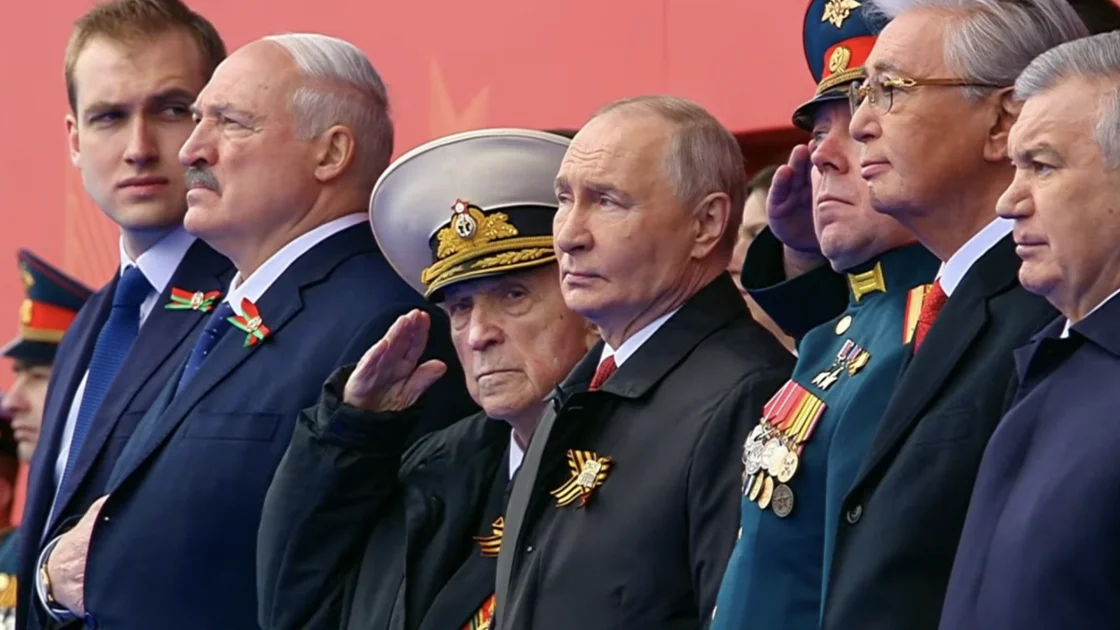
Amid the breakdown of the ceasefire, Russian President Vladimir Putin suggested that the war in Ukraine may be “coming to an end.” Speaking after the scaled-back Victory Day parade in Moscow on May 9, Putin said he was willing to negotiate new security arrangements for Europe and named former German Chancellor Gerhard Schröder as his preferred negotiating partner—a choice likely to be rejected by Ukraine and the EU. However, Putin conditioned direct talks with Zelenskyy on the prior settlement of peace terms, stating that a meeting would be the “final point, not the negotiations themselves.”
Despite Putin’s conciliatory tone, other Kremlin officials downplayed hopes for a quick resolution. Kremlin spokesperson Dmitry Peskov said that reaching a peace agreement is a “very long road with many complicated details,” while aide Yuri Ushakov insisted that no new trilateral talks could begin until Ukrainian forces withdraw from the Donetsk region—a condition Kyiv has rejected.
Why It Matters: The Stakes for Ukraine and Europe
The failed ceasefire and mixed signals from Moscow highlight the persistent volatility of a conflict that has raged for over four years. Trump’s mediation effort, part of a broader US-led push for peace, has so far failed to halt the fighting. Analysts suggest that the three-day pause was primarily a diplomatic gesture, with both sides using the lull to reposition and rearm.
For Ukraine, the continued hostilities mean ongoing casualties and destruction. Zelenskyy’s government remains firm that it will not cede territory under Russian occupation, while Kyiv insists on full sovereignty as a precondition for any final settlement. The war has also strained Europe’s energy markets and security architecture, pushing the European Union to consolidate ranks after the departure of Hungarian Prime Minister Viktor Orbán.
Russia’s War Effort Stalls
Meanwhile, Russia’s military progress has stalled despite massive expenditures of money and lives. ISW assessments confirm that Russian forces have conducted only limited offensive operations, with both sides exchanging artillery and drone strikes. Ukrainian drones have struck deep inside Russian territory, even threatening the safety of the Victory Day parade in Red Square. This year’s parade featured no heavy military equipment and was attended by fewer foreign dignitaries than last year’s 80th-anniversary event, signaling waning international support for Moscow’s narrative.
Oil prices have risen due to the ongoing US-Iran conflict, temporarily filling Russian coffers, but the economic outlook remains grim. Trump’s decision to remove sanctions on some Russian oil has provided a short-term boost, but long-term growth is constrained by war-related inflation and labor shortages.
Perspective: Broader Implications and Trends
Putin’s vague suggestion that the war could end soon may be an attempt to project confidence while buying time. However, neither side appears ready to make the concessions necessary for a durable peace. The Kremlin remains committed to its maximalist goals, including the full occupation of Donetsk and Luhansk regions, while Ukraine refuses to accept any deal that legitimizes Russian annexation.
The failure of the US-mediated ceasefire raises questions about Trump’s ability to broker a lasting resolution. With the EU united and no major foreign heavy hitters attending the Victory Day parade, Russia’s image as a global power has suffered. The war has also exposed the limits of US military might, as the inconclusive conflict against Iran has demonstrated that even superpowers struggle to achieve decisive victories.
In a world where internet infrastructure is increasingly a target, the conflict has highlighted the vulnerability of communication grids. For instance, recent solar flare warnings remind us how digital disruption can compound wartime chaos. As war fatigue grows on both sides, the path to peace remains elusive, with no clear end in sight beyond Putin’s calculated rhetoric.
Comments