
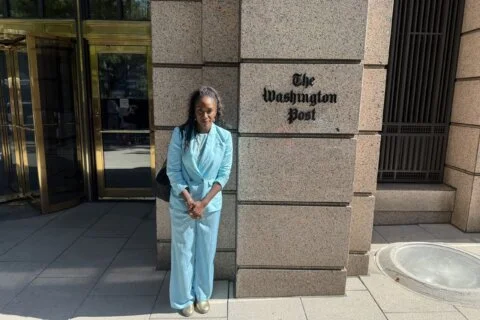
Arbitrator Orders Washington Post to Reinstate Columnist Fired Over Charlie Kirk Posts
An independent arbitrator has ordered the Washington Post to reinstate opinion columnist Karen Attiah, who was fired in September 2025 over social media posts about the killing of conservative activist Charlie Kirk. The ruling, issued on Monday, found that the Post violated Attiah's rights as a union-protected employee and lacked "good and sufficient cause" for her termination. The newspaper must also compensate Attiah for lost wages and benefits.
Attiah, who spent 11 years at the Post as an editor and columnist focusing on race, gender, and global human rights, called the decision a validation of her work. "This decision confirms what we've said from the start: I was doing my job as an opinion journalist, and doing that job is not misconduct," she said in a statement. The Washington-Baltimore News Guild, which backed Attiah, and the Democracy Defenders Fund, a legal advocacy group co-founded by Norm Eisen, hailed the ruling as a landmark for press freedom. A Post spokesperson said the company respects the arbitration process but declined to comment on a possible appeal.
The case stems from posts Attiah made on her personal Bluesky account on September 10, 2025, the day Kirk was shot and killed at a Utah university. She wrote: "Refusing to tear my clothes and smear ashes on my face in performative mourning for a white man that espoused violence is… not the same as violence." In another post, she added: "Part of what keeps America so violent is the insistence that people perform care, empty goodness and absolution for white men who espouse hatred and violence." The Post argued these comments violated its social media policy, which prohibits employees from harming the newspaper's editorial integrity or journalistic reputation, and constituted "gross misconduct." Managers also claimed that her reference to "a white man" could endanger the physical safety of Post employees.
Context: A Year of Fallout from Kirk's Killing
Kirk, the co-founder of Turning Point USA, was a prominent conservative voice known for his provocative statements on race, immigration, and religion. His death sparked an immediate and intense reaction across the political spectrum. On the right, influencers like Laura Loomer sought to punish anyone who did not express sufficient mourning. Attiah was among several journalists and public figures who faced professional repercussions for their commentary.
In the months that followed, the conservative campaign to police speech began to unravel. Several fired employees won reinstatement or settlements, and Attiah's case became a flashpoint in the broader debate over free expression in the workplace. The arbitrator's record included a revealing detail: the Post's own security team had flagged Attiah as a recurring target of threats since 2018, with dozens of threat assessments and at least one in-person security detail. This undercut the Post's argument that her posts endangered others, as she herself had long been the subject of violent rhetoric from right-wing figures.
The ruling also highlighted the role of labor solidarity. The Washington-Baltimore News Guild had backed Attiah throughout the process, and the arbitration was seen as a test of whether union protections could withstand political pressure. Norm Eisen, who co-founded the Democracy Defenders Fund, called the decision "a thunderous win" for Attiah and "a landmark decision for every journalist who refuses to be silenced."
Perspective: A Turning Point in Cancel Culture Battles
The outcome of Attiah's case signals a broader shift in how employers and courts are handling politically charged dismissals. As the one-year anniversary of Kirk's death approaches, the right's cancel culture campaign appears to have lost momentum. Legal experts note that arbitrators are increasingly scrutinizing whether companies have legitimate cause for termination or are capitulating to online mobs. This case could set a precedent for other journalists and workers who face retaliation for expressing personal opinions on social media.
It also underscores the fragility of free speech protections in the workplace. While the First Amendment limits government action, private employers have wide latitude—unless union contracts or labor laws intervene. Attiah's reinstatement is a reminder that collective bargaining agreements can serve as a critical defense against political firings. The ruling may encourage more workers to join unions and more journalists to push back against editorial pressure.
As the media landscape remains polarized, the case highlights the ongoing tension between institutional brand protection and individual expression. For the Washington Post, the loss is a reputational blow. For Attiah, it is a personal vindication after a year of uncertainty. For the public, it raises enduring questions about who gets to speak, what they can say, and at what cost. The decision may not end the culture wars over Charlie Kirk's legacy, but it has drawn a clear legal line: employers cannot use thin justifications to silence their employees under political pressure.
Meanwhile, Tyler Robinson, the accused assassin, faces a separate legal battle as his lawyers seek to ban cameras from his September 1 hearing, arguing that the case should not be treated as a reality TV show. That trial will likely keep Kirk's name in the headlines for months to come, but the Attiah ruling offers a counterpoint—a moment where the forces of retribution met their match in the form of labor law and free press advocacy.
Comments