
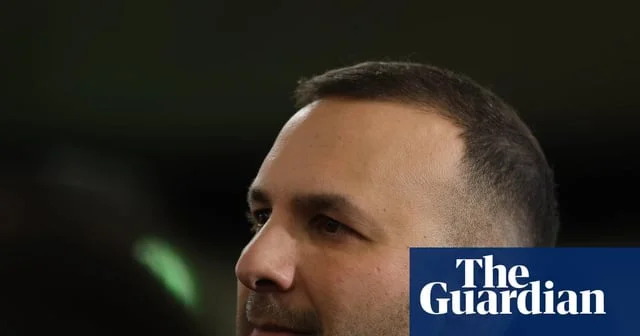
Green leader Zack Polanski fabricated Ministry of Justice role, new evidence shows
Green Party leader Zack Polanski is facing fresh questions about his professional credibility after The Telegraph revealed that he falsely claimed to have worked at a non-existent committee within the Ministry of Justice. The revelation comes as Polanski’s party celebrates historic gains in local elections but faces mounting scrutiny over his leadership, judgment, and the antisemitism allegations that have dogged the Greens in recent weeks.
According to a report published late on May 10, Polanski stated in biographical materials that he had served on a “Ministry of Justice committee” – a body that officials confirmed never existed. The claim has been removed from his official profiles after inquiries from the press, but the episode has added fuel to a growing fire of criticism that the 43-year-old Jewish activist is a “lightweight opportunist” whose political ascent has been built on questionable assertions.
The Ministry of Justice declined to comment on the specifics, but sources close to the department told The Telegraph that no record of Polanski’s purported role could be found. Polanski’s office has not yet issued a detailed response, though the party previously acknowledged he had “misspoken” about other aspects of his career, including earlier false claims about having been a full member of the National Council for Hypnotherapy and having served as a Red Cross spokesman.
A pattern of embellished credentials
This is not the first time Polanski has faced allegations of stretching the truth about his résumé. In recent weeks, it emerged that he had written online that he was a spokesman for the Red Cross, a claim the organisation itself rejected. Polanski later admitted he had been “wrong” about the Red Cross role, blaming the error on a “mix-up” in his memory.
Similarly, his claim of full membership in the National Council for Hypnotherapy – where he had once worked as a practitioner – was disputed by the body, which said he had only been an affiliate member. Polanski’s shifting explanations have given ammunition to his critics, who argue that the Green Party leader is a “self-declared populist” who prioritises media attention over accuracy.
“Polanski is a lightweight political opportunist,” one reader of The Independent wrote in a comment published May 9, reflecting a broader sentiment. “His ‘gonzo communication style’ needs to be treated with caution and fact-checking.”
Historic election gains collide with credibility crisis
The timing of the Ministry of Justice revelation could hardly be worse for Polanski. Just days earlier, the Greens celebrated one of their most successful local election performances ever, winning the Hackney mayoralty for the first time, taking control of Norwich City Council, and making gains across London and Oxford. The results were widely seen as a sign that Britain’s two-party system is fracturing, with voters – especially younger, left-leaning Britons – abandoning Labour under Sir Keir Starmer for the Greens’ more radical platform.
Yet the electoral triumph has been overshadowed by a cascade of negative headlines. Polanski’s approval ratings have dropped 14 points in the past week, according to a More in Common poll, as controversies over antisemitism within the party, his own past statements, and now his CV have eroded public confidence.
“The Greens have shockingly proved that anti-Semitism is a vote-winner,” wrote Jake Wallis Simons in The Telegraph on May 8, arguing that Polanski’s party has become “a seedbed for the political ambitions of every jihadist, Islamist and progressive fanatic in Britain.” The claim is hotly disputed by Green supporters, who say the party is being unfairly smeared, but the data is sobering: more than 30 Green candidates were under internal investigation for antisemitic comments ahead of the May 7 elections, and two London candidates were arrested on suspicion of stirring up racial hatred online.
Polanski’s response to antisemitism accusations
Polanski, who is Jewish and has described himself as “certainly not a Zionist,” has repeatedly said that antisemitism is “completely unwelcome” in the Green Party. He has vowed to “get a grip” on the issue – a promise he first made seven years ago, according to a Telegraph investigation published May 7. Critics accuse him of “breathtaking hypocrisy,” pointing to his own record of sharing posts that Metropolitan Police commissioner Sir Mark Rowley described as “inaccurate and misinformed” in the aftermath of an attack on a synagogue in Golders Green.
Jewish members of the Green Party, whose numbers are reportedly growing, have also objected to some of the party’s moves against Israel, saying that the leadership’s focus on anti-Zionism sometimes crosses into antisemitic tropes. Polanski himself has said that “no country has the right to exist – including Israel,” a statement that drew sharp condemnation from Jewish leaders and lawmakers across the political spectrum.
A divided electorate and a fragmented political landscape
The controversy around Polanski is part of a larger story about the realignment of British politics. The May 7 local elections delivered a fragmented result: Labour suffered heavy losses, Reform UK surged under Nigel Farage, and the Greens established themselves as a genuine force in urban centres. But whereas Reform’s rise has been met with relatively muted media scrutiny of its donors – including a secret £5 million donation from crypto billionaire Christopher Harborne – the Greens have faced an intense spotlight on their leader’s past and the conduct of their candidates.
“It is sometimes difficult to explain to the layperson what ‘news’ is,” wrote one commentator in The Independent on May 10, contrasting the intense scrutiny of Polanski’s council tax arrangements with the relative silence around Farage’s foreign-based donors. “Maybe we should call it two-tier journalism. The harshest scrutiny for people we don’t approve of. A blind eye for the ones we don’t mind.”
That perception of double standards has energised Polanski’s supporters, who argue that he is the victim of a coordinated “smear campaign” by a media establishment that fears the Greens’ progressive agenda. They point to the party’s success in Hackney, where Zoë Garbett won the mayoralty, and to its strong showing in Norwich as proof that voters are not deterred by the bad headlines.
The broader trends shaping the Greens’ rise
Polanski’s Greens have benefited from a convergence of factors: disenchantment with Labour’s centrist turn under Starmer, a surge in youth voter turnout driven by anger over the Gaza war, and a political moment that rewards bold, uncompromising stances. The party’s platform – which includes a wealth tax, a Green New Deal, and a pro-Palestinian foreign policy – resonates with a cohort of voters who feel abandoned by both main parties.
But the same forces that have propelled the Greens forward have also made them vulnerable to accusations of extremism. The entry of former Momentum and Corbynite activists into the party has raised fears among moderates that the Greens could be taken over by factions that tolerate or even encourage antisemitic rhetoric. As one Independent reader put it: “There are increasing signs of entryism from Momentum and the Corbynite left, bringing their intolerant and unpleasant views with them. It won’t end well, because this group are always bad news.”
The party’s constitution, which limits leaders to two-year fixed terms, may offer a safety valve. But with Polanski’s poll numbers falling and the Ministry of Justice story dominating the news cycle, the question is whether the Greens can sustain their momentum without a leader who commands broad trust.
What the Ministry of Justice revelation means for Polanski’s future
The false claim about working at the Ministry of Justice is, on its face, a small fabrication. But in the context of multiple other embellishments – the Red Cross, the hypnotherapy council, and earlier disputes about his council tax payments – it paints a picture of a politician who is careless with facts. For a leader who has built his brand on authenticity and speaking truth to power, such revelations are particularly damaging.
Political analysts note that the British electorate has historically punished politicians who are caught lying about their CVs, regardless of party. The cases of Michael Foot’s misstated war record or Boris Johnson’s many exaggerations show that the issue can linger, eroding public trust over time. For Polanski, who already faces a credibility gap with moderate voters, the Ministry of Justice affair could be the straw that breaks the camel’s back.
Yet the Greens’ electoral base may not care. Many of the party’s new supporters are drawn to its radical policies on Gaza, climate, and inequality, not to the fine print of its leader’s résumé. If Polanski’s approval ratings continue to slide, however, internal party pressure could mount for him to step aside before the next general election. The two-year leadership term means a leadership contest is never far away.
A moment of reckoning for the Greens
For now, the Green Party is riding high on its best-ever local election performance, but the clouds are gathering. The Ministry of Justice revelation, coming on top of the antisemitism scandals and Polanski’s own rhetorical missteps, has given ammunition to critics who argue that the party is not fit to govern. The next few weeks will be crucial: if Polanski can weather the storm and focus attention on policy, the Greens may yet consolidate their gains. If not, the party could find itself torn between its populist momentum and the need for a leader who can command respect beyond the progressive bubble.
As one Telegraph columnist put it: “The Greens’ ascent is a code red for ordinary voters who already fear the country is in trouble.” Whether that code red translates into lasting power or a spectacular flameout depends, in large part, on whether Zack Polanski can rebuild trust – starting with the truth about his own past.
Comments