
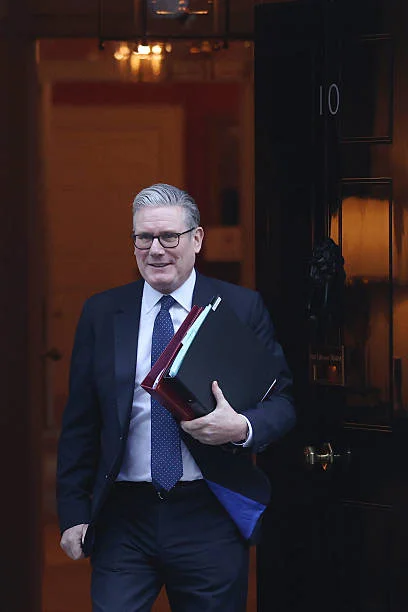
Burnham and Badenoch Clash Over Defence Spending at PMQs
Prime Minister Andy Burnham faced Conservative leader Kemi Badenoch at Prime Minister's Questions on September 9, 2026, in a session dominated by defence spending and national security. Badenoch pressed Burnham on whether he would commit to spending 3% of GDP on defence by 2030, accusing him of being "unbelievable" for failing to set out clear plans. She argued that with Argentina claiming the Falklands and Russia's ongoing invasion of Ukraine, the UK faces immediate threats, and questioned: "Is the Prime Minister unable or is he just unwilling?"
Burnham defended his position, stating that national security "can't come at the expense of social security." He told the Commons that Labour MPs "will not be forced to choose between the two," rejecting Conservative proposals to slash housing benefits to fund defence. The Tories quickly branded his refusal "shameful," with a party spokesman saying: "The Prime Minister is prioritising the ballooning benefits bill over our national security. This is not leadership, it is surrender."
PMQs also touched on the UK's recent sanctions on illegal Israeli settlements in the West Bank, with Burnham stressing the need to act against injustice and the risk of the two-state solution collapsing. He also confirmed a mental health strategy will be presented to Parliament before Christmas.
Why This Matters: The Defence Spending Debate
The clash highlights a growing rift between the government and opposition over how to fund the UK's defence commitments. Badenoch's focus on the 3% GDP target reflects Conservative efforts to position themselves as the party of national security, especially amid global instability. The Falklands and Ukraine situations underscore the urgency, but Burnham's insistence on protecting welfare spending suggests a fundamental disagreement over priorities.
Burnham argued that defence and social security are not mutually exclusive, but the Tories see it differently. The Conservative Party's social media post, "CONFIRMED: Labour are the welfare party," signals an intention to weaponise this issue in future elections. The debate also comes ahead of an anticipated budget, with speculation over how the government will balance spending commitments.
Economically, the UK faces borrowing pressures, and finding additional funds for defence without cutting elsewhere is a significant challenge. Burnham's position may appeal to Labour's core supporters, but it leaves him vulnerable to accusations of weakness on defence, a charge Badenoch is keen to press.
Sanctions on Israeli Settlements Add to PMQs Tension
Another key topic was the UK's decision to impose sanctions on illegal Israeli settlements in the West Bank, announced by Foreign Secretary Ed Miliband earlier this week. The move, backed by 12 countries, includes banning imports from settlements and has drawn sharp criticism from Israel, which responded with counter-measures including closing the UK consulate in Jerusalem.
At PMQs, Burnham defended the action, saying: "Leadership is about taking action where there is injustice, where we need to correct unfairness." He expressed concern over "the risk of the collapse of the two-state solution," adding that it "is dying before our eyes, and that requires us to have the courage to act."
The sanctions have also provoked domestic backlash, with Britain's chief rabbi, Sir Ephraim Mirvis, calling it a "truly dark day for British Jews" and warning it could embolden antisemitism. Miliband rejected this, insisting the measures were "the right thing to do" in response to settler violence.
The UK's stance reflects a broader shift in international opinion toward Israel, but it carries diplomatic and economic risks. US ambassador to Israel Mike Huckabee threatened consequences for British businesses, though official figures show UK pharmaceutical imports from Israel are relatively small.
Wider Implications: Welfare, Defence, and Foreign Policy
Today's PMQs reveals a government trying to balance domestic social commitments with international security demands. Burnham's refusal to choose between defence and welfare sets a new precedent, but it remains unclear how he will meet NATO commitments without making unpopular cuts. His critics argue that in a volatile world, strength requires hard budget choices, while supporters see his stance as a principled defence of the welfare state.
The Israel sanctions further complicate matters, as the UK navigates its post-Brexit role on the world stage. Burnham's rhetoric about acting on injustice may resonate with some voters, but it risks alienating allies and could have economic repercussions. As the government prepares for future budgets, these tensions will likely intensify, making PMQs a key battleground for defining the nation's priorities.
Ultimately, today's session underscores a pivotal moment: how the UK reconciles its social values with its security needs will shape its trajectory for years to come. Both leaders have staked out clear but opposing visions, leaving voters to judge whose approach best serves the country's interests.
Comments