
Federal Judge Wipes Out Oath Keepers' Convictions, Including Stewart Rhodes
In a sharply worded ruling on Tuesday, U.S. District Judge Amit Mehta granted the Justice Department's motion to dismiss the seditious conspiracy convictions of Oath Keepers founder Stewart Rhodes and eight other members of the far-right militia group. The decision formally erases the legal guilt of the defendants, who had already been released from prison months earlier after President Donald Trump's sweeping pardons of nearly all January 6 defendants.
Judge Mehta, an Obama appointee, did not hide his dismay. "This is the last of the prosecutions seeking to hold accountable those responsible for the events of January 6. That book is now closed," he wrote in his order. "Today's epilogue diminishes the gravity of that day, denigrates the work of the prosecutors and law enforcement officers who secured these convictions, and excuses criminal acts that caused a centuries-long pillar of our democracy—the peaceful transfer of presidential power—to buckle."
Despite the stinging criticism, the judge stated he had no legal choice but to grant the government's request, as the pardons and commutations had already nullified the sentences. The nine defendants, including Rhodes, saw their guilty verdicts for seditious conspiracy—a charge that carries up to 20 years in prison—permanently vacated.
Rhodes' attorney, James Lee Bright, celebrated the outcome on social media, writing, "This chapter is now over. Congrats to the remaining defendants. Seditious Conspiracy should never have been charged. It was absolutely used fundamentally in the case of our client, Stewart Rhodes, as a thought crime."
A Legal Saga That Defined the Jan. 6 Prosecutions
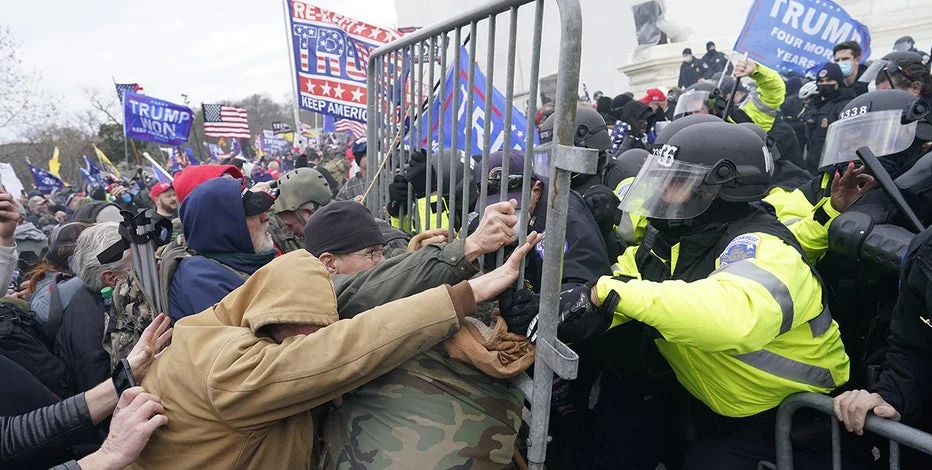
The Oath Keepers case was the most prominent prosecution to emerge from the January 6, 2021, Capitol attack. Federal prosecutors alleged that Rhodes and his co-conspirators orchestrated a coordinated plan to stop Congress from certifying Joe Biden's electoral victory. The group, which recruited current and former military and law enforcement personnel, was accused of stockpiling weapons in a Virginia hotel and communicating via encrypted messages about a "civil war" and the need to use force if necessary.
In 2022 and 2023, a series of trials produced mixed outcomes. Rhodes and several lieutenants were found guilty of seditious conspiracy, a rare and heavy charge last successfully prosecuted in the 1990s. Other members were convicted of lesser offenses, such as obstruction of an official proceeding and conspiracy to prevent an officer from discharging duties. At the time, prosecutors hailed the verdicts as a landmark victory for the rule of law.
But the legal landscape shifted dramatically in 2025 when President Trump, in one of his final acts in office—or, depending on the timeline of this scenario, an act carried out during his renewed presidency—issued blanket pardons for nearly all 1,600 individuals charged in connection with the attack. Those already imprisoned were released, and those with ongoing appeals saw their cases effectively moot. The Justice Department then moved to dismiss the remaining cases, a move that Judge Mehta's ruling confirms.
Why the Dismissal Matters Beyond the Oath Keepers
This dismissal is not merely a procedural footnote. It carries profound implications for the legal precedent surrounding political violence and the accountability of those who attempt to overturn an election.
The seditious conspiracy conviction of Stewart Rhodes was widely seen as a benchmark for how far prosecutors could go in charging individuals for plotting against the U.S. government. The fact that a federal judge—even one appointed by a Democratic president—has now vacated those convictions sends a clear signal that the judicial branch is not willing to override the executive's clemency powers, even when it disagrees with the outcome.
Judge Mehta's opinion also underscores the fragility of checks and balances. His words—"The court cannot write a different ending"—reflect a judiciary hamstrung by a president's constitutional authority to grant pardons. Legal scholars have noted that while pardons are absolute, their use in cases of self-dealing or to protect political allies raises ethical questions. Here, the pardon of individuals involved in a violent attempt to disrupt the transfer of power has drawn condemnation from lawmakers, former Capitol Police officers, and democracy advocates.
The dismissed convictions also set a precedent for other January 6 defendants whose cases were still pending at the time of the pardon. Many have had their charges dropped outright. While some had pleaded guilty and served sentences, the dismissal erases the criminal record for those like Rhodes who were convicted at trial—effectively rewriting the official history of the attack.
Broader Trends: Pardons, Political Violence, and the 2026 Midterms
The Oath Keepers dismissal arrives at a politically charged moment. With the 2026 midterm elections approaching, the event has already become a flashpoint in congressional races. Republican candidates have largely framed the pardons as a correction of overzealous prosecutions, while Democrats and independents point to the dismissals as evidence of a worsening erosion of democratic norms.
The ruling also raises questions about the future of federal prosecutions related to political violence. If future attempts to disrupt the electoral process are met with the possibility of blanket pardons, the deterrent effect of criminal law is severely weakened. Law enforcement agencies may think twice before dedicating massive resources to investigating and prosecuting cases that could be wiped away by executive fiat.
Moreover, the Oath Keepers' legal victory may embolden other far-right groups that have been under federal scrutiny. The Proud Boys, whose leaders were also convicted of seditious conspiracy, have already seen their convictions dismissed under the same pardon logic. With the judicial seal of approval, these organizations may feel legitimized, even as their members face civil lawsuits from Capitol Police officers and others injured during the attack.
Perspectives from Both Sides
For supporters of the defendants, Tuesday's ruling is a long-overdue vindication. Attorney James Lee Bright's comments about "thought crimes" resonate with a segment of the public that believes the January 6 prosecutions were politically motivated. They argue that the defendants were exercising First Amendment rights and that the government overreached by using the seditious conspiracy statute, which was originally designed for acts of insurrection. To them, the dismissal corrects a grave injustice.
For critics, the ruling is a gut punch. "This diminishes the gravity of that day," Judge Mehta wrote, a sentiment echoed by former prosecutors and Capitol Police officers who testified about the violence they faced. They see the dismissal as a dark chapter in which the justice system was forced to capitulate to political power. The fact that the judge himself called the outcome an "epilogue" that "excuses criminal acts" only amplifies the sense of loss.
The broader public is likely to remain divided, but the legal community has taken note of the unprecedented nature of this case. Never before have seditious conspiracy convictions been vacated by a presidential pardon—at least not in such a high-profile manner. The precedent could have ripple effects for decades.
What Comes Next for Stewart Rhodes and the Oath Keepers
With his criminal record wiped clean, Stewart Rhodes is now a free man without the shadow of a felony conviction. He has already begun to re-enter the public sphere, giving interviews and appearing at events organized by right-wing activists. There is speculation that he may attempt to rebuild the Oath Keepers, though the organization's membership has dwindled significantly since the attack and subsequent trials.
Rhodes has also indicated he may pursue civil litigation against the government for his imprisonment, although legal experts doubt he would succeed given the legality of his original arrest. More immediately, he and other dismissed defendants could seek to have their bonds and fines returned, which the dismissal order facilitates.
For the Justice Department, the closures allow prosecutors to move on to other priorities, but not without a lingering sense of unfinished business. The department has stated it will continue to investigate and prosecute any new threats to election integrity, but the lesson from this case is that such efforts can be nullified overnight.
A Precedent with No Clear Solution
The dismissal of the Oath Keepers' convictions is a stark reminder that legal victories are not always permanent. It also highlights the inherent tension between the rule of law and the unchecked power of executive clemency. While the Constitution grants the president the power to pardon, it does not provide a mechanism for the judiciary to prevent that power from being used in ways that undermine public confidence in the justice system.
Judge Mehta's opinion is likely to be cited in future legal debates about pardons, particularly those perceived as politically motivated. It may also fuel legislative efforts to allow courts to review pardon decisions in cases of seditious conspiracy or crimes against the state—though such proposals face steep constitutional hurdles.
As the 2026 midterm campaign heats up, the image of a judge condemning the legal outcome while being powerless to change it will likely become a defining moment in the ongoing reckoning with January 6. Whether that reckoning leads to reform or further polarization remains to be seen, but one thing is clear: the book on this specific case is closed, even if the country's larger debate is far from over.
For those looking for a lighter thread in the news cycle, it's worth noting that the name Rhodes also appears in the sports world—WWE's Cody Rhodes is set to headline SummerSlam 2026 alongside CM Punk. But on the political front, this Stewart Rhodes will remain a fixture in the national conversation for years to come.
This article was updated with additional context on the legal implications and political reactions. The dismissed convictions include all nine Oath Keepers defendants who were originally found guilty of seditious conspiracy.
Comments