
Major Fire Engulfs Nottingham City Centre Residential Property
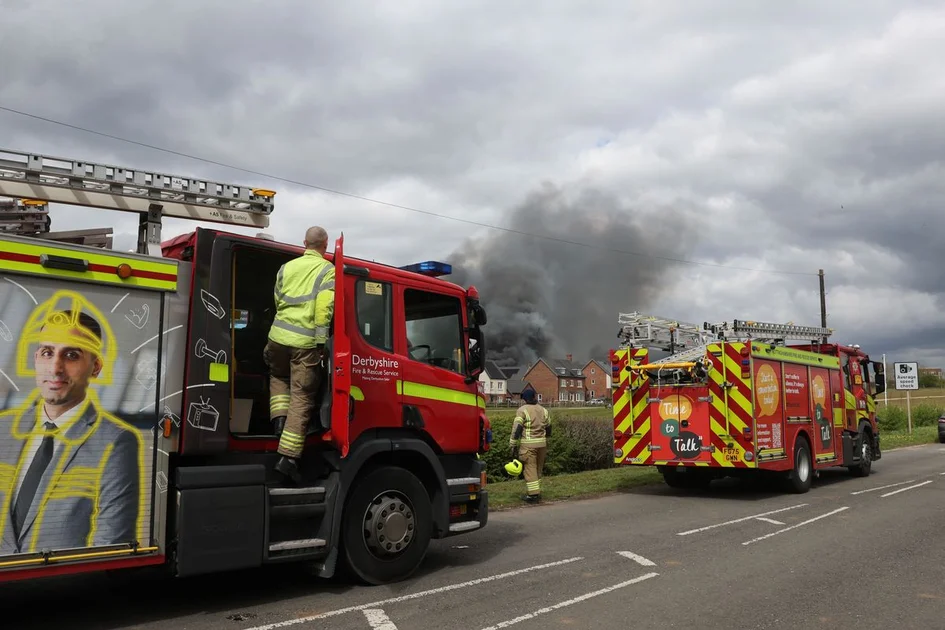
A major fire broke out at a residential property on Market Street in Nottingham city centre late Monday evening, prompting a large-scale emergency response and widespread disruption. Nottinghamshire Fire and Rescue Service confirmed that 12 fire engines were deployed to tackle the blaze, which was first reported shortly after 10:00 pm on October 5.
Residents were evacuated from the building, located near the Theatre Royal Nottingham at the corner of Upper Parliament Street. A crowd of approximately 30 to 40 onlookers gathered near the police cordon as thick smoke billowed into the night sky, blanketing the city centre. Emergency services remain at the scene, and authorities have urged the public to avoid the area.
Road Closures and Transit Chaos
Several major thoroughfares have been closed to facilitate emergency operations, including Upper Parliament Street, Lower Parliament Street, Market Street, King Street, and Queen Street. Nottingham Express Transit (NET) trams have been suspended in both directions between the Theatre Royal and Market Square stops. Nottingham City Transport has rerouted multiple bus services, directing commuters to alternative stops such as Angel Row, Mount Street, Canal Street, and Victoria Centre.
In a statement posted on social media, Nottinghamshire Fire and Rescue Service said: "We are currently attending a residential property on Market Street, Nottingham. Please avoid the area, and if local residents are affected by smoke, keep doors and windows closed." By 10:55 pm, the service confirmed that 12 fire engines remained on scene, battling the flames.
No Injuries Reported as Cause Remains Unknown
As of early Tuesday morning, no injuries have been reported, and the cause of the fire has not yet been determined. Fire crews continue to work to extinguish the blaze, and an investigation is expected to follow once the scene is secure. The scale of the response—12 fire engines—underscores the severity of the incident, which has caused significant disruption to one of Nottingham's busiest central districts.
Context: A City Centre in Disruption
The fire has struck at the heart of Nottingham's commercial and cultural hub, an area typically bustling with evening activity. Market Street and the surrounding roads are home to numerous businesses, restaurants, and residential properties, making the closure of key arteries a logistical challenge for emergency services and a major inconvenience for residents and commuters.
The evacuation of a residential building near the Theatre Royal highlights the potential danger to those living in the affected property. While no injuries have been reported, the psychological impact on displaced residents and the broader community is significant. The fire also raises questions about fire safety in older city-centre buildings, many of which may have outdated infrastructure.
This is not the first time Nottingham has faced a major fire incident. In recent years, the city has seen several notable blazes, including a 2018 fire at a student accommodation block and a 2020 fire at a warehouse. Each incident has prompted reviews of safety protocols and emergency response strategies. The current fire will likely reignite discussions about the adequacy of fire prevention measures in densely populated urban areas.
Perspective: Broader Implications for Urban Safety
The Nottingham fire is a stark reminder of the vulnerabilities inherent in urban environments, where aging infrastructure and high population density can amplify risks. As cities continue to grow, the demand for robust emergency response systems and stringent building safety regulations becomes ever more critical. The swift mobilisation of 12 fire engines demonstrates the effectiveness of Nottinghamshire Fire and Rescue Service's response capabilities, but it also highlights the resource-intensive nature of tackling large-scale urban fires.
Beyond the immediate logistical disruptions, the incident may have longer-term implications for local businesses and the city's economy. The closure of major roads and suspension of tram services will inevitably impact trade in the short term, particularly for establishments in the affected zone. Moreover, the evacuation of residents could lead to temporary housing challenges and insurance claims.
The fire also underscores the importance of community resilience and communication during emergencies. Authorities have effectively used social media to disseminate safety advice, but the incident will test the city's ability to manage recovery and support affected individuals. As Nottingham recovers, lessons learned from this event will likely inform future urban planning and emergency preparedness strategies.
In a broader context, the fire adds to a growing list of urban emergencies across the UK in recent years, from the Grenfell Tower tragedy to smaller-scale incidents. Each event reinforces the need for continuous improvement in fire safety standards and emergency response coordination. For now, the focus remains on containing the blaze and ensuring the safety of residents and responders.
As the situation develops, further updates are expected from Nottinghamshire Fire and Rescue Service and local authorities. Residents are advised to keep doors and windows closed if affected by smoke and to avoid the area until it is declared safe.
Comments