
Final Count Confirms Deadlock
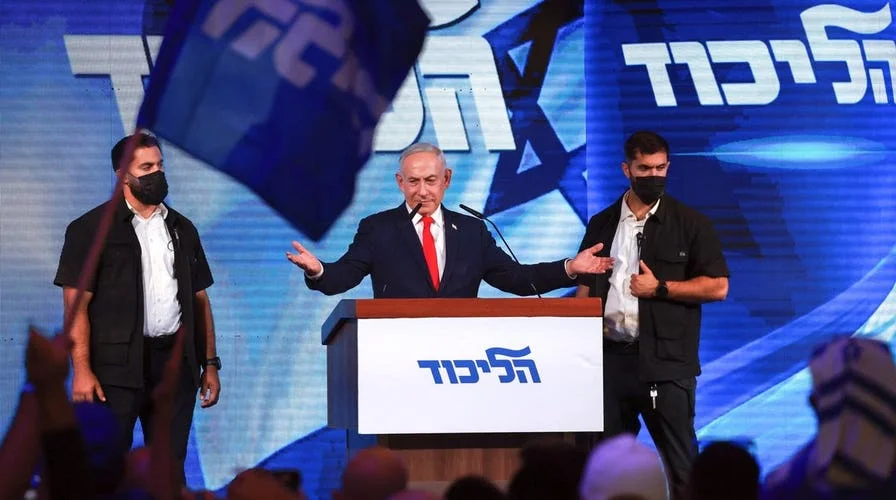
Israel's Central Elections Committee published the final results of Tuesday's Knesset election on Thursday, confirming that Prime Minister Benjamin Netanyahu's Likud remains the largest single party with 27 seats, but his broader right-religious bloc fell short of a parliamentary majority. The full count, which included the last double-envelope absentee ballots, put Netanyahu's bloc at 53 seats and the opposition bloc at 48 — both well below the 61 needed to form a government without support from outside their camps.
The Arab-led parties emerged as the biggest story of the night, winning a record combined 19 seats. The Joint List took 11 and Ra'am secured eight, giving the Arab sector unprecedented potential influence over the formation of Israel's next government. Opposition leader Gadi Eisenkot's Yashar party won 21 seats, Naftali Bennett's B'Yachad 12, Yair Golan's The Democrats eight and Avigdor Liberman's Yisrael Beytenu seven. Within Netanyahu's bloc, United Torah Judaism and Otzma Yehudit each won seven, while Shas and the Religious Zionist Party took six apiece.
Fraud Allegations and Shin Bet Probe
The result was announced amid rising tensions over allegations of foreign interference. Central Elections Committee chairman Justice Noam Sohlberg directed Shin Bet Director David Zini to investigate suspicions that foreign entities — potentially including Qatar and Turkey — funneled money into Israel to influence voter turnout in the Arab sector. The committee said the integrity of voting at polling stations had been maintained.
Likud has claimed the election was "stolen" following Sohlberg's order, while Democrats leader Yair Golan accused Netanyahu of seeking to delegitimize the results and Arab voters. Ayman Odeh, chairman of Hadash-Ta'al, said in a statement that despite "racism, exclusion and delegitimization," Arab citizens had turned out in large numbers and would not give up the fight for equality.
Coalition Arithmetic Leaves Netanyahu Boxed In
The arithmetic is stark: with 53 seats, Netanyahu cannot assemble a majority without the Arab parties, which have historically not been part of right-wing coalitions, or without breaking apart the opposition bloc. The opposition, at 48, likewise cannot reach 61 without the Arab parties — a scenario that would require unprecedented cooperation between Jewish centrist and left-wing factions and Arab-led lists.
The deadlock marks a dramatic shift from the pre-election narrative. Most television polls had shown Likud receiving significantly fewer seats, with other parties in Netanyahu's bloc, including Shas and Otzma Yehudit, projected to gain more. Instead, Likud held firm as the largest party, but its partners underperformed, leaving the bloc short. The result echoes the protracted coalition crises that have dominated Israeli politics in recent years, though the record Arab turnout adds a new dimension.
Arab Parties as Potential Kingmakers
The Joint List and Ra'am have never been positioned to play such a central role in government formation. Their combined 19 seats give them the ability to block or enable a coalition, though deep ideological divides with Jewish parties — particularly on issues relating to the occupation and Palestinian rights — make formal participation unlikely. Still, the outcome forces a reckoning with the political weight of Israel's Arab minority, which makes up roughly a fifth of the population.
A Nation at a Crossroads
The election was held against the backdrop of deep divisions over the October 7 reckoning, judicial overhaul tensions and the ongoing threat from Iran. Israel had braced for a pivotal election as Netanyahu faced a serious challenge from Eisenkot, the former army chief who emerged as the wild card of the campaign. The final results suggest that while Netanyahu remains Israel's dominant political figure, his path to power has narrowed.
The foreign funding investigation threatens to cast a shadow over the legitimacy of the outcome and could complicate coalition talks. Netanyahu's allies have seized on the probe to question the Arab parties' gains, while opponents accuse the prime minister of undermining faith in democratic institutions. The Shin Bet's findings, expected in the coming days, may determine whether the results are challenged further.
What Happens Next
President Isaac Herzog is expected to begin consultations with party leaders next week to determine who has the best chance of forming a government. Netanyahu will likely argue that as leader of the largest party he should be given the first mandate, but the numbers do not favor him. The opposition may instead attempt to assemble a coalition with Arab support from outside the government — a fragile arrangement that would require concessions on budget and policy issues.
A Fragile Political Landscape
Regardless of who succeeds in forming a government, the next Knesset will be deeply fractured. The record Arab representation and the near-even split between blocs suggest that Israeli politics remains locked in a cycle of instability. For Netanyahu, the result is both a personal victory — Likud's continued dominance — and a strategic defeat, as his right-religious alliance cannot command a majority. The coming weeks will test whether Israel's political system can break the deadlock or whether the country is heading toward another election in the near future.
For now, the only certainty is that the final count has confirmed a deadlock, with the Arab parties holding the balance of power and the Shin Bet probe adding a volatile new element to an already unpredictable political moment.
Comments