
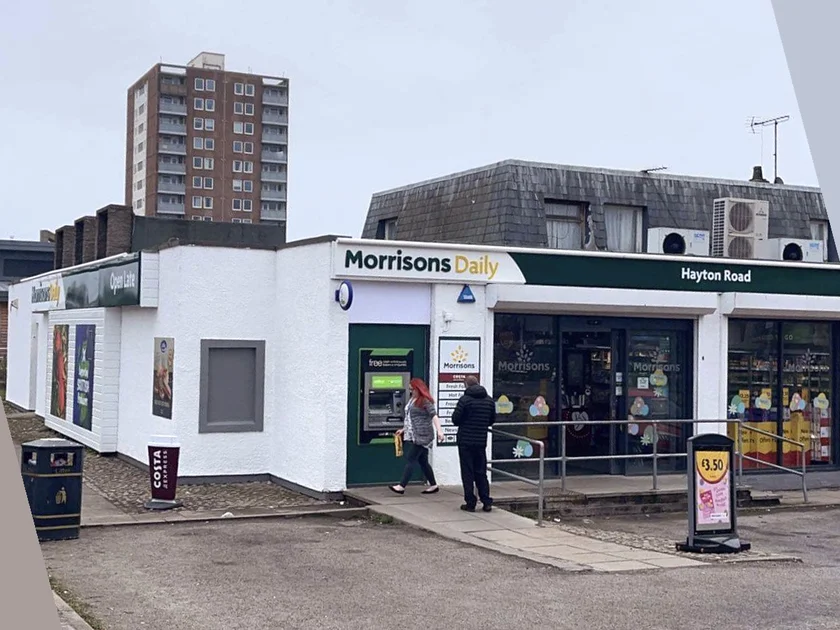
Morrisons Confirms 100 Convenience Store Closures, Hundreds of Jobs at Risk
Morrisons has confirmed plans to close around 100 of its company-owned Morrisons Daily convenience stores across the UK over the next few months, putting hundreds of jobs in jeopardy. The supermarket giant began consulting staff on the proposals on Thursday, May 21, 2026, describing the affected outlets as loss-making and “the most challenged” in its estate.
A Morrisons spokesperson stated that “where possible” the company will seek to redeploy affected colleagues into other parts of the business, including its larger supermarkets and manufacturing operations. However, with 100 stores slated for closure, the scale of the cuts raises the likelihood of significant redundancies. The closures are concentrated entirely on former McColl’s sites acquired by Morrisons in 2022, when it outbid rival Asda to purchase the struggling convenience chain.
Key facts at a glance
- 100 Morrisons Daily stores to close in the coming months
- Hundreds of jobs at risk; redeployment offered where possible
- All affected sites are former McColl’s stores acquired in 2022
- Stores described as “loss-making” and “most challenged” in the portfolio
- Announcement follows three major rounds of redundancies this year
Chief Executive Rami Baitiéh, who has been leading a turnaround since taking the helm, has emphasised that the closures are part of a broader effort to simplify the business and cut costs amid mounting financial pressure. The company’s debt stands at £3.1 billion, though Morrisons says it has reduced that figure by 46% since Baitiéh’s reset began.
Why This Matters: Debt, Costs and a Shifting Convenience Strategy
The closures represent a stark pivot in Morrisons’ convenience store strategy. When the company bought McColl’s for £190 million in 2022, it inherited more than 1,100 convenience stores, which it quickly rebranded as Morrisons Daily. The move was seen as a bold bet on the growing convenience market, allowing the supermarket to compete with the likes of Tesco Express, Sainsbury’s Local and Co-op.
Three years on, that bet has not paid off for a large chunk of the estate. The 100 stores targeted for closure are all company-owned former McColl’s sites that have failed to turn a profit. Industry analysts point to a combination of high operating costs, increased competition and changing consumer habits as factors that have left these stores struggling.
Morrisons has also blamed government policy for making the situation worse. In a statement, the retailer said it had faced “significant” cost increases from policy choices, “which have made returning these stores to profitability even more difficult.” The company’s criticism has been interpreted as a swipe at Labour’s economic agenda, including rises in the national living wage and higher employer national insurance contributions introduced since the party took power.
Financial headwinds
The supermarket has been grappling with challenging economic conditions. Rising energy bills, food inflation and higher borrowing costs have squeezed margins across the grocery sector. Morrisons, which carries a significant debt load from a leveraged buyout by private equity firm Clayton, Dubilier & Rice in 2021, has been particularly exposed. Interest payments on that debt have eaten into cash flow, limiting the company’s ability to invest in underperforming stores.
The decision to close 100 sites is part of a wider cost-cutting drive that has already seen more than 200 head office roles eliminated. In April 2026, Morrisons announced it would cut around 8% of jobs at its Hilmore House headquarters in Bradford, a move designed to streamline operations across its different retail formats. The company also saw the departure of group wholesale and convenience director Matt Heslop, with convenience stores being shifted to the retail division under Group Retail Director Martin Dawson.
The franchise pivot
While Morrisons is closing company-owned stores, it remains committed to growing the Morrisons Daily brand — just not in the same way. Baitiéh has made clear that future expansion will be driven by franchise agreements rather than directly owned outlets. The company is actively looking to sell some of its remaining company-owned stores to franchisees, a model that reduces Morrisons’ direct financial exposure while keeping the brand visible on high streets.
The franchise approach is already well-established in the convenience sector. Spar, Nisa and Costcutter have long operated successful franchise networks, and Morrisons has been quietly testing the model in recent years. The shift away from company-owned sites reflects a wider industry trend: supermarkets are increasingly wary of the high fixed costs associated with running their own convenience stores, preferring instead to license their branding and supply chains to independent operators who bear the local risk.
Perspective: What the Closures Mean for Shoppers, Staff and the Sector
The Morrisons Daily closures will have an immediate impact on local communities, particularly in areas where the affected stores are the only nearby grocery option. While Morrisons has not published a full list of sites, all 100 are former McColl’s stores — many of them located in residential neighbourhoods, small towns and suburban high streets. For shoppers, the loss of a convenience store can mean longer trips to the nearest supermarket, especially for those without access to a car.
For staff, the situation is more uncertain. Hundreds of workers face the prospect of redundancy, though Morrisons has stressed its intention to redeploy as many as possible. The company’s ability to absorb these employees will depend on vacancies in its larger supermarkets and distribution centres, which may be limited given the broader cost-cutting programme. Unions have expressed concern about the lack of detail on redeployment options, and further announcements are expected as consultation progresses.
Broader trends in UK convenience retail
The closures come at a time of significant change in the UK convenience sector. The market remains highly competitive, with discounters Aldi and Lidl continuing to take share from traditional supermarkets, and with the rise of rapid delivery services like Just Eat, Deliveroo and Getir (before its collapse) reshaping consumer expectations. At the same time, rising operational costs — from wages to energy to business rates — have made it harder for smaller convenience stores to survive.
Morrisons is not alone in pruning its convenience network. Tesco has made major changes to its own-label offerings recently, and other retailers have been reassessing their store portfolios. The underlying challenge is the same: the economics of the convenience store model, once a reliable growth driver for supermarkets, are becoming increasingly stretched.
For Morrisons, the bet now is that a smaller, more disciplined convenience operation — built around franchises rather than company ownership — can deliver better returns. Rami Baitiéh has set a target of opening “hundreds more” Morrisons Daily stores in the coming years, but almost all of them will be run by franchisees. The company’s long-term goal remains to embed the Morrisons Daily brand as a fixture of British high streets, but the path to that goal now looks very different from the one envisioned when it bought McColl’s.
The political dimension
The closures have also become a political flashpoint. Morrisons explicitly blamed the government for making it harder to return stores to profitability, and the story has been seized on by opposition politicians as evidence that Labour’s economic policies are hurting businesses and jobs. The GB News report that first broke the news framed the closures as a direct consequence of rising costs driven by government choices, a narrative that has resonated with critics of the administration.
However, the reality is more nuanced. While higher wages and employer costs have undoubtedly added pressure, the challenges facing Morrisons’ convenience portfolio predate the current government. The McColl’s acquisition was always a gamble: many of the stores were small, in secondary locations and already struggling before Morrisons bought them. The pandemic, a shift to online shopping and the rise of discounters have all compounded those difficulties. Blaming Labour may play well politically, but the structural issues in Morrisons’ convenience estate are long-standing and complex.
What happens next
Staff consultations are expected to continue over the coming weeks, with closures likely to roll out gradually over the next few months. Morrisons has said it will confirm affected stores once the consultation process concludes. In the meantime, the company is pressing ahead with its wider turnaround plan, which includes expanding its online delivery service with a new fleet of vans, introducing new store formats and improving its supply chain efficiency.
For the UK convenience sector, the Morrisons Daily closures are a reminder that even the biggest players can struggle to make the model work. As costs rise and competition intensifies, the trend towards franchise-led convenience networks may accelerate. For shoppers in the 100 communities set to lose their local store, that trend will be cold comfort — but for Morrisons’ balance sheet, it may be the only viable path forward.
Comments