
Mitsubishi Issues Urgent Recall for Over 108,000 SUVs Across the United States
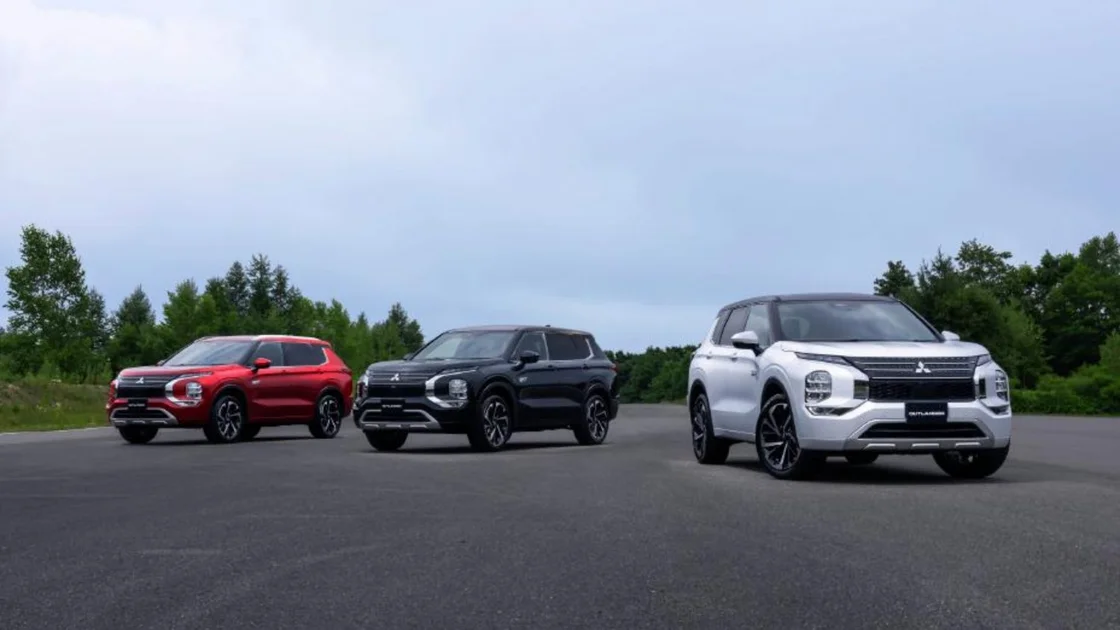
Mitsubishi Motors has announced a recall affecting 108,046 vehicles sold in the United States, according to a notice published Friday by the National Highway Traffic Safety Administration (NHTSA). The recall targets specific model years of the Outlander and Outlander PHEV — two of the Japanese automaker's most popular SUV lines in the American market. The safety concern centers on a mechanical component that, if it fails, could result in physical injury to drivers, passengers, or bystanders.
The recall was made public on April 24, 2026, and represents one of the more significant safety actions taken by Mitsubishi in recent years. Owners of affected vehicles are urged to pay attention to upcoming notification letters and contact the company's customer service line to arrange a free repair.
The Defect: Corroding Gas Spring Cylinders Behind the Liftgate
At the heart of this recall is a structural component that most drivers rarely think about: the liftgate gas spring cylinder. These cylinders are responsible for holding the rear hatchback or liftgate of an SUV open when accessed. According to the NHTSA recall notice, the gas spring cylinders in the affected vehicles may corrode over time and lose pressure. This degradation can lead to two distinct failure modes: a rupture of the gas spring cylinder itself, or the unexpected and sudden falling of the liftgate while it is open.
Why This Is a Safety Risk
Both failure scenarios carry meaningful injury potential. A ruptured gas spring cylinder can expel fragments or cause sudden mechanical movement without warning. A falling liftgate — particularly on a full-size SUV like the Outlander — represents a blunt-force hazard to anyone standing behind the vehicle, whether loading cargo, accessing the trunk, or simply standing nearby. The NHTSA confirmed that these scenarios increase the risk of injury, and Mitsubishi has determined the situation serious enough to warrant a full recall rather than a voluntary service campaign.
Affected Models and Production Years
The 108,046 vehicles included in this recall fall into two categories:
- 2018–2022 Mitsubishi Outlander PHEV (plug-in hybrid electric vehicle)
- 2014–2020 Mitsubishi Outlander (standard gasoline model)
The wide span of model years — stretching back to 2014 for the standard Outlander — suggests the corrosion issue is not limited to a particular manufacturing batch or production run, but may instead reflect a design or materials choice that has shown a tendency to degrade over time and exposure to the elements.
An Expansion of a Prior Recall: Context and Timeline
This is not the first time Mitsubishi has addressed this particular vulnerability. The NHTSA confirmed that the current recall is an expansion of a previous action issued in August 2025, which at the time covered more than 90,000 vehicles. That earlier recall was itself a significant safety action, but subsequent investigation — or incoming owner complaint data — apparently revealed that additional vehicles needed to be brought into the remediation scope.
From 90,000 to 108,000: A Growing Problem
The jump from approximately 90,000 vehicles in August 2025 to 108,046 in April 2026 represents an increase of roughly 20 percent. This kind of recall expansion is not unusual in the automotive industry — manufacturers often begin with a conservative estimate of how many vehicles are affected and then widen the net as engineers gather more field data, warranty claims, and corrosion inspection results. However, it does underscore the importance of NHTSA's ongoing monitoring role after initial recalls are issued. Recalls do not always solve the full problem the first time around, and regulators must remain vigilant.
The company's internal recall reference number is SR-26-001, a designation that will be important for owners documenting their repair history or dealing with automotive insurance matters.
What Affected Owners Should Do
Mitsubishi has outlined a clear remediation path for vehicle owners caught in this recall. The company will replace both the left and right liftgate gas springs at no cost to the owner. This is a standard approach in recall scenarios — the manufacturer absorbs the full cost of parts and labor in order to correct a safety defect.
Timeline for Owner Notification
Physical notification letters are expected to be mailed to affected owners on or around June 17, 2026. That gives owners approximately seven weeks from the date of the public announcement to prepare. In the interim, owners who believe their vehicle may be affected are encouraged to reach out directly to Mitsubishi's customer service team at 1-888-648-7820 rather than waiting for the letter to arrive.
Owners can also verify whether their vehicle is included in the recall by using the NHTSA's public recall lookup tool at safercar.gov, where they can enter their Vehicle Identification Number (VIN) to check for open recalls across all manufacturers.
Precautions in the Meantime
While Mitsubishi has not issued explicit guidance warning owners to stop using their vehicles entirely, the nature of the defect suggests that exercising caution when operating the liftgate is advisable until the repair is completed. Owners should be particularly careful when loading groceries, sports equipment, or other cargo into the rear of the vehicle, and should avoid leaving anyone — especially children — unsupervised near the open liftgate of an affected model.
A Broader Wave of Automotive Recalls in 2026
The Mitsubishi action is part of a notably active period for vehicle recalls in the United States and globally. In the same week, Jaguar Land Rover announced a recall affecting approximately 170,000 vehicles, and Ford issued a recall for nearly 605,000 vehicles in the US related to a windshield wiper issue. Meanwhile, in South Korea, a single recall wave swept up more than 532,000 vehicles from Hyundai Motor, Kia, KG Mobility, and Toyota Motor Korea over a variety of defects ranging from faulty seat belts to software glitches and structural frame cracks.
This wave of recalls reflects both the increasing complexity of modern vehicles and the heightened scrutiny that regulators around the world are applying to automotive safety. As vehicles incorporate more electronic systems, hybrid drivetrains, and advanced driver-assistance technologies, the number of potential failure points has multiplied — even as manufacturers invest heavily in quality control.
The PHEV Dimension
The inclusion of the Outlander PHEV in this recall is noteworthy. Plug-in hybrid electric vehicles represent a growing segment of the automotive market, and safety concerns affecting PHEV models receive heightened attention from both regulators and consumers who have invested in greener transportation options. While this particular defect is purely mechanical — involving gas spring cylinders, not the battery or electric drivetrain — the presence of the PHEV variant in the recall pool is a reminder that hybrid and electric vehicles are not immune to the same structural and material degradation issues that affect conventional combustion-engine cars.
What This Recall Signals for Automotive Safety Culture
The Mitsubishi recall, and particularly its status as an expansion of a prior action, raises important questions about how the automotive industry manages safety defects across aging vehicle fleets. The Outlander models affected span nearly a decade of production, from 2014 through 2022. As vehicles on American roads age — the average age of a passenger car in the United States now exceeds 12 years — the risk of corrosion-related and material degradation failures will only increase.
This places growing pressure on manufacturers to proactively monitor field data and warranty claims, on regulators like the NHTSA to expand recalls when initial actions prove insufficient, and on consumers to stay informed about the vehicles they drive. The fact that the August 2025 recall was insufficient to capture all affected vehicles highlights a systemic challenge: when corrosion is the root cause, the boundaries of which vehicles are truly at risk can be difficult to define cleanly at the outset.
For Mitsubishi, which has worked to rebuild its market presence in North America through the Outlander lineup, managing this recall efficiently and transparently will matter not just for safety compliance but for brand reputation. Free repairs and proactive communication are the baseline expectation — how quickly and smoothly the company processes claims will shape consumer confidence going forward.
The automotive safety landscape in 2026 is one where recalls are increasingly visible, increasingly scrutinized, and increasingly interconnected with broader conversations about vehicle longevity, manufacturing quality, and the responsibilities manufacturers carry long after a vehicle leaves the showroom floor. As this Mitsubishi case demonstrates, a recall is rarely a clean, one-time event — it is often the beginning of a longer process of investigation, expansion, and remediation that can unfold over years.
Comments