
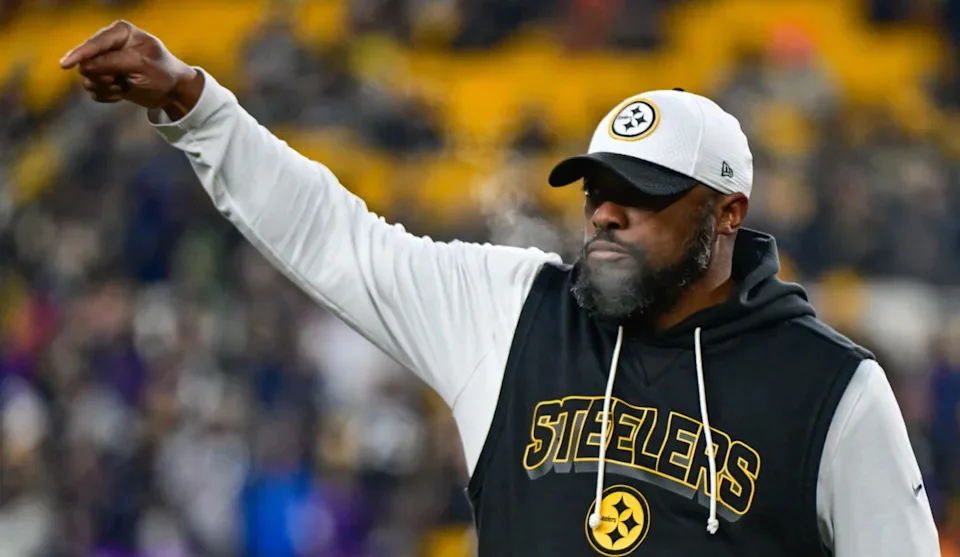
Mike Tomlin Opens Up About Decision to Step Down as Steelers Coach
Nearly ten months after shocking the football world by stepping down as head coach of the Pittsburgh Steelers, Mike Tomlin has finally revealed the reasoning behind his decision. In a candid conversation with longtime Steelers defensive tackle Cam Heyward on the "Not Just Football" podcast, Tomlin explained that his departure was not simply a reaction to a single playoff loss but the culmination of years of reflection on when a coach should walk away.
Tomlin, who led the Steelers for 19 seasons, made his decision quickly after Pittsburgh's wild-card round loss to the Houston Texans in January. "I did probably by the time I pulled in my driveway," Tomlin said, according to Behind the Steel Curtain. That swift timing suggests the thought had been percolating for quite a while. "I never wanted to stay too long," he continued. "As a football lover, I was always really impressed by those that moved away or had the self-awareness to move away at what they deemed the appropriate time. I just always wanted to respect the game enough to be able to do that. To not overstay my welcome. That was a big component of me coming to the decision as anything."
The announcement, made to the team the day after the loss, caught many by surprise, but Tomlin had been contemplating his exit for some time. He emphasized that his decision was rooted in a desire to give his players a fresh start rather than any dissatisfaction with the organization. "I just thought we had the makings of a really good team, a team that is capable of competing for and winning a championship," Tomlin said. "But when I really started thinking about it, man, my bags might slow that down. I thought that guys like him (Heyward) and T.J. were deserving of the optimism that comes with new regimes. I've been around that. I saw it in Tampa. I want that for those guys, even if it means it doesn't happen with me."
The Andy Reid Factor and a Desire for New Beginnings
Tomlin's philosophy on coaching longevity was shaped in part by watching Andy Reid's tenure with the Philadelphia Eagles. In the same podcast interview, Tomlin recalled how Reid's departure from Philadelphia after 14 seasons left a lasting impression. Tomlin was the defensive backs coach for the Tampa Bay Buccaneers in the early 2000s when his teams frequently faced Reid's Eagles in the NFC playoffs, including the 2002 NFC Championship Game, which Tampa Bay won before capturing the Super Bowl.
"That was eye-opening for me," Tomlin said, per Pro Football Network. Reid eventually left the Eagles despite building one of the league's most successful teams, and Tomlin took note of how a change of scenery can benefit both a coach and a franchise. The lesson stayed with him throughout his own 19-year run in Pittsburgh, reinforcing his belief that stepping aside at the right moment is a sign of respect for the game and the people in it.
Tomlin's self-awareness extended to his relationship with his players, particularly Heyward, who shared an emotional moment from the day Tomlin announced his decision. "I feel like I failed you," Heyward told Tomlin, according to Steelers Nation. "Because we didn't reach the mountain top together and I've appreciated what you've given me... To get that ripped right then and there, I was hurt. When he did that, I was like, I don't know if I can play without him." Tomlin, in turn, felt a sense of responsibility for not delivering a championship to veterans like Heyward and T.J. Watt, further motivating his choice to hand over the reins.
Context: A Legendary Tenure and a Playoff Drought
Tomlin's departure marks the end of one of the most stable and successful coaching runs in NFL history. He compiled a 183-107-2 regular-season record in Pittsburgh, never suffered a losing season, and led the Steelers to a Super Bowl XLIII victory in 2008, his second year at the helm. He also took Pittsburgh to another Super Bowl appearance in 2010, falling to the Green Bay Packers. For nearly two decades, Tomlin's teams were models of consistency, but the latter years of his tenure were marked by a frustrating lack of postseason success.
The Steelers did not advance in the playoffs for the last nine years of Tomlin's reign, a drought that became a significant blemish on an otherwise stellar résumé. The 2025 season ended with a blowout loss to the Texans at home in the wild-card round, the kind of unceremonious exit that had become all too familiar. Despite the lack of playoff wins, Tomlin's teams remained competitive, and his players consistently praised his leadership and ability to connect with them.
The decision to step away, therefore, was not made in a vacuum. It came after years of speculation about whether the Steelers needed a fresh voice to get over the hump. Tomlin's acknowledgment that a new regime could provide optimism and energy reflects a mature understanding of the cyclical nature of sports. He recognized that his message might have grown stale, not because of any failure, but simply because of the passage of time.
The Aftermath: New Era in Pittsburgh and Tomlin's Media Transition
Since Tomlin's departure, the Steelers have moved on quickly. They hired Mike McCarthy as the new head coach, tasking him with revitalizing a roster that still boasts talent on both sides of the ball. Early indications have been positive, and the team is hopeful that McCarthy can reverse their playoff fortunes. For Tomlin, the transition has been to a completely different role: he joined NBC Sports as an analyst for Sunday Night Football, and he will make his return to the sidelines—this time in the broadcast booth—when the Steelers take on the Cincinnati Bengals on Sunday night.
Tomlin has made it clear that he is not thinking about a return to coaching anytime soon. In an interview with ESPN, he stated that he has not given "one iota of thought" to coaching again, emphasizing his focus on his broadcasting role. "I'm just trying to be the best analyst I can be," he said. That stance, while not surprising given his fresh departure, leaves the door open for a potential return down the line, but for now, Tomlin seems content with his new chapter.
The news of Tomlin's reasoning has resonated across the NFL, sparking conversations about coaching longevity and the importance of self-awareness. In a league where coaches often cling to power until they are forced out, Tomlin's decision to walk away on his own terms stands out as a rare act of grace. It also highlights the emotional toll of a profession that demands constant sacrifice and the difficult choice between holding on and letting go.
Perspective: A Blueprint for Coaching Transitions
Tomlin's candid explanation offers a broader lesson for sports and beyond. In an era where job security is fleeting and the pressure to win immediately is immense, his emphasis on not overstaying his welcome is a refreshing counterpoint. By choosing to step aside, Tomlin ensured that he left the Steelers with dignity and gave his players a chance to hear a new voice, a move that could pay dividends for a franchise hungry for another championship.
His willingness to share his rationale also humanizes a figure who, despite his success, remained somewhat enigmatic. Tomlin's reflections on Andy Reid's career and his own desire to avoid becoming a hindrance demonstrate a level of introspection that is not always associated with NFL head coaches. It is a reminder that even the most successful leaders must grapple with questions of legacy, timing, and the greater good.
As Tomlin prepares to call his first Steelers game as an analyst, the football world will be watching closely. His presence in the booth will be a reminder of what he accomplished in Pittsburgh and why he chose to walk away. For Steelers fans, the sting of his departure may linger, but the reasons behind it—selflessness, respect for the game, and a desire to see others succeed—are likely to be appreciated in time. In a sports landscape often defined by ego, Tomlin's decision is a rare and admirable example of knowing when to say goodbye.
Looking ahead, Tomlin's future remains uncertain, but his legacy is secure. Whether he ever returns to coaching or remains in broadcasting, his approach to retirement will be studied and discussed for years to come. And as the Steelers embark on a new era under McCarthy, they do so with the knowledge that their former coach left them in a better place, even as he walked away.
Comments