
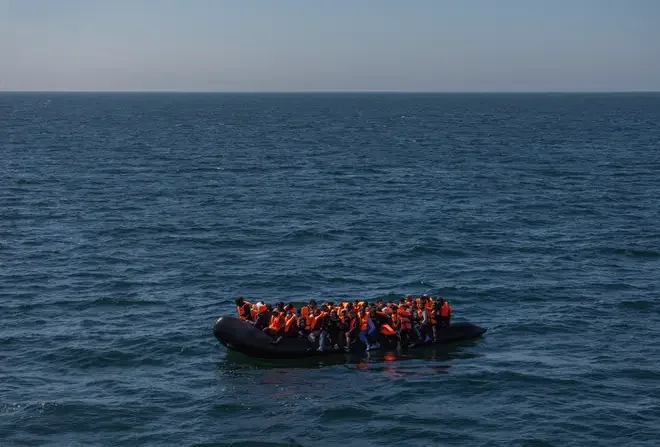
Mega-Dinghy Engine Fire Triggers Major Cross-Channel Rescue Operation
A heavily overcrowded migrant dinghy carrying 157 people caught fire in the English Channel early Tuesday morning, sparking a large-scale air and sea rescue operation involving British and French authorities. The incident, which occurred roughly 70 miles off the French coast, has reignited urgent debates over border security and migrant safety as crossings continue at elevated levels.
The vessel, described by officials and witnesses as a "mega-dinghy," was attempting to reach the United Kingdom when its engine ignited just before 6 a.m. local time. According to the French maritime prefecture for the Channel and North Sea, the fire caused the boat's structure to deteriorate rapidly, forcing all passengers into the water. Within hours, more than 150 people were pulled from the sea by rescue teams, with no immediate reports of fatalities or serious injuries.
International Rescue Effort Underway
The rescue operation mobilized an extensive array of assets from both sides of the Channel. The UK Border Force deployed two vessels, the BSC Contender and BSC Courageous, while the Royal National Lifeboat Institution (RNLI) launched its all-weather lifeboat from Eastbourne. French patrol boats and additional maritime units also rushed to the scene, aided by helicopters and fixed-wing aircraft monitoring the area.
By mid-morning, a total of 157 people had been rescued and were being transported to the port of Boulogne-sur-Mer in France for medical evaluations. French authorities reported that two of their boats rescued 103 migrants, while British vessels accounted for the remaining 54. All survivors were expected to arrive in Boulogne by early afternoon, where emergency services set up a reception center to provide immediate care.
The incident began hours earlier, when the vessel reportedly departed from the French coast on Monday night. French maritime officials noted that five people onboard had already been rescued overnight after showing signs of distress, but the remaining passengers rejected all offers of assistance, insisting on continuing their journey toward the UK.
Eyewitness Accounts and Official Statements
Initial reports from survivors indicated that the dinghy was carrying more than 160 people, making it one of the largest attempted crossings this year. The French prefecture confirmed that the boat was "structurally fragile" and severely overcrowded, a factor that likely contributed to the engine fire and the vessel's quick deterioration.
A coastguard spokesperson stated, "A vessel caught fire earlier this morning whilst in the French search and rescue region. UK vessels and a lifeboat are assisting." The RNLI confirmed that its Eastbourne lifeboat launched at 6 a.m. and participated in the rescue alongside other units.
Nigel Farage, leader of Reform UK, responded to the news on social media, writing, "We must put a stop to this. Our plan will save lives." His party's deputy leader, Richard Tice, echoed those sentiments, adding, "Just like Reform policy: rescue and return. It's the humanitarian thing to do. We must stop people dying."
The French maritime prefecture also criticized the behavior of the migrants, stating, "Determined to reach the United Kingdom, migrants crossing the Channel in small boats refused assistance offered by French emergency services, accepting it only in situations of extreme emergency." This refusal, they noted, forced authorities to maintain a careful distance to avoid escalating the dangerous situation.
A Growing Humanitarian Crisis in the English Channel
Tuesday's incident is the latest in a series of alarming events that have brought the migrant crossing crisis into sharp focus. The dinghy was carrying the second-highest number of passengers of any single boat this year, trailing only a vessel on July 23 that held 165 people. The sheer scale of these mega-dinghies underscores the increasing desperation of migrants willing to risk their lives in overcrowded and unseaworthy boats.
Last week, four people died in separate incidents involving overloaded vessels attempting the same crossing. Those tragedies, combined with Tuesday's fire, highlight the escalating dangers posed by the crossing route, which is one of the busiest and most perilous migration corridors in the world.
The root causes of this crisis are complex and multifaceted. Ongoing conflicts, economic instability, and political persecution in countries across the Middle East, Africa, and Asia continue to drive thousands of people toward Europe's shores. Additionally, the smugglers orchestrating these crossings have adapted to increased law enforcement efforts by employing riskier tactics, such as launching boats from more distant points along the French coast to evade detection.
Political Pressure Mounts on the Government
The incident comes at a time of intense political scrutiny over immigration policy in the UK. Last week, Reform UK proposed a controversial plan dubbed "Operation Fortress," which would use the Royal Navy to turn back migrant boats and return passengers to France or Belgium. The party describes the initiative as a humanitarian measure designed to deter dangerous crossings.
Prime Minister Andy Burnham, who took office earlier this year, has vowed to continue working to reduce the number of small boat arrivals. However, his government has faced criticism from opposition parties and migration experts who argue that current deterrents are ineffective. More than 2,000 people have crossed the Channel since Burnham became prime minister, according to official tallies, a figure that has fueled public frustration and calls for more decisive action.
On Monday, Burnham pledged to be "relentless" in curbing the crossings, but Tuesday's incident underscores the immense difficulty of achieving that goal. The UK has implemented a range of measures, including increased patrols, advanced surveillance technology, and stricter asylum policies, but the number of arrivals has remained stubbornly high.
The Human Toll Behind the Headlines
Beyond the political debates, Tuesday's rescue is a stark reminder of the human cost of this crisis. The 157 survivors are now safe, but many will face an uncertain future, including potential detention, asylum claims, and long legal battles. Others, however, will likely attempt to cross again, driven by circumstances that they consider worse than the risks of the sea.
Charities and aid organizations have repeatedly criticized the UK and French governments for prioritizing deterrence over safety. They argue that the focus on stopping crossings has led to more dangerous routes and larger, less stable boats, thereby increasing the likelihood of tragedies. The refusal of many migrants to accept help, as seen in this incident, further complicates rescue efforts and places both rescuers and migrants at greater risk.
Broader Implications and the Road Ahead
The mega-dinghy fire raises pressing questions about the effectiveness of current migration policies on both sides of the Channel. While immediate rescue operations saved lives, the underlying factors that compel people to embark on such perilous journeys remain unresolved. Experts suggest that without addressing the root causes of migration, including conflict, poverty, and climate change, the flow of desperate people will continue.
The incident also highlights the escalating sophistication of illegal smuggling networks. The use of larger vessels and longer routes indicates a criminal enterprise that is adapting to enforcement measures and treating human lives as commodities. This reality demands a coordinated international response that combines border security with genuine humanitarian protections.
As the UK government considers its next steps, the memory of Tuesday's near-tragedy will likely influence policy debates. Whether through increased naval patrols, new asylum agreements, or expanded safe routes, the challenge remains daunting. For now, the 157 people rescued from the burning dinghy are safe, but their futures—and the future of the broader migration crisis—remain uncertain.
Lessons from the Fire and a Search for Solutions
Experts, politicians, and humanitarian groups are drawing contrasting lessons from Tuesday's event. For proponents of stricter border controls, the incident is clear evidence that smugglers are willing to exploit even the most dangerous conditions, necessitating stronger enforcement and immediate returns. For advocates of refugee protection, the fire reveals the unsustainability of a approach that leaves migrants with no option but to risk death on the high seas.
A key concern is the normalization of mega-dinghies, which carry far more people than the smaller boats used in previous years. The structural stress on these vessels, combined with poor maintenance and overloaded conditions, makes them ticking time bombs. Maritime safety experts have repeatedly warned that engine fires, hull breaches, and capsizing are all but inevitable under such circumstances, and Tuesday's incident was a near-catastrophic demonstration of those risks.
Meanwhile, the UK's new prime minister faces significant pressure to deliver on his promises. Burnham's administration has already introduced new deterrent measures, including increased use of electronic tagging and expedited processing for asylum seekers. But critics argue that these policies do little to address the desperation that drives migration and may, in fact, increase danger by pushing people toward more extreme measures.
In the coming weeks, the fallout from this incident will likely dominate political discourse. French and UK authorities will conduct a thorough investigation into the causes of the engine fire and the sequence of events leading up to the rescue. Their findings could inform future safety protocols and operational responses.
For the migrants who survived, the ordeal is far from over. Many will face deportation proceedings, while others may see their asylum claims rejected. The psychological trauma of the fire and the rescue will linger, even as they are processed through the labyrinthine migration system.
Ultimately, the mega-dinghy fire serves as a vivid and tragic illustration of the enduring complexity of global migration. It is a story of human desperation, political stalemate, and the unwavering efforts of rescue workers who risk their own lives to save others. As the Channel crossing crisis continues to evolve, one thing is certain: the need for humane and effective solutions has never been more urgent.
Comments