
The Battle for Eternia's Soul: Vibrant Visuals vs. a Voiced-Over Villain
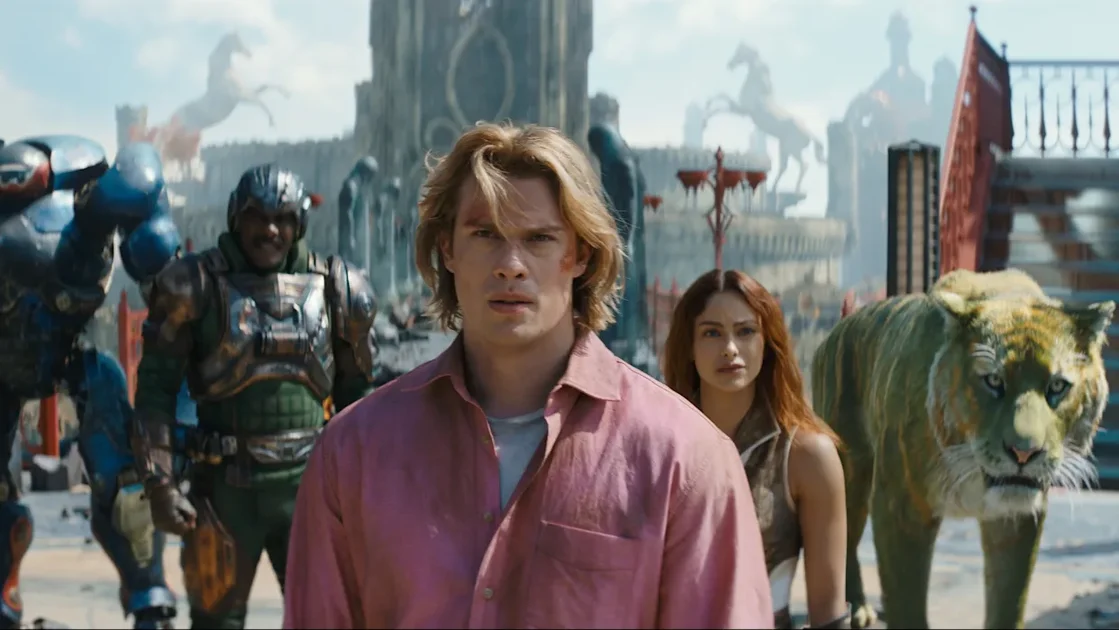
When 'Masters of the Universe' premieres on June 5, 2026, audiences will step into an Eternia that burns with retina-searing color—a deliberate act of rebellion against a decade of flat, gray blockbusters. Director Travis Knight, speaking to Polygon ahead of the film's release, described his vision for He-Man's world as 'polychromatic,' 'insane,' and 'retina burning.' Yet behind this visual triumph lies an equally dramatic off-screen story: the calculated erasure of Jared Leto, the actor voicing the film's central villain, from the movie's own marketing.
Knight, an animator by trade who broke into live-action with 'Bumblebee,' told Polygon that his background shaped the film's dynamic, crisp aesthetic. 'Part of it is that I'm an animator, so I come at it with that perspective,' he explained. 'Eternia is a very rich, colorful world. It's like retina burning in terms of its color.' The result, according to early impressions from Polygon and Collider, is a blockbuster that looks nothing like the muddy, gray spectacles that have dominated multiplexes in the post-MCU era. Knight's secret weapons include practical sets from two-time Oscar-nominated production designer Guy Hendrix Dyas, creature effects from legacy studios like Industrial Light & Magic, and a philosophy of guiding the audience's eye through 'how things are moving across the frame.'
But even as critics celebrate the film's visual audacity, a separate drama is unfolding around its most recognizable antagonist. Skeletor may loom large in the trailers—his skull-faced visage is everywhere—but his voice actor, Jared Leto, is nowhere to be found. According to a report from Gizmodo published May 23, Amazon MGM has actively downplayed Leto's involvement, opting to exclude him from premiere events, press junkets, and even social media promotion. Leto received a reported $5 million for the role and is under a gag order that has kept him silent since production wrapped. He did not attend the film's premiere earlier this week.
The disconnect is striking. Multiple early viewers, as noted by Gizmodo, have conceded that Leto delivers a surprisingly effective Skeletor. Yet the studio that hired him appears unwilling to leverage that performance in the film's marketing. 'It's a strange thing for a production to not just have a controversial actor in its cast but then actively downplay his involvement,' wrote Justin Carter for Gizmodo. The decision reflects the ongoing reckoning with Leto's public image, which has been marred by sexual assault allegations and a reputation for difficult behavior on previous genre projects.
Why Eternia's Colors Matter—and Why Leto's Silence Speaks Volumes
The timing of 'Masters of the Universe' could not be more pointed. For years, audiences and critics have lamented the visual deterioration of big-budget filmmaking—the flat lighting, the desaturated palettes, the over-reliance on digital environments that leave actors floating in a sea of gray. Collider's set visit report from May 2025 captured the frustration precisely: 'The world as we know it is rapidly losing color. Not only have we been in a downward spiral since the '80s, but no one seems to care about bringing back what we have lost.'
Knight's answer to this trend was to build Eternia from the ground up. The production leaned heavily on practical sets designed by Guy Hendrix Dyas, who told Collider that he 'fanatically' watched He-Man as a child and ensured every vehicle and costume stayed faithful to the original animated series. Visual effects from ILM, Rodeo FX, and DNEG were layered on top, not used as a crutch. 'That's not to diminish the film's stunning visual effects,' the Collider report noted, 'but those effects are built upon highly detailed practical sets.'
This commitment to tactile, vibrant filmmaking is more than aesthetic vanity. It signals a broader trend in Hollywood where directors like Knight—who cut his teeth in stop-motion animation at Laika—are pushing back against the homogenization of the blockbuster look. The same impulse drove 'Dune' to favor natural light, 'The Batman' to embrace shadows, and now 'Masters of the Universe' to drench every frame in color.
Yet the film's cultural import does not end with its visual palette. The decision to sideline Jared Leto, while commercially understandable, raises uncomfortable questions about Hollywood's risk calculus. Amazon MGM clearly believed Leto's star power or vocal performance was worth the initial investment. But as the film's release approached, the studio appears to have calculated that his name—attached to multiple allegations and a history of divisive performances—would hurt rather than help the box office. According to Gizmodo, Leto did not show up at the film's premiere, and he is not doing any promotional appearances alongside cast members Nicholas Galitzine, Camila Mendes, or Idris Elba.
This is not the first time a studio has distanced itself from a controversial actor mid-campaign, but the degree of erasure is unusual. Skeletor is the villain. He is the centerpiece of the marketing. Yet the man behind the voice is treated as a liability. Early reports indicate that Leto's Skeletor may even be one of the film's highlights—which only deepens the irony that audiences will not hear him speak about the role.
What the 'Preview Cut' Reveals About the Franchise's Long Shadow
Adding another layer to this narrative is the unexpected return of the 1987 'Masters of the Universe' film, which is getting a 4K Blu-ray release from distributor Toy Robot Video that includes a newly uncovered 'Preview Cut.' As reported by JoBlo, the physical release will contain two discs: one with the theatrical cut and another with an extended version featuring never-before-seen footage, alternate takes, and new scenes. The original film, notorious for sinking Cannon Films, has since gained a cult following—and the new cut offers a chance to revisit the franchise's first, flawed attempt at live-action magic.
The timing of this archival release, announced just weeks before the new film hits theaters, is serendipitous. It allows audiences to compare the 1987 version—starring Dolph Lundgren and Frank Langella as a Shakespearean Skeletor—with Knight's 2026 update. The original film was a production nightmare, a box office flop, and yet it has endured precisely because of its earnest, unapologetic commitment to the source material's ridiculousness. Knight has acknowledged paying homage to that earlier film, as Germain Lussier reported for Gizmodo on May 22, confirming 'a few winks and nods to the Dolph Lundgren-Frank Langella adaptation.'
For fans of the franchise, the 4K 'Preview Cut' is a gift that contextualizes the new film. It shows that the challenge of adapting He-Man has never been about the material itself—Eternia is inherently colorful, absurd, and operatic—but about whether filmmakers have the nerve to commit to that vision fully. The 1987 film tried and failed in the marketplace, but succeeded in memory. Knight's film, by all early accounts, may succeed in both.
The Broader Reckoning: Color, Controversy, and the Future of the Blockbuster
The simultaneous release of a vibrant, practical-effects-driven 'Masters of the Universe' and the quiet marketing burial of its villain's voice actor speaks to two converging trends in modern Hollywood.
First, there is the technical and aesthetic backlash against the 'dark and gritty' era. For over a decade, studios have favored visual styles that are easy to render digitally and forgiving of shoddy effects—dim lighting, muted colors, and desaturated palettes. 'One pervasive theory is that the dimmer lighting allows filmmakers to better conceal the seams in the final product,' Collider observed. Knight and his team have rejected this logic wholesale. The result, if the early praise translates to box office success, could accelerate a shift toward more colorful, practical-heavy filmmaking. Other directors are already following suit: the recent 'Barbie' phenomenon, the 'Dune' films' tactile sandscapes, and the 'Spider-Verse' franchise's hyper-saturated animation have all demonstrated that audiences crave visual richness.
Second, the industry is still wrestling with how to handle controversial talent. Amazon MGM's approach to Jared Leto—pay him millions, hire him for a high-profile role, then pretend he does not exist—is a muddled compromise that satisfies no one. It shields the film from some boycotts, but it also raises questions about accountability. If Leto's presence was truly damaging, why hire him at all? If his performance was genuinely good, why not let him take a bow? The gag order and the silent premiere suggest a studio hedging its bets, hoping the film's quality will outshine the controversy.
This balancing act is not unique to 'Masters of the Universe.' In recent years, studios have quietly cut actors from promotional materials or recast roles mid-production amid scandals. However, the sheer size of this film—and the centrality of Skeletor to the narrative—makes the decision particularly conspicuous. As Gizmodo noted, 'It's a strange thing for a production to not just have a controversial actor in its cast but then actively downplay his involvement.'
What's at Stake for the Franchise
For Amazon MGM, 'Masters of the Universe' represents a significant investment with long-term franchise potential. The cast includes Nicholas Galitzine as Prince Adam/He-Man, Camila Mendes as Teela, Idris Elba as Man-At-Arms, and a supporting roster including Alison Brie, James Purefoy, and Morena Baccarin. A successful opening could greenlight sequels and spin-offs, expanding a universe that Mattel has long wanted to turn into a lasting film property.
But the film also carries the weight of skepticism. Previous attempts to revive He-Man for modern audiences—including a failed Netflix series—have struggled to find traction. Knight's film must overcome both the baggage of the 1987 flop and the current controversy around its lead villain. The fact that Leto's Skeletor is reportedly good only heightens the tension: the film's most potent performance may be its most hidden.
Box office projections are not yet public, but early buzz suggests that the film's visuals could be a major draw. Polygon's preview, written as part of their Summer 2026 coverage, declared that 'not only is Masters of the Universe a wild ride, but it looks spectacular.' If audiences agree, the film could become a proof-of-concept for a more visually adventurous blockbuster era.
For now, the fate of 'Masters of the Universe' rests on a paradox: a movie that looks forward—vibrant, bold, unafraid of color—that is also haunted by the very human complications of its past. Skeletor may be the 'most powerful man in the universe,' but in 2026, even he cannot escape the storm swirling around the actor who gives him voice.
In other entertainment news, 'The Testaments' Season 2 has been renewed by Hulu, and the WWE Merger Trial is set to bring Vince McMahon and Ari Emanuel to the stand in June.
Comments