
Second-Weekend Plunge Raises Red Flags for ‘The Mandalorian and Grogu’
Disney’s highly anticipated theatrical debut of “The Mandalorian and Grogu” has hit a severe turbulence in its second weekend, recording a staggering 69% decline at the domestic box office. The film earned approximately $25 million from 4,300 locations in its sophomore frame, a sharp fall from its $102 million opening weekend. This dramatic drop has shifted industry conversations from celebration to concern, as the film’s global total now stands at roughly $246 million — far from the $500 million to $600 million break-even threshold reported by insiders.
Directed by Jon Favreau and starring Pedro Pascal, the big-screen continuation of the beloved Disney+ series was expected to reignite the Star Wars theatrical franchise after a seven-year absence. Instead, it now faces an uphill battle against mounting competition, lukewarm critical reception, and a surprisingly soft international performance. The film slipped to third place domestically, trailing behind two low-budget horror successes: “Backrooms,” which held the top spot, and “Obsession,” which continued its strong third-weekend run fueled by positive word-of-mouth.
A Debut That Promised More
The film’s opening weekend — $102 million domestically — initially signaled a robust interest in Star Wars’ return to theaters. However, the 69% second-weekend drop is one of the steepest for any major franchise film in recent memory. For comparison, even poorly received sequels like “The Rise of Skywalker” experienced smaller second-weekend declines. The rapid erosion of audience momentum suggests that the film’s initial draw was largely driven by die-hard fans rather than broader mainstream appeal. The domestic total after two weekends is now $137 million, with international markets contributing $109 million — an unusually low overseas share for a blockbuster.
According to The Hollywood Reporter, Disney insiders estimate the film needs to gross between $500 million and $600 million globally to turn a profit, factoring in its $165 million production budget and an undisclosed marketing spend. At its current trajectory, achieving that target will be extremely challenging. The film’s international performance, making up only 44% of the worldwide total, lags behind typical blockbuster splits, further complicating the math.
Why This Drop Matters for Disney and Star Wars
The stakes for “The Mandalorian and Grogu” extend far beyond a single film’s box office returns. This release represents Disney’s first theatrical Star Wars feature since 2019’s “The Rise of Skywalker,” which itself received a mixed response. The studio has been cautious in bringing the franchise back to theaters, instead leaning on successful Disney+ series like “The Mandalorian,” “Andor,” and “Ahsoka.” The decision to transition the most popular of those series to the big screen was seen as a test of whether the franchise could recapture its box office dominance.
Summer Competition and Changing Audience Habits
The film now faces an increasingly crowded summer slate. Major releases including “Masters of the Universe,” “Scary Movie,” “Disclosure Day,” “Toy Story 5,” and “Supergirl: Woman of Tomorrow” are all set to debut in June, further squeezing screen availability and audience attention. Meanwhile, “Backrooms” and “Obsession” have proven that lower-budget horror can thrive without massive marketing spends, underscoring a shift in consumer preferences toward fresh IP and genre films with strong word-of-mouth.
Social media discourse around the film has been mixed. While it holds an 88% audience score on Rotten Tomatoes, critics have been less kind — IGN rated it 5/10, citing a weak story and underdeveloped characters despite praising its practical effects and action sequences. The gap between audience and critic scores suggests a polarized reception that may limit long-term legs. Memes and online commentary have also targeted co-writer and producer Dave Filoni, who was recently promoted to co-head of Lucasfilm, questioning whether his creative vision translates effectively to the big screen.
The Streaming Safety Net — and Its Limits
One potential silver lining is the film’s eventual arrival on Disney+, which could expand its viewership significantly. The Mandalorian series itself was instrumental in launching the streaming service in 2019, and the film will likely draw additional viewers once it becomes available on the platform. However, that future streaming success does little to alleviate the immediate financial pressure of theatrical underperformance. Moreover, relying on streaming to recoup costs has become a riskier strategy as the streaming industry matures and subscriber growth slows across the board.
Broader Implications for Franchise Cinema
The performance of “The Mandalorian and Grogu” is being closely watched as a bellwether for the broader health of franchise-driven theatrical releases. Hollywood has increasingly banked on established IP to drive ticket sales, but a string of underperformers — from “Indiana Jones and the Dial of Destiny” to “The Marvels” — has raised questions about audience fatigue. Star Wars, once considered among the most reliable brands, now appears vulnerable to the same headwinds.
Is Star Wars Still Bankable?
Disney’s acquisition of Lucasfilm in 2012 promised a new era of Star Wars blockbusters. The sequel trilogy initially delivered massive returns, but the franchise’s theatrical track record has been uneven. “The Mandalorian and Grogu” was intended to bridge the gap between the streaming series and a renewed theatrical presence, but its box office struggles suggest that simply attaching a popular character to a movie is no longer a guarantee of success. Critics and analysts point to a lack of coherent long-term creative strategy, inconsistent quality, and oversaturation of Star Wars content across Disney+ as contributing factors.
Meanwhile, the indie horror sector’s success with “Backrooms” and “Obsession” highlights a growing appetite for original, high-concept stories that rely on strong marketing and word-of-mouth rather than brand recognition. These films have achieved what “The Mandalorian and Grogu” could not: sustained momentum. The contrast underscores a fundamental shift in audience behavior, where novelty and quality increasingly outweigh familiarity.
The Road Ahead for Lucasfilm
Lucasfilm’s current leadership, including Filoni and president Kathleen Kennedy, now faces tough questions about the future direction of the franchise. Upcoming projects like an untitled James Mangold film and a new Star Wars trilogy remain in development, but the box office performance of “The Mandalorian and Grogu” may prompt a reassessment of release strategies, budgets, and creative priorities. The film’s steep drop could also influence how Disney evaluates risk for future theatrical Star Wars outings, potentially accelerating a pivot toward streaming-first releases.
In a broader context, the film’s struggles are part of a larger pattern across the industry. Sequels and spinoffs from major franchises — including DC, Marvel, and even Fast & Furious — have seen diminishing returns compared to their predecessors. Studios are increasingly forced to balance budget discipline with audience expectations. “The Mandalorian and Grogu” had a relatively modest $165 million budget, but its marketing expenses and the cost of disappointing returns may still result in a significant financial blow to Disney.
A Changing Box Office Landscape
The film’s second-weekend collapse also reflects evolving viewing habits. With streaming services offering nearly instant access to a vast library of content, the traditional theatrical window has become less sacred. Movies must now compete not only with other theatrical releases but with the allure of home viewing. “The Mandalorian and Grogu” may ultimately find its largest audience on Disney+, but that does not diminish the symbolic weight of its theatrical underperformance.
The Silver Lining of Practical Effects
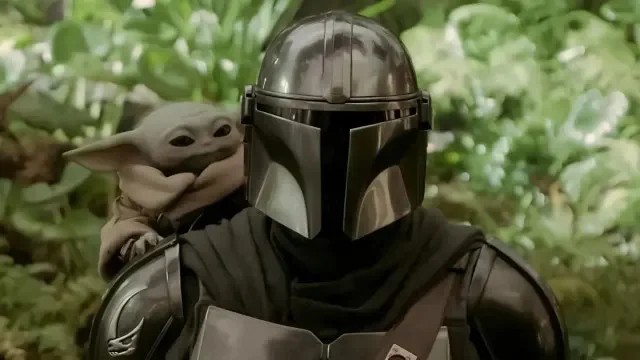
Despite the disappointing numbers, the film has garnered praise for its commitment to practical effects and stunt work — a throwback to the original trilogy’s aesthetic. Fans have celebrated the tactile feel of the creatures, costumes, and sets. This could become a selling point for the eventual home video release, but it hasn’t been enough to sustain box office momentum in a crowded summer market. The disconnect between critical appreciation for technical craft and audience indifference to narrative elements suggests that even beloved characters like Grogu (aka Baby Yoda) cannot compensate for a perceived lack of storytelling ambition.
What This Means for Disney’s Film Slate
The performance of “The Mandalorian and Grogu” comes at a time when Disney is recalibrating its entire film strategy under CEO Bob Iger’s leadership. The studio has publicly committed to reducing the volume of Marvel and Star Wars content, focusing on quality over quantity. Yet, this film’s difficulties indicate that even a high-profile, relatively well-reviewed franchise entry (by audience scores) can stumble. The studio will likely scrutinize budgets and release timing even more carefully going forward.
For now, “The Mandalorian and Grogu” remains a box office story that shocks industry observers. It could still recover somewhat over the next few weeks, especially if it holds well during the typically slower early summer frame. However, the odds of it reaching profitability in theaters appear slim. The film’s fate will likely be re-evaluated once it hits streaming and home video, where it may recoup some of its losses — and perhaps even build a new audience.
Conclusion: A Wake-Up Call for Hollywood
“The Mandalorian and Grogu” is more than just a box office disappointment; it is a cautionary tale about the limits of brand loyalty in an era of abundant entertainment options. The 69% second-weekend drop suggests that even the most beloved characters cannot guarantee theatrical success without a compelling story, strong word-of-mouth, and a marketing campaign that resonates beyond the core fanbase. Disney and Lucasfilm will need to adapt to these new realities if they hope to keep Star Wars a viable theatrical franchise in the years ahead.
In the meantime, audiences have voted with their wallets, choosing horror over heroics and novelty over nostalgia. The Force, it seems, is not always with the biggest budget.
Comments