
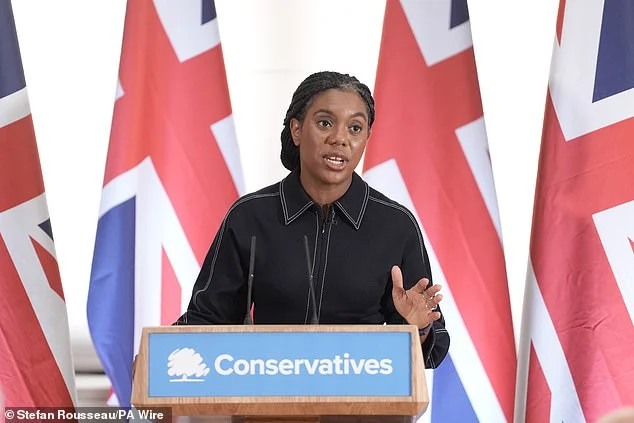
Badenoch Draws Red Lines on Net Zero and ECHR
Conservative leader Kemi Badenoch has intensified her internal party purge, vowing to block any prospective candidate or sitting MP who supports the UK’s 2050 net zero emissions target or remains committed to the European Convention on Human Rights (ECHR). In an article for The Telegraph, Badenoch declared she is building “a party for the future, not a retirement home for failed politicians,” and warned that some former colleagues “should never have been candidates before.”
The move, first reported on July 10 by BusinessGreen, has drawn immediate fire from centrist Tories. The pressure group Prosper UK, backed by former Home Secretary Amber Rudd and ex-Justice Secretary David Gauke, pushed back against what it called a “single test” on climate and human rights policy. “Requiring agreement on every major issue risks shutting out talented people,” Prosper said, arguing that the most successful Tory governments were “broad churches” that accommodated different strands of centre-Right thinking.
Badenoch, however, is unyielding. She argues that net zero targets “make energy more expensive” and that believing the ECHR can be “wished away” is a sign of unseriousness. Her hardline stance is part of a broader reset: she has said she wants to recruit “serious businesspeople, engineers, electricians, builders, [and] teachers” to stand at the next general election, sidelining traditional career politicians.
Farage’s By-Election Bombshell Adds Pressure
The internal Tory turmoil comes as Nigel Farage, leader of Reform UK, announced he is quitting his Clacton-on-Sea seat to trigger a by-election, framing it as “people versus the establishment.” Both Labour and the Conservatives have said they will not field a candidate, effectively handing Farage a clear shot at returning to Parliament with a fresh mandate.
Badenoch’s decision not to stand a Tory candidate in Clacton can be read as an acknowledgment of her party’s diminished standing—and a tactical move to avoid a humiliating defeat. But it also underscores how Farage is exploiting the vacuum left by a Conservative Party still reeling from scandals and policy infighting. Reform deputy leader Richard Tice claimed the main parties are “running scared,” and the Clacton contest is likely to become a lightning rod for public anger at the political establishment.
The timing could not be worse for Badenoch. At the same time that she is trying to project strength by enforcing ideological purity on net zero and the ECHR, she is ceding ground to a populist rival who has made opposing both issues central to his platform. The contrast highlights a key vulnerability: Badenoch’s own red lines may merely play into Farage’s hands, validating his critique of a “corrupt” system while doing little to expand the Tory coalition.
The Stakes for the Conservative Party
The row over candidate selection is not an abstract personnel dispute. It threatens to accelerate the fragmentation of the centre-Right vote. Prosper UK’s supporters—who include Andy Street, the former West Midlands mayor, and Baroness Davidson, former Scottish Tory leader—represent a substantial bloc of moderate Conservatives who view climate action and human rights protections as non-negotiable.
If Badenoch forces these figures out, she risks turning the Tories into a rump party of culture war warriors, shedding the suburban and urban voters needed to win a majority. Conversely, if she compromises, she opens herself to charges of weakness from the party’s growing Reform-sympathetic wing. The net zero question is particularly explosive: polls consistently show broad public support for the UK’s climate goals, even among some Tory voters, meaning a purge could alienate swing voters as much as it energizes the base.
Broader Implications for British Politics
Badenoch’s purge is a symptom of a deeper realignment in British politics. The old Conservative coalition—business-friendly, socially liberal, fiscally responsible—is being torn apart by the forces of nationalism, climate scepticism, and anti-establishment populism. By drawing a hard line on net zero and the ECHR, Badenoch is choosing to compete with Reform UK for the same voters, rather than attempting to rebuild a broad centre-Right alliance.
This strategy carries echoes of the Brexit wars that consumed the party from 2016 onward. Then, as now, demands for ideological purity on a single issue (Brexit) led to the expulsion of moderates and a narrowing of the party’s appeal. The result was a landslide defeat in 2024. Badenoch seems determined to repeat that pattern, albeit on different terrain.
Meanwhile, the Clacton by-election will be a live test of whether Farage can convert media spectacle into electoral muscle. If he wins convincingly—and especially if he does so without serious Tory or Labour opposition—the pressure on Badenoch from her own right flank will become unbearable. Calls for a merger with Reform, or for Badenoch to step aside in favour of a more populist leader, will only grow louder.
In a political landscape already shaken by events like the Tommy Robinson’s Moscow Trip Funded by Musk Foundation Sparks UK Democracy Alarm, Badenoch’s bet is high-risk. She is gambling that the public is more concerned with cultural and environmental grievances than with economic competence or institutional stability. If she is wrong, the Conservatives may not merely lose the next election—they may cease to exist as a governing party.
All eyes are now on Clacton and on the list of candidates Badenoch ultimately approves. The next few months will determine whether the Tory leader is a visionary or a pyromaniac.
Comments