
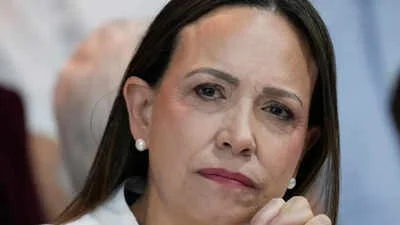
Machado Announces Fresh Presidential Bid and Return to Venezuela
Panama City, Panama — Venezuelan Nobel Peace Prize laureate and opposition leader María Corina Machado declared on Saturday that she will run for president again and plans to return to her homeland before the end of 2026. Speaking at a press conference in Panama City alongside fellow opposition leaders, Machado reaffirmed the coalition's commitment to a democratic transition “through free and fair presidential elections, where all Venezuelans inside and outside the country vote.”
Machado, who has been in exile since December 2025 after emerging from 11 months in hiding within Venezuela, traveled to Norway where she was honored with the Nobel Peace Prize. Her announcement comes more than four months after the Trump administration stunned the international community by sidelining Machado and instead cooperating with a loyalist of the former ruling party following the U.S. military’s capture of then-President Nicolás Maduro.
Despite the political turmoil, Machado remains the most recognizable opposition figure in Venezuela. She rose to prominence as Maduro’s fiercest challenger, but his government barred her from running in the 2024 presidential election. In response, she selected retired ambassador Edmundo González Urrutia as her proxy. Official results declared Maduro the winner hours after polls closed, but Machado’s campaign produced evidence showing González defeated Maduro by a margin of more than 2-to-1.
“I will be a candidate, but there may be others, of course,” Machado said Saturday. She pledged to run against any other presidential hopeful in “an impeccable election.”
The Stakes: A Fractured Political Landscape and U.S. Policy Shift
Machado’s renewed candidacy injects fresh uncertainty into Venezuela’s already fragmented political scene. The country has been without a clear electoral timeline since Maduro was captured and acting President Delcy Rodríguez assumed power. Under Venezuela’s constitution, a presidential election must be held within 30 days of the president becoming “permanently unavailable,” but the Trump administration has dampened talk of elections.
Rodríguez has opened Venezuela’s oil industry to U.S. investment at a time of surging global oil prices driven by the ongoing war in Iran. U.S. President Donald Trump and senior officials have praised her cooperation, effectively freezing the push for a democratic vote. The shift in Washington’s stance has left opposition leaders like Machado struggling to regain momentum while exiled abroad.
“An election with democratic conditions would take between seven and nine months of planning,” Machado said. Key requirements include appointing neutral electoral authorities, updating voter registration rolls, and allowing opposition candidates to campaign without government interference. These conditions remain unmet under Rodríguez’s administration, which controls the military and state institutions.
The international community has largely condemned the U.S. pivot. European Union and Latin American governments continue to call for free elections, but without direct leverage over Washington’s oil deals or Caracas’s internal politics, their influence remains limited. Machado’s announcement is a signal that the opposition is not ready to accept the status quo.
Machado’s Road from Hiding to Nobel Laureate
María Corina Machado’s journey from fugitive to Nobel laureate has defined the post-Maduro opposition. After being barred from the 2024 election, she went into hiding for 11 months somewhere in Venezuela, avoiding arrest by Maduro’s security forces. In December 2025, she surfaced and fled to Norway, where she received the Nobel Peace Prize for her nonviolent resistance and advocacy for democracy.
Her exile has not silenced her. From Panama, she has continued to coordinate with opposition factions, maintain ties with international media, and keep pressure on both Caracas and Washington. Saturday’s press conference was the most direct challenge yet to the Trump administration’s strategy of working with Rodríguez.
“We are more united than ever,” Machado said. “The Venezuelan people deserve a real choice, not a managed transition that excludes the majority.”
The Global Context: Oil, War, and Geopolitical Maneuvering
Venezuela’s political crisis is now deeply intertwined with global energy and security dynamics. The war in Iran has driven oil prices to record highs, making Venezuela’s reserves — the largest in the world — strategically vital. Rodríguez’s willingness to sign favorable contracts with U.S. companies has won her Washington’s backing, but critics argue it has come at the cost of democratic principles.
Machado’s return to the political stage presents a dilemma for the White House. Supporting her could disrupt lucrative oil deals and destabilize the fragile relationship with Caracas. Ignoring her risks alienating a broad opposition that still commands significant public sympathy, both domestically and among the Venezuelan diaspora.
Meanwhile, internal pressure is mounting. Human rights groups have documented continued repression under Rodríguez, including arrests of activists and restrictions on the press. The economy remains in recession, with hyperinflation and shortages of basic goods persisting despite the oil revenue surge.
For comparison, similar geopolitical standoffs are unfolding elsewhere. For instance, the Iran's Uranium Standoff: Khamenei Blocks Transfer as Talks Hang in Balance shows how resource-rich nations leverage strategic assets during global crises. Venezuela’s oil has become its own bargaining chip, for better or worse.
What Machado’s Candidacy Means for Venezuela’s Future
Machado’s vow to run again is more than a personal ambition; it is a test of whether the opposition can regroup and force change. Her biggest challenge remains access to the ballot. Under Maduro and now Rodríguez, the electoral council has been stacked with government loyalists. Even if an election is held, it is uncertain that Machado would be allowed to participate.
Still, her track record suggests she will not be easily deterred. In 2024, despite being barred, she orchestrated a campaign that allegedly won the vote for González. Her ability to mobilize volunteers, raise funds, and collect evidence of fraud gave her credibility that other opposition figures lack.
“I will be a candidate, but there may be others, of course,” she repeated, signaling openness to a primary process that could unify the fragmented opposition. However, with no election date set, the immediate priority is building momentum for democratic conditions rather than winning a vote that cannot yet be held.
Broader Implications: A Regional and Global Test for Democracy
Machado’s return bid is being watched closely across Latin America, where democratic backsliding has become a trend. From Nicaragua to El Salvador, autocratic leaders have consolidated power while the U.S. and other powers have responded inconsistently. Venezuela remains the most dramatic case, with its oil wealth, humanitarian crisis, and exile community spanning the hemisphere.
Her Nobel Prize status gives her moral authority but also raises expectations. If she fails to return or to run, it would deal a heavy blow to opposition morale. If she succeeds, it could revive democratic hopes not just in Venezuela but worldwide.
Domestically, the opposition must also contend with war fatigue. The 2024 election fraud and subsequent crackdown left many Venezuelans disillusioned. Machado hopes her Nobel prestige and clear message will reenergize those who have given up on change.
On the policy front, her announcement may pressure the Trump administration to reconsider its stance, especially if the Venezuelan diaspora in Florida — a key voting bloc — presses for action. The administration will have to balance energy security interests against political fallout.
Conclusion: A Pivotal Moment for Venezuela and the Region
María Corina Machado’s decision to run for president again and return from exile marks a pivotal moment in Venezuela’s ongoing crisis. It challenges both the Rodríguez government and the Trump administration’s pragmatic approach. The next months will reveal whether democratic conditions can be established or whether the country slips further into authoritarian rule.
With oil revenues flowing, Washington reluctant to push for elections, and the opposition determined, Venezuela stands at a crossroads. Machado’s promise of a free and fair vote is a bet that international pressure and domestic resolve can still outmaneuver vested interests.
Meanwhile, other parts of the world face their own extreme pressures, such as those described in the Global Heat Wave Spikes Records, Child Deaths, and Ocean Alarm in May 2026, highlighting how interconnected crises — political, environmental, and humanitarian — demand urgent attention. Venezuela’s fate may hinge on whether the global community extends the same urgency to democracy as it does to energy security.
Comments