
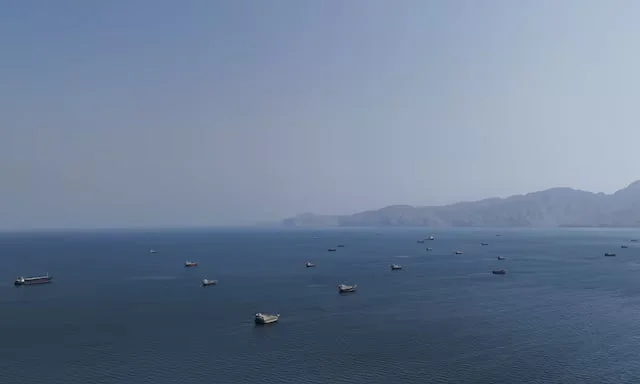
LNG Shipments Through Hormuz Surge to Wartime High
Liquefied natural gas (LNG) traffic through the Strait of Hormuz has climbed to its highest level since the outbreak of the Iran war, according to industry data reported by OilPrice.com. The increase marks a significant recovery for a waterway that handles roughly one-fifth of global LNG trade and about a third of seaborne oil shipments.
The revival in LNG flows comes as the U.S. military has begun coordinating with Saudi oil tankers to navigate risky Hormuz crossings, highlighting the persistent security challenges in the region even as commercial traffic rebounds. The Strait, which narrows to just 21 miles at its narrowest point, has been a flashpoint for tensions between Iran and Western powers for years.
Escorts and Risk Management
The U.S. military's coordination with Saudi tankers underscores the delicate balance between maintaining energy flows and ensuring the safety of vessels and crews. While precise details of the coordination remain scarce, the move signals that Washington is willing to commit military resources to keep the Strait open, even as it seeks to avoid a broader escalation.
Oil Prices Slip as Diplomatic Deal Takes Shape
Despite the uptick in LNG traffic, crude oil prices have retreated from recent highs. Brent crude fell below $90 per barrel for the first time since August, according to OilPrice.com data, as markets reacted to reports that Iran's $8 billion Hormuz deal is heading to President Trump for approval. The deal, if finalized, could ease sanctions on Iranian energy exports in exchange for guarantees on maritime security.
Market Reaction
The prospect of a diplomatic breakthrough has tempered the risk premium that had built up in oil markets during the conflict. West Texas Intermediate (WTI) also declined, trading near $85 per barrel, while natural gas futures remained relatively stable. Analysts caution that the market's optimism may be premature, given the fragile nature of the negotiations and the continued military coordination in the Strait.
Context: Why Hormuz Matters
The Strait of Hormuz is the world's most important oil chokepoint. According to the U.S. Energy Information Administration, about 20 million barrels per day of oil and petroleum products flowed through the Strait in 2023, equivalent to roughly 20% of global consumption. In addition, Qatar and the United Arab Emirates export significant volumes of LNG through Hormuz, making it a critical artery for global gas supplies, particularly to Asia and Europe.
The Iran War and Its Aftermath
The Iran war, which began earlier this year, disrupted shipping lanes and prompted insurers to raise premiums for vessels transiting the Strait. Many tanker operators rerouted or paused shipments, leading to a sharp decline in LNG traffic. The recent increase suggests that confidence is gradually returning, but the U.S. military's coordination with Saudi tankers indicates that risks remain elevated.
ADNOC Gas Posts Stunning Profit Recovery
In a sign of the broader rebound in energy exports, ADNOC Gas has reported a stunning profit recovery. The Abu Dhabi-based company, a subsidiary of the Emirates' national oil company, benefited from increased export volumes and higher prices as energy markets stabilized. The profit surge underscores the resilience of Gulf producers and their ability to adapt to volatile conditions.
Implications for Global Supply
ADNOC Gas's performance is a bellwether for the region's energy sector. As the largest LNG producer in the Middle East after Qatar, the UAE plays a pivotal role in supplying European and Asian markets. The company's recovery may encourage other producers to ramp up exports, further easing supply concerns that had pushed prices higher earlier in the year.
Perspective: A Fragile Recovery
The increase in LNG traffic through Hormuz is a positive development for global energy security, but it is not without caveats. The U.S. military's involvement in escorting Saudi tankers highlights the ongoing volatility in the region. A single incident—a tanker seizure, a drone strike, or a naval confrontation—could reverse the gains and send prices soaring once again.
Diplomatic and Security Dynamics
The reported $8 billion deal between Iran and the United States, if approved by President Trump, could represent a major de-escalation. However, the deal faces opposition from hardliners in both countries and from U.S. allies such as Saudi Arabia and Israel, who fear that easing sanctions on Iran would embolden its regional activities. The balance between diplomacy and deterrence will be crucial in determining whether the Strait remains open and stable.
Market Outlook
For now, energy markets are pricing in a gradual normalization of flows. But traders remain cautious, and the risk premium is unlikely to disappear entirely until there is a durable political settlement. The coming weeks will be critical as the Trump administration evaluates the Iran deal and as the U.S. military continues its coordination with Gulf allies. The trajectory of LNG traffic through Hormuz will be a key indicator of whether the region is truly on the path to stability.
What This Means for Global Energy
The recovery in Hormuz LNG traffic has far-reaching implications. Europe, which has been scrambling to replace Russian pipeline gas, relies heavily on Qatari and Emirati LNG. Asia, too, depends on Gulf supplies to meet its growing energy needs. A sustained increase in flows would help ease global gas prices and reduce the risk of shortages during the upcoming winter season.
Risks Ahead
However, the situation remains fluid. The U.S. military's escort operations are a reminder that the Strait is not yet a safe passage. Any escalation—whether from Iran, non-state actors, or accidental encounters—could disrupt shipments. Moreover, the political fate of the Iran deal is uncertain. If the deal collapses, the U.S. may tighten sanctions, leading to renewed tensions and potentially another downturn in traffic.
A Test of Resilience
The current rebound is a test of the resilience of global energy supply chains. It also underscores the importance of diversification. Countries are investing in alternative routes and sources, but for now, the Strait of Hormuz remains indispensable. The coming months will reveal whether the recent gains are sustainable or merely a temporary reprieve.
Comments