
The Recent Event: A Silent Summoning
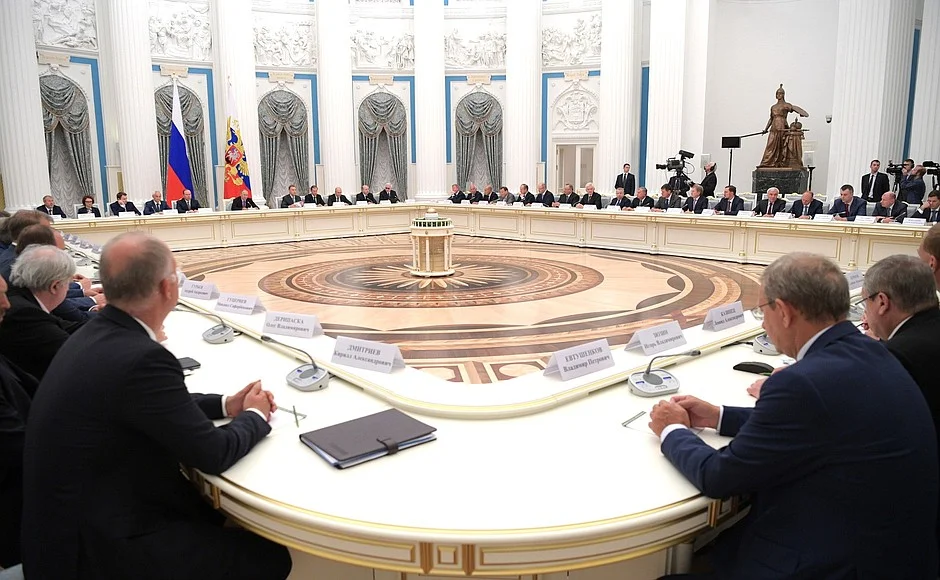
Hours after launching his full-scale invasion of Ukraine on February 24, 2022, Vladimir Putin summoned Russia's richest men to the Kremlin's cavernous Yekaterininsky Hall. More than three dozen billionaires sat huddled along one wall, masked and pale, while Putin sat across the room, creating a vast physical and psychological distance. In the Kremlin-published video of the meeting, none of the invited tycoons said a word.
Putin's message, delivered in typically coded language, was nonetheless clear: "I would like to call on you to show understanding of what is going on," he said, according to BBC reporting, "and work together with the government to find the tools which would support production, the economy, jobs." The businessmen were expected to back the war effort economically. They did so silently. That silence has become a defining feature of the Russian super-rich under Putin—a learned response to decades of warnings that speaking out carries a heavy price.
A Pattern of Fear
The most vivid warning remains Mikhail Khodorkovsky. In 2003, then Russia's richest man and an oil magnate funding opposition groups, accused Putin of presiding over rampant corruption. He spent the next decade behind bars on charges of tax evasion, fraud, and embezzlement—charges he denied. His case echoed through the business community, reinforcing a simple rule: public dissent is costly. The 2022 meeting's silence was not mere deference; it was survival instinct.
Context: Murmurings of a Post-Putin Future
Yet beneath that silence, something is shifting. According to BBC Monitoring, some members of Russia's once-mighty business elite are now quietly imagining a Russia after Putin. They wonder whether, once the president leaves office or dies, the country might return to the 1990s—when oligarchs wielded immense power—or whether a healthier politics might take root. Arkady Ostrovsky, a prominent Kremlin-watcher at The Economist who recently spent hours interviewing one of Russia's richest men, says he senses a "historic, political shift" in how the ultra-rich view the future.
That restlessness is significant. The collapse of the Soviet Union in 1991 gave birth to a class of people who amassed extraordinary wealth and sought to control politicians for their own benefit. Putin later narrowed that space, centralizing power and making clear that defiance would be punished. The 2022 meeting was the starkest illustration of that new order: the elite were present, but voiceless.
The contradiction is stark: private calculations about a post-Putin era exist, yet the public moment in Yekaterininsky Hall produced no visible pushback. As one analysis noted, the meeting's message was direct—help keep production moving, the economy functioning, and jobs intact as the war began—and the room's silence was the final recorded exchange.
The War's Economic Toll
The war has only deepened the pressure on Russian business. Sanctions, supply-chain disruptions, and the drain of resources to the front have forced tycoons to navigate an increasingly hostile environment. Some have lost assets; others have been forced to sell or cede control to the state. The silence of the elite, once a tactic, now also reflects a grim calculation: open opposition risks not only personal freedom but also the remnants of their wealth.
Perspective: A Trilateral Summit and a Quiet Reckoning
Against this backdrop, the Kremlin announced on November 14, 2026, that Putin will hold a trilateral meeting with Chinese President Xi Jinping and US President Donald Trump on November 19 in Shenzhen, on the sidelines of the APEC summit. The meeting, confirmed by Kremlin spokesman Dmitry Peskov, signals a potential shift in geopolitical dynamics—yet it also underscores Putin's continued centrality to Russia's power structure.
For Russia's business elite, the imminent summit may be both a source of hope and anxiety. A high-profile international engagement could stabilize Putin's position, postponing the post-Putin scenarios they quietly discuss. Alternatively, it could open diplomatic pathways that eventually reshape the domestic political landscape. Either way, the tycoons are watching from the sidelines—still silent in public, but increasingly vocal in private.
The 2022 meeting's silence was a warning. Today, that silence is accompanied by murmurings. The Russian business elite has not forgotten the price of speaking out, but the future beyond Putin is no longer unthinkable. As the war grinds on and the Kremlin prepares for a pivotal trilateral summit, the question is whether that silence will hold—or whether, when the moment comes, the elite will finally speak.
Comments