
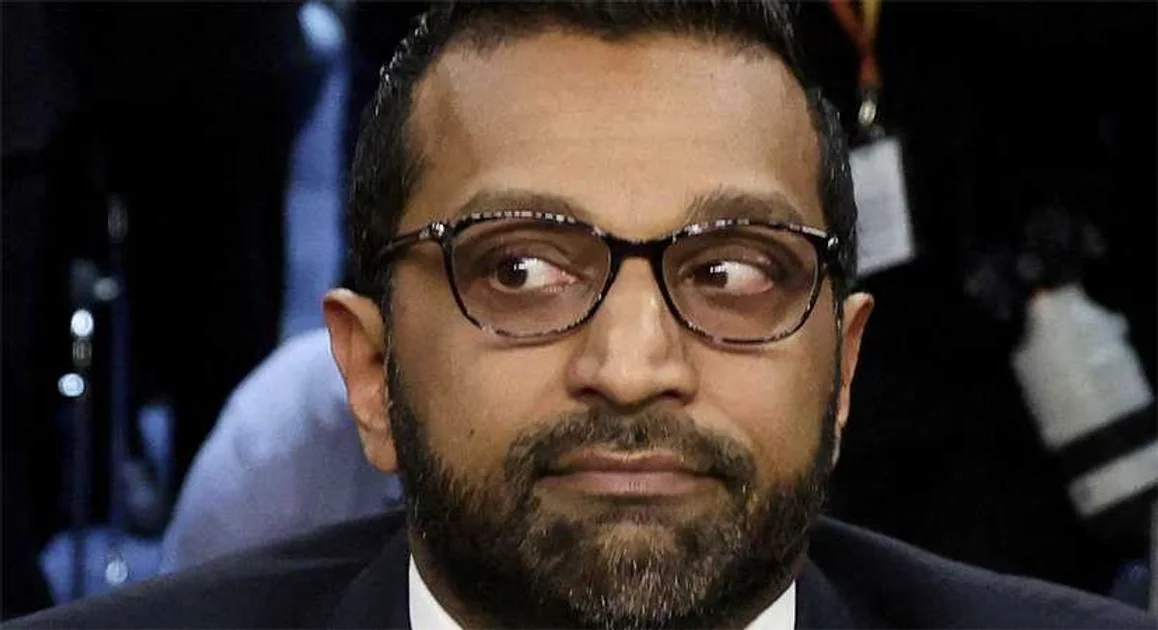
FBI Director Under Fire for Revealing Sealed Case Details Online
FBI Director Kash Patel is facing mounting criticism from current and former law enforcement officials after he prematurely disclosed details of a foiled plot to attack the Ultimate Fighting Championship (UFC) event at the White House earlier this month. The disclosure, made via social media on June 16, has raised questions about whether Patel violated federal laws governing sealed court cases and the FBI's own disciplinary code.
According to sources familiar with the investigation, five men were arrested in connection with an alleged plot to attack the UFC Freedom 250 event, which coincided with President Donald Trump's birthday. Patel announced the arrests in a tweet, stating that the suspects had been "stopped cold" and praising the rapid action of the FBI, the Department of Justice, and partner agencies. However, the investigation had been sealed by a court order, and several law enforcement officials confirmed that agents were still actively searching for additional suspects at the time of Patel's post.
"While the result represented the best of investigative work, it was also nothing out of the ordinary for this law enforcement team – we are built to detect, respond to, and bring to justice those who threaten the lives of American citizens – particularly during large gatherings like the historic UFC 250 fight," Patel wrote in his post.
Legal and Ethical Breach Alleged
Federal law generally prohibits the public disclosure of information related to sealed cases while the court order remains in force, unless formal court authorization is obtained. Patel has previously invoked court orders sealing grand jury testimony as justification for the FBI's inability to release files on Jeffrey Epstein, making his own disclosure in this case appear contradictory.
Lauren Anderson, a former FBI counterterrorism official with 29 years of experience, told The Guardian that several current and former agents who had been in meetings with Patel reported that he frequently seeks out details of investigations that he can then publicize on social media. "This is consistent with a pattern of behavior where the director prioritizes personal image over operational security and legal protocols," Anderson said.
The Foiled Plot: A Mishmash of Grievances
Court documents and social media posts reviewed by NBC News reveal that the core participants in the plot were motivated by a "shuffling playlist of grievances and conspiracy theories." The 32-year-old Missouri man identified as the ringleader was described by federal investigators as "running the show." The group allegedly planned to use drones and explosives to attack the UFC Freedom 250 event, which was held at the White House on June 14.
The plot failed to materialize due to the intervention of the FBI and the Secret Service, but investigators noted that the investigation was still active at the time Patel went public. The premature disclosure may have compromised ongoing efforts to identify and apprehend additional suspects, according to law enforcement sources.
Political and Security Implications
The incident has reignited debates about Patel's leadership style and his willingness to push the boundaries of legal and ethical norms. Critics argue that the disclosure was an attempt to "make himself look good" by taking credit for a successful operation, even at the risk of undermining the investigation.
Supporters of Patel, however, have dismissed the criticism, pointing to the successful prevention of a potential attack and the need for transparency in law enforcement operations. The White House has not commented directly on the controversy, but President Trump has previously praised Patel's performance as FBI director.
Kash Patel's Girlfriend Caught in the Crossfire
The controversy has also drawn in country singer Alexis Wilkins, who is dating Patel. Wilkins performed at the Great American State Fair, a Trump-backed event held in Washington, D.C., on June 24. The performance drew criticism from those who accused her of benefiting from her relationship with Patel and potentially violating federal ethics laws.
Wilkins defended herself, stating that she "was invited to sing this anthem on my own accord." She later traveled to Brussels, Belgium, to perform at an America 250th birthday celebration organized by U.S. Ambassador Bill White. The event featured the Zac Brown Band and a video message from President Trump.
Despite her efforts to move on, social media users have continued to criticize her, with some questioning the timing of her appearances and her connection to Patel. One user commented, "America's 250th and the best we got is kasha’s honey pot gf? We are sooo cooked."
Broader Implications for Law Enforcement Transparency
The Patel controversy highlights a growing tension between the FBI's need for operational secrecy and the public's demand for transparency. In an era of instant communication and social media, law enforcement leaders face increasing pressure to provide real-time updates on high-profile cases. However, the risks of premature disclosure are significant, including compromising investigations, endangering agents, and undermining the integrity of the judicial process.
Experts warn that Patel's actions could set a dangerous precedent for future FBI directors. "If the director can bypass legal protocols for personal gain, it erodes trust in the institution and potentially endangers public safety," said a former FBI official who spoke on condition of anonymity.
The Role of Sealed Court Orders
Sealed court orders are a common tool in federal investigations, designed to protect the integrity of ongoing operations and the privacy of individuals who are not yet charged. Violating these orders can result in legal penalties for the individuals responsible, as well as damage to the case itself. Patel's decision to publicly disclose details of the sealed case has raised questions about whether he consulted with the Department of Justice or obtained the necessary court authorization before doing so.
Comparison with Other High-Profile Cases
The incident is reminiscent of past controversies involving FBI directors and senior officials who leaked classified information to the media. However, the use of social media as a direct channel for such disclosures is relatively new and presents unique challenges for oversight.
In a related development, Patel has also been accused of directing $1 million to what critics call a "slush fund" to pay bonuses to loyalist agents. The allegations, reported by The Guardian, have further fueled concerns about his management of the agency and his ability to maintain its independence from political influence.
What This Changes: The Future of FBI Leadership
The controversy over the UFC plot disclosure is likely to intensify calls for Patel's resignation or impeachment. Democratic lawmakers have already demanded an investigation into his actions, while some Republicans have expressed concern but stopped short of calling for his removal.
The incident also raises broader questions about the future of the FBI under Patel's leadership. Since taking office, he has pursued a policy of greater public engagement, including regular social media updates and press conferences. While supporters argue that this approach increases transparency and public trust, critics contend that it compromises operational security and undermines the rule of law.
A Precedent for Future Disclosures?
If Patel faces no consequences for his actions, it could encourage future FBI directors to use social media as a tool for personal branding, potentially at the expense of national security. Conversely, if he is held accountable, it would reinforce the importance of adhering to legal and ethical standards, even in an era of 24/7 news cycles and instant communication.
For now, the investigation into the foiled plot continues, and law enforcement agencies are working to determine whether any suspects remain at large. The case serves as a stark reminder of the delicate balance between transparency and security in modern law enforcement.
For more on legal and security issues, see our coverage of French Justice System Under Scrutiny as High-Profile Trials Hit Critical Junctures.
Conclusion
The UFC plot disclosure has become a defining moment for Kash Patel's tenure as FBI director. It has exposed the risks of prioritizing public image over legal protocols and has sparked a debate about the role of social media in law enforcement. As the fallout continues, the case underscores the importance of maintaining the integrity of the judicial process, even in the face of political pressure and public scrutiny.
For those following the latest in law enforcement and security, the story of the foiled UFC plot and its aftermath is far from over. The coming weeks will likely bring further revelations and, possibly, legal consequences for those involved.
Comments