
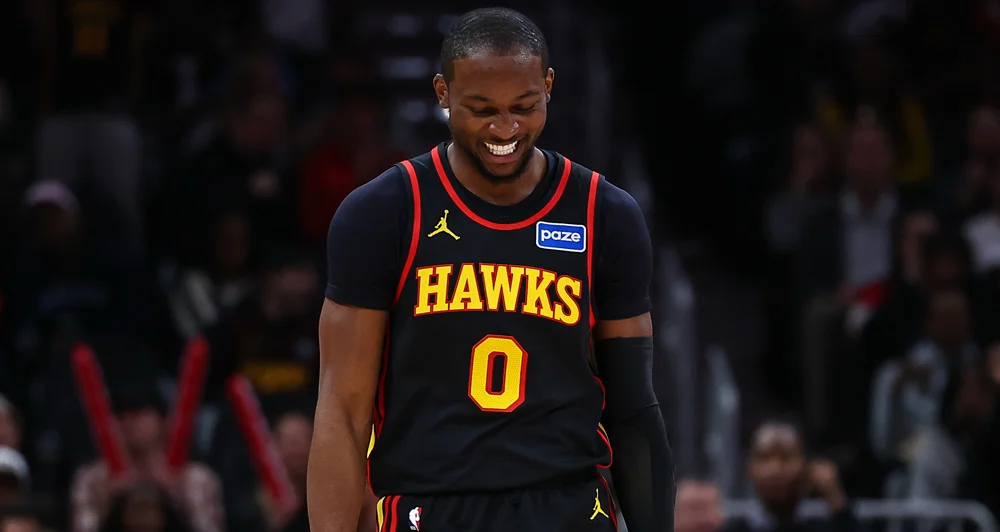
Hawks Decline Option, Kuminga Enters Unrestricted Free Agency
The Atlanta Hawks have declined Jonathan Kuminga’s $24.3 million team option for the 2026-27 season, making the 23-year-old forward an unrestricted free agent. The move, confirmed by ESPN on June 29, ends Kuminga’s brief tenure in Atlanta and opens a new chapter for the former lottery pick, who is now free to negotiate with any team.
Kuminga was traded to the Hawks from the Golden State Warriors at the February deadline, along with Buddy Hield, in exchange for Kristaps Porziņģis. In 16 regular-season games with Atlanta, he averaged 12.3 points, 5.3 rebounds, and 2.1 assists in 22.1 minutes per game, shooting 47.6% from the field and 34.6% from three-point range. He also played a key role in the Hawks' playoff run, averaging 13.7 points and 3.3 rebounds in six games against the eventual champion New York Knicks.
Despite his contributions, Atlanta decided to decline the option after reportedly scouring the trade market for Kuminga without finding a suitable deal. The Hawks now have 16 players under contract, leaving no roster spot for Kuminga without further moves. However, according to NBA insider Jake Fischer, a return to Atlanta remains possible via a sign-and-trade or a new contract if the team creates room.
Why This Matters: Kuminga’s Market and Potential Landing Spots
A Polarizing but Talented Asset
Kuminga’s free agency is drawing significant interest because of his unique blend of athleticism and untapped potential. Selected seventh overall by the Warriors in 2021, he spent five seasons in Golden State, where his relationship with head coach Steve Kerr was rocky, and his role fluctuated wildly. The trade to Atlanta offered a fresh start, and Kuminga thrived as a bench spark, using his explosiveness to attack the rim and pressure defenses.
However, questions remain about his consistency, particularly his three-point shooting (34.6% with Atlanta) and defensive discipline. Teams view him as a high-upside project who needs the right system to flourish.
Milwaukee Bucks Emerge as a Leading Suitor
Among the teams linked to Kuminga, the Milwaukee Bucks stand out. Fischer reported that the Bucks, who recently traded Giannis Antetokounmpo to the Miami Heat and are entering a rebuild, have interest in signing Kuminga. Milwaukee holds a traded player exception that could facilitate a sign-and-trade or a direct signing. The Bucks are focused on acquiring young talent, and Kuminga’s age and upside align with their long-term plans.
Other Potential Destinations
The Sacramento Kings, who had strong interest in Kuminga before his trade to Atlanta, are expected to re-enter the sweepstakes, per Andscape’s Marc J. Spears. Other cash-strapped teams may explore sign-and-trade options, as few franchises have significant cap space this summer. Kuminga’s desire for a clear role and starter minutes will factor into his decision, as will contract terms—likely a multiyear deal in the $15-20 million annual range.
The Hawks’ Dilemma
For Atlanta, declining the option was a financial and roster calculus. The Hawks already have $188 million committed to 16 players, with Jalen Johnson, Dyson Daniels, and Onyeka Okongwu among their highest-paid assets. Bringing Kuminga back would require waiving or trading a player, or using a sign-and-trade to acquire other assets. The team’s priority has been retaining its own free agents and building depth, but losing Kuminga without compensation would be a blow to their playoff aspirations.
Broader Implications: What This Means for the NBA Landscape
Kuminga’s free agency is a microcosm of the evolving NBA market, where young, athletic wings with untapped potential are highly coveted but often overvalued. His case highlights the tension between a player’s desire for a defined role and a team’s need for production. For the Bucks, acquiring Kuminga would signal a commitment to a youth movement, similar to their recent draft picks and trades. For the Kings, it would be a bet on Kuminga’s ability to complement their core.
This saga also underscores the risks of the restricted free agency system. The Warriors’ summerlong contract feud with Kuminga—stemming from discontent over his role—led to his departure, and the Hawks’ decision to decline his option shows that even productive players can become cap casualties in a league where financial flexibility is paramount.
As Kuminga enters his prime, his next contract will not only define his career trajectory but also serve as a case study for how teams value potential over proven production. The coming weeks will determine whether he lands in Milwaukee, returns to Atlanta, or finds a new home with a contender ready to unlock his full potential.
Comments