
MGM+ Debuts 'American Hostage' Starring Jon Hamm
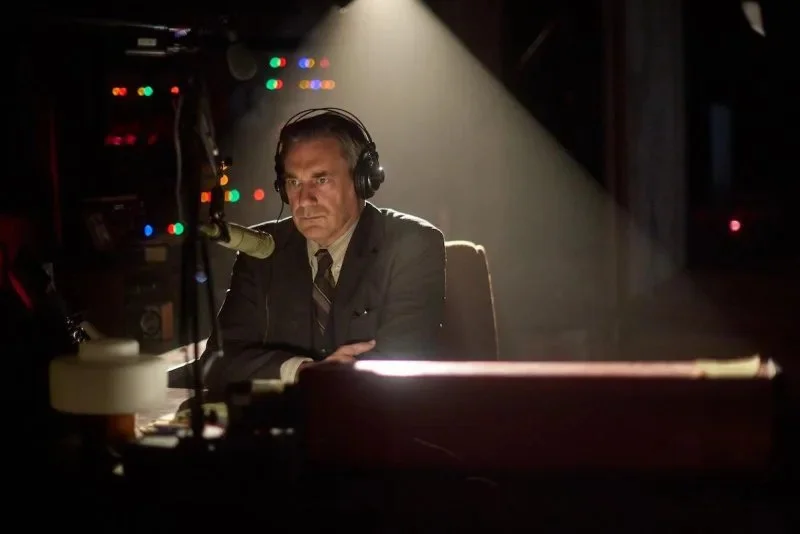
MGM+ premiered its eight-episode limited series American Hostage on September 11, 2026, bringing the harrowing 1977 Indianapolis hostage crisis to television screens. The period drama stars Jon Hamm as Fred Heckman, a respected local radio reporter thrust into the center of a 63-hour standoff when a desperate businessman demands to be interviewed on his popular news program.
The series, co-created by Shawn Ryan and Eileen Myers, adapts the true story of Tony Kiritsis (played by Giovanni Ribisi), an Indiana man who took his mortgage broker Richard "Dick" Hall (Kristoffer Polaha) hostage at gunpoint. Kiritsis rigged a shotgun with a wire tied to Hall's neck, creating a deadly trap that would fire if anyone attempted to intervene. His demand: a live interview with Heckman to expose what he believed was a conspiracy by the mortgage company to steal his property.
Hamm reprises the role he previously voiced in the 2022 scripted podcast of the same name. The cast also includes Mireille Enos as Fred's wife Barbara Heckman, William Jackson Harper as journalist colleague Ben Hairston, and Alan Arkin as attorney John Ruckelshaus.
Critical Reception: Hamm Shines, But Series Divides Reviewers
Early reviews of the series have been mixed, with critics universally praising Hamm's performance while questioning whether the drama fully capitalizes on its compelling source material.
IndieWire's Ben Travers described the series as "a timely, tepid drama," noting that Hamm "anchors" the production but that the eight-episode format struggles to maintain tension. The review highlighted the show's exploration of timely themes, particularly its meditation on how societies trade trusted institutions for newer alternatives. Travers drew parallels between the series' 1977 setting and contemporary concerns about artificial intelligence, digital media, and eroding public trust.
MovieWeb's Christine Persaud was more enthusiastic, praising Hamm as "the king of TV" and calling the series "intriguing enough to want to watch the reenactment" even for viewers familiar with the historical events. Persaud singled out the show's title sequence for particular praise, comparing its tone to a blend of Dexter and Mad Men. She described the series as featuring "moments of subtlety, quiet intensity, and social commentary."
ScreenRant's Matthew Rudoy emphasized the show's eerie relevance in 2026. "The public's relationship with and view of the media is a divisive issue in 2026," Rudoy wrote, noting that while Fred Heckman was "widely respected by everyone and seen as a voice of reason, truth, and authority," such universally trusted journalists no longer exist in the same way. Rudoy observed that the series "particularly excels with the questions it raises, even when there are no clear answers."
Joblo's Alex Maidy offered a more critical assessment, comparing the series unfavorably to Gus Van Sant's 2025 film Dead Man's Wire, which covered the same events. Maidy acknowledged that the extended runtime allows American Hostage to explore "the overarching conspiracy that led to the shocking crime itself," but concluded that it "does not necessarily improve upon what we have already seen." He described Ribisi's portrayal of Kiritsis as "more charming and down-to-earth" than Bill Skarsgård's manic interpretation in the film.
The True Story Behind the Drama
The historical events depicted in American Hostage occurred over three days in February 1977, when Tony Kiritsis, a local businessman facing foreclosure, took drastic action. Kiritsis believed that Richard Hall and his father M.L. Hall were orchestrating a scam to steal real estate from him through fraudulent mortgage practices.
Unlike typical hostage situations, Kiritsis had no intention of escaping or harming his captive if his demands were met. He wanted publicity. Specifically, he wanted Fred Heckman, the most trusted radio voice in Indianapolis, to broadcast his grievances to the public. The standoff became a media sensation, with the wire-rigged shotgun creating a gruesome visual that captivated television audiences nationwide.
The crisis raised profound questions about journalistic ethics that the series explores. Heckman found himself in an impossible position: by providing Kiritsis a platform, was he legitimizing a criminal act or fulfilling his duty to report the truth? As the only line of communication between Kiritsis and authorities, Heckman became more than a journalist—he became an ad hoc hostage negotiator, balancing his professional obligations against the immediate need to save lives.
A Timely Meditation on Media and Trust
Perhaps the most striking aspect of American Hostage is how its 49-year-old story resonates in 2026. The series arrives at a moment when public trust in journalism has reached historic lows, with accusations of bias, misinformation, and "fake news" dominating political discourse.
The contrast between Heckman's era and our own is stark. In 1977, a radio reporter could command universal respect and serve as a neutral arbiter of truth. Kiritsis chose Heckman precisely because he trusted him to tell his story fairly—a level of faith in media that seems almost quaint today.
As the hostage crisis unfolds across eight episodes, the series gradually reveals parallels to contemporary issues. The public's relationship with authority, the role of media in amplifying marginalized voices, and the questions of who deserves to be heard all feel remarkably current. The show doesn't offer easy answers, which critics have identified as both a strength and a limitation.
The series also explores how technology and changing business models have transformed journalism. Just as Heckman's radio medium was eventually supplanted by television and then digital platforms, our current information ecosystem continues to fragment. The series implicitly asks whether the kind of trusted, community-rooted journalism Heckman practiced can survive in an era of algorithmic feeds and declining local newsrooms.
Two Adaptations, One Story
American Hostage represents the third major adaptation of the Kiritsis story. The 2022 podcast, also starring Hamm, first brought renewed attention to the case. Then came Gus Van Sant's 2025 film Dead Man's Wire, which centered on Kiritsis with Bill Skarsgård in the lead role.
The television series distinguishes itself by shifting focus to Heckman and expanding the narrative to include the broader conspiracy that Kiritsis believed was working against him. With eight hours of storytelling compared to the film's runtime, the series has room to develop supporting characters and explore the institutional failures that contributed to the crisis.
This abundance of adaptations raises questions about Hollywood's appetite for revisiting true crime stories across multiple formats. The phenomenon of "twin films"—like Armageddon and Deep Impact or the dueling Candy Montgomery projects Candy and Love & Death—suggests that certain stories capture the cultural imagination in ways that demand multiple interpretations.
For audiences unfamiliar with the events, American Hostage serves as an accessible entry point. For those who know the story, the series offers a more contemplative take, emphasizing ethical dilemmas over action sequences.
What the Series Means for Television Drama
American Hostage arrives as broadcast and cable networks continue to invest in limited series based on true crime and historical events. The format allows for prestigious casting, extended character development, and the kind of nuanced storytelling that two-hour films cannot accommodate.
Hamm's involvement signals the continued appeal of established television stars in prestige projects. His performance as Heckman draws on the same qualities that made his work in Mad Men iconic: a commanding presence, moral complexity, and the ability to convey inner turmoil beneath a composed exterior.
The series also reflects MGM+'s strategy of producing distinctive, character-driven dramas that can compete in an increasingly crowded streaming landscape. By pairing a recognizable star with a compelling true story and a timely thematic hook, the network hopes to attract both critics and subscribers.
Reviews suggest that American Hostage succeeds most when it focuses on the ethical questions at its core rather than the mechanics of the hostage situation itself. The series' willingness to leave some questions unresolved may frustrate viewers seeking clear resolutions, but it also reflects the messy reality of the events it depicts.
As the 2026 television season unfolds, American Hostage stands as a notable entry in the true crime genre—imperfect but thought-provoking, anchored by a compelling lead performance, and deeply relevant to contemporary debates about media, truth, and public trust.
Comments