
Necropsy Confirms Avian Influenza as Primary Cause of Jackie's Death
BIG BEAR, Calif. — The final necropsy report on Jackie, the beloved Big Bear bald eagle whose livestream captivated millions, was released Wednesday, revealing that Highly Pathogenic Avian Influenza (HPAI) was the primary underlying cause of her decline and death. The California Department of Fish and Wildlife (CDFW) announced the findings in a joint statement with the San Diego Zoo Wildlife Alliance and the Ojai Raptor Center, ending weeks of speculation about what caused the eagle's mysterious illness.
Jackie died on August 10 at the Ojai Raptor Center after more than three weeks of intensive medical care. She was estimated to be around 14 years old. The necropsy, performed by veterinary pathologists at the San Diego Zoo Wildlife Alliance, along with extensive laboratory and toxicology testing, painted a picture of a complex and unusual disease process that had been developing over time.
According to the CDFW, the HPAI infection caused a severe ulcer in Jackie's stomach, which led to persistent internal bleeding, anemia, and the development of bacterial sepsis. "In an uncommon presentation of the virus, the infection caused a severe ulcer in her stomach that led to persistent internal bleeding, anemia and the development of bacterial sepsis," said Steve Kubiski, Director of Disease Investigations with the San Diego Zoo Wildlife Alliance, in the statement.
The necropsy also revealed chronic disease involving the ventriculus, the muscular portion of a bird's stomach commonly called the gizzard. The damaged and ulcerated tissue contributed to ongoing blood loss and severe anemia, and allowed bacteria to enter the body, resulting in a serious secondary bacterial infection. Additional testing found severe inflammation and blood clot formation in Jackie's heart and several major blood vessels, and HPAI virus genetic material was present in multiple tissues throughout her body, including the ulcerated tissue in her ventriculus.
While toxicology screening detected brodifacoum, an anticoagulant rodenticide commonly known as rat poison, in Jackie's liver, officials determined it was not the primary cause of her illness or death. "The necropsy did not find uncontrolled bleeding typically associated with anticoagulant rodenticide; therefore, brodifacoum was not identified as the primary cause of illness or death," the CDFW said. Other persistent environmental contaminants were also found, but their role in her death was considered secondary. Tests for West Nile virus were negative, and heavy metal levels were within acceptable limits.
A Beloved Icon's Sudden Decline
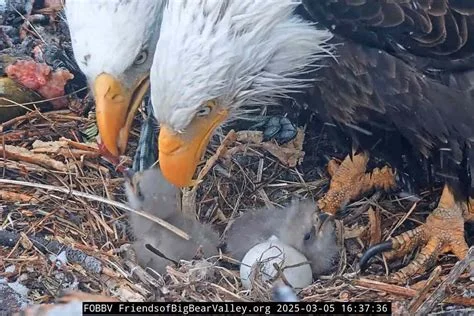
Jackie's story captured the hearts of millions through the Friends of Big Bear Valley's nonstop livestream of her nest overlooking Big Bear Lake, which she shared with her mate, Shadow. The camera offered an intimate window into the lives of the bald eagles, from incubating eggs to weathering snowstorms, and amassed a devoted global fanbase. When Jackie was found weak and disheveled on the shoreline of Big Bear Lake in July, after being seen in a fight with two subadult eagles, fans and wildlife officials alike were alarmed.
She was taken to the Ojai Raptor Center for treatment, where tests revealed she had anemia. She received a blood transfusion from another eagle, which briefly provided hope for her recovery. Despite scans, biopsies, and round-the-clock care, experts could not determine why she was ill. She continued to suffer setbacks and died on August 10. The months-long investigation into her death involved veterinary pathologists, toxicologists, and disease experts from multiple institutions.
"The necropsy revealed a complex and unusual disease process involving severe, chronic inflammation and ulceration of the stomach, persistent internal bleeding, anemia and secondary bacterial sepsis," the Ojai Raptor Center said in a social media post. "Further diagnostic testing confirmed Highly Pathogenic Avian Influenza (HPAI) within the affected tissues, identifying the virus as an underlying cause of the severe stomach ulceration. Multiple complications developed over time and ultimately contributed to her decline and death."
The findings brought some closure to a community that had rallied around Jackie. On October 3, fans gathered at Bear Mountain Ski Resort for a celebration of life and legacy, where Big Bear Valley Interim Executive Director Shelley Egan stood with a painting by local artist Jillana Marshall honoring the eagle. Jackie has since been cremated, according to the Los Angeles Times.
What Is HPAI and Why It Matters
Highly Pathogenic Avian Influenza is an infectious disease that primarily affects birds and has been circulating in wild bird populations throughout the United States. Waterfowl and shorebirds are natural hosts of avian influenza viruses, while eagles and other raptors may be exposed through contact with infected birds or by consuming infected prey, according to the CDFW.
The virus has caused widespread mortality in wild birds and poultry across North America in recent years, and its presence in a top predator like a bald eagle highlights the far-reaching consequences of the disease. Raptors are particularly vulnerable because they scavenge and hunt other birds, potentially ingesting the virus. While human infections are rare, HPAI has occasionally spilled over into mammals, raising concerns among public health officials.
Jackie's case is notable because of the unusual presentation: instead of the typical respiratory or neurological symptoms, the virus caused a severe stomach ulcer that led to internal bleeding. This atypical manifestation underscores the complexity of the disease and the challenges veterinarians face in diagnosing and treating wildlife. "Together, the findings showed that Jackie was suffering from multiple severe and interconnected disease processes that had been developing over time and ultimately led to her decline and death," the CDFW statement said.
The detection of rat poison in Jackie's system also drew attention to the broader issue of environmental contaminants affecting wildlife. Brodifacoum is a second-generation anticoagulant rodenticide that can persist in the food chain and cause secondary poisoning in predators. While it was not deemed the primary cause of death, its presence in Jackie's liver serves as a reminder of the sublethal threats that wildlife face.
Broader Implications for Wildlife and Public Health
Jackie's death is a stark reminder of the ongoing threat posed by HPAI to wild bird populations and the ecosystems they inhabit. The virus has been detected in numerous species across the country, and its impact on raptors is of particular concern because they are often indicators of environmental health. Bald eagles, once on the brink of extinction, have made a remarkable recovery in recent decades, but diseases like HPAI can pose new challenges to their populations.
Wildlife agencies continue to monitor the spread of HPAI and advise the public to avoid handling sick or dead birds. The CDFW recommends that anyone who finds a dead bird report it to local wildlife authorities. For those who keep backyard poultry, biosecurity measures are essential to prevent the spread of the virus.
The findings also highlight the importance of comprehensive necropsies and toxicology testing in understanding wildlife mortality. Without such thorough investigations, the complex interplay of infectious diseases and environmental contaminants might go unnoticed. The collaboration between the CDFW, San Diego Zoo Wildlife Alliance, and Ojai Raptor Center exemplifies how multi-institutional efforts can unravel difficult cases.
For Jackie's fans, the news brings a mix of sadness and understanding. The livestream that once brought joy now serves as a testament to the fragility of nature. As one fan wrote on social media, "Jackie brought us together and taught us about the wild. Her death reminds us that even the strongest among us can be brought down by unseen threats."
Remembering Jackie's Legacy
Jackie's legacy extends beyond her death. She was a symbol of resilience and a bridge between humans and the natural world. The Friends of Big Bear Valley, the nonprofit that operates the nest camera, has said it will continue to share the lives of Shadow and other eagles in the area. The organization has also emphasized the importance of conservation and education.
In the wake of her death, discussions about wildlife rehabilitation and disease surveillance have gained momentum. The Ojai Raptor Center, which cared for Jackie in her final weeks, has received an outpouring of support from the public. The center continues to treat injured and orphaned raptors and relies on donations to fund its work.
As wildlife officials continue to study HPAI and its effects, Jackie's case will serve as a valuable data point. It underscores the need for vigilance and research to protect not only bald eagles but all wildlife. The necropsy report, while conclusive, leaves room for further questions about how the virus behaves in individual animals and what can be done to mitigate its impact.
For now, those who followed Jackie's journey can take solace in knowing that her death was thoroughly investigated and that her story has contributed to a better understanding of avian influenza. Her memory lives on in the hearts of her fans and in the ongoing efforts to preserve the wild places she called home.
As the sun sets over Big Bear Lake, the nest she shared with Shadow remains, a silent witness to the cycles of life and death in the natural world. The livestream continues, offering a new generation of viewers the chance to connect with nature, just as Jackie did for so many.
Comments