
Trump Announces Exploration Plans
President Donald Trump announced Wednesday that "massive" oil, gas, and mineral exploration is "getting ready to begin" in Greenland, a self-governing territory of Denmark. In a post on his Truth Social platform, Trump said the Arctic island holds some of the world's largest reserves of "easily" extractable oil, though he provided no specific details about potential U.S. involvement or timelines.
The announcement comes less than a month after the United States, Greenland, and Denmark signed a new security agreement on September 22, 2026, aimed at bolstering American military and security presence on the island. That pact, which has no expiration date, grants the U.S. broad access to Greenland's airspace and territory, allows for the expansion of the Pituffik Space Base, and permits the establishment of two additional bases at Narsarsuaq and Mestersvig. It also includes provisions for "minerals cooperation" but does not grant the U.S. any special exploration rights.
Key Details of the Security Agreement
The security deal, signed in New York City, largely focuses on military purposes, including Trump's planned "Golden Dome" missile defense system. It blocks non-NATO countries from establishing bases on the island without agreement from the parties involved. The agreement reaffirms Danish sovereignty and Greenlanders' right to self-determination, and would remain in effect if Greenland eventually chooses independence.
Context: Why Greenland Matters
Trump's announcement is likely aimed at addressing rising energy prices and economic concerns ahead of next month's midterm elections. The president posted the statement following a campaign event Tuesday in Wasilla, Alaska, where he stumped for Republican Senator Dan Sullivan. Rising energy costs—a direct result of Trump's war in Iran—are creating financial hardships for American working-class families, making energy independence a key electoral issue.
Greenland has long been on Trump's radar. Since his first term, he has cited the island's strategic location as a reason for greater U.S. control, even suggesting purchasing it from Denmark or using military force. During his second term, he issued threats to seize the territory, causing tensions with NATO allies. The September security agreement was seen as a way to ease those tensions while still expanding U.S. military presence.
Challenges to Exploration
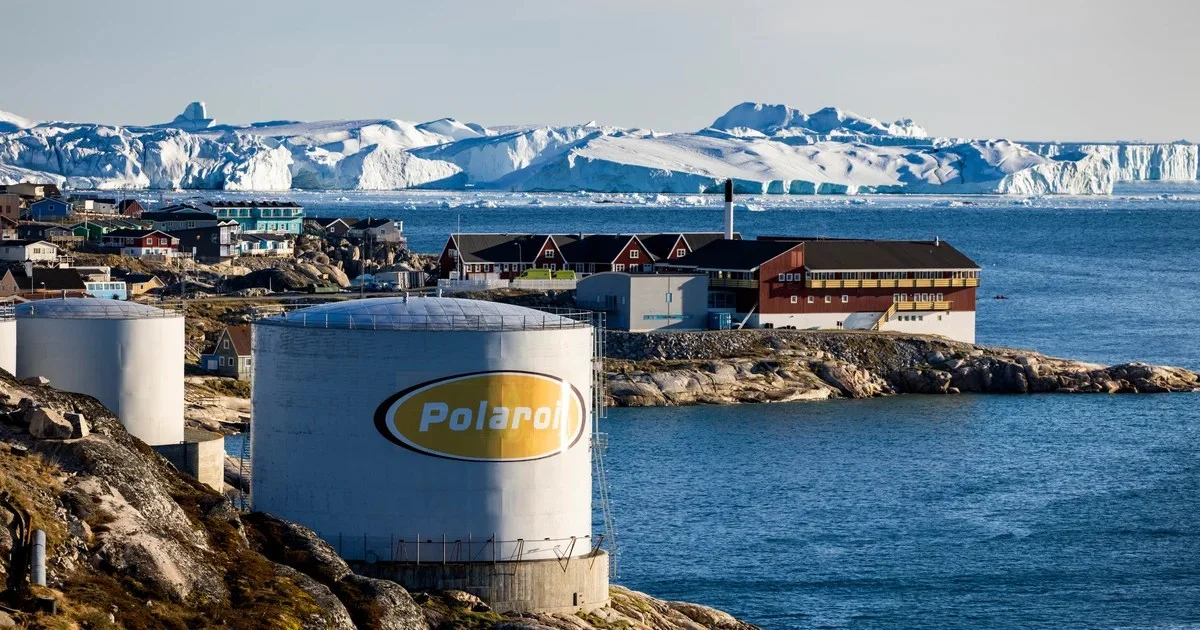
Despite Trump's optimism, resource exploration and extraction in Greenland have stymied companies for decades. The island's harsh climate, lack of key infrastructure, and difficult geology have prevented previous efforts to extract rare earth minerals, oil, and gas from progressing beyond the exploratory stage. Industry experts believe Greenland's mineral resources remain only lightly explored, and the cost of extraction has not made economic sense for private companies.
Perspective: Strategic and Economic Implications
Trump's comments highlight Greenland's dual importance: as a strategic military outpost and as a potential resource treasure trove. In his post, Trump emphasized Greenland's role in defending the United States, stating that "any future attack" on the U.S. would have to come across the island, where American defenses would "routinely knock down drones, missiles, or any other form of weapon not yet conceived." He added that the island provides "time, location, and sightline, like nowhere else in the world."
The announcement, however, raises questions about the balance between military priorities and resource extraction. The security agreement mentions "minerals cooperation" but offers no specifics on how exploration would proceed or whether U.S. companies would receive preferential treatment. Representatives of the leaders of Denmark and Greenland did not immediately return requests for comment.
Broader Trends
Trump's push for Greenland exploration fits a broader pattern of his administration's focus on energy dominance and reducing dependence on foreign resources. It also underscores the growing geopolitical competition for Arctic resources, as climate change makes the region more accessible. However, the practical hurdles remain significant, and it is unclear whether Trump's announcement will translate into actual exploration or is primarily a political message ahead of the midterms.
As the U.S. seeks to assert its influence in the Arctic, the coming months will reveal whether Greenland's resources can be developed economically and whether the new security agreement paves the way for meaningful cooperation or remains a symbolic gesture.
Comments