
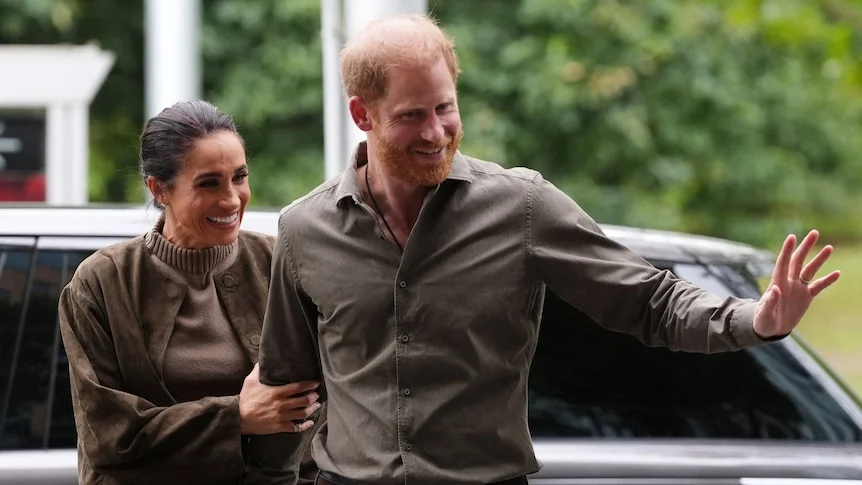
A Whirlwind Four Days Down Under
The Duke and Duchess of Sussex have completed a brisk four-day visit to Australia's east coast, touching down in Melbourne, Sydney, and Canberra in what looked — on paper at least — remarkably like a traditional royal tour. The itinerary was packed: Indigenous cultural ceremonies, visits to homeless shelters and children's hospitals, a stop at the Australian War Memorial, and time spent sailing on Sydney Harbour with veterans from Invictus Australia.
Yet the couple no longer carry working royal status. They traveled in a private capacity, and that distinction colored nearly every aspect of the trip — from the scale of public engagement to the thorny question of who foots the security bill.
From Packed Crowds to Quiet Corners
The contrast with their last Australian visit in 2018 was stark. Eight years ago, tens of thousands of Australians lined the streets to catch a glimpse of the then-working royals during a nine-day, country-wide tour. This time, the BBC reported that most Australians it spoke to were either unaware of or simply uninterested in the couple's presence. Walkabouts — the traditional set-piece moments where royals meet the public — were largely absent, replaced by more controlled, semi-spontaneous appearances.
That said, genuine warmth was on display in moments. On the final day, Harry met Michelle Haywood beneath the Sydney Opera House sails — the daughter of Daphne Dunne, a war widow who had a memorable encounter with the Prince years earlier. Fans got selfies and high-fives, and the couple appeared visibly at ease in those intimate exchanges.
Social Media, Mental Health, and a Keynote at $2,400 a Seat
Beyond the photo opportunities, the visit carried a substantive advocacy thread — most visibly around the harms of social media and youth mental health. At Melbourne's Swinburne University of Technology, Meghan spoke candidly about her own experience online, telling a group of young people and mental health advocates that she had been "the most trolled person in the entire world" for a decade. She described being "bullied every day" and argued that the tech industry is fundamentally "not incentivised to stop" platforms from being weaponised for cruelty.
Harry, for his part, praised Australia's decision to ban social media for children under 16, calling it "epic" from a "responsibility and leadership standpoint." He acknowledged that many other countries have followed suit but stressed that it should never have come to a ban in the first place — tech companies, he argued, must be held accountable for making their platforms safe.
The mental health theme runs deep for the Sussexes. Their Archewell Foundation has made wellbeing advocacy a cornerstone of its work, and Australia's legislative action on youth social media gave the visit a timely policy hook.
The Commercial Dimension
Not all of the trip was charitable in nature. On the same day as the Swinburne University event, Harry delivered a keynote address at a workplace culture summit — with tickets priced at up to A$2,400 (around £1,260) per person. The blending of commercial engagements with charitable ones drew attention, as did emerging reports that Australian taxpayers could bear some of the security costs for the couple's public events. The combination prompted a degree of backlash, complicating the otherwise carefully curated narrative of the tour.
This dynamic is increasingly familiar for the Sussexes, whose post-royal life requires them to sustain themselves financially through speaking engagements, media deals, and brand partnerships — even as they continue to trade on causes and imagery closely associated with their royal past. It's a tension that celebrities in comparable situations often navigate, not unlike the scrutiny facing other high-profile figures caught between public service and personal brand. For a broader look at how public figures manage perception under intense media pressure, the Blake Lively vs. Justin Baldoni trial case offers a timely parallel in the celebrity-media ecosystem.
Why the Lukewarm Reception Matters
Giselle Bastin, an associate professor at Flinders University who researches Australia's relationship with the monarchy, offered a measured verdict: "If they think it's gone well, it's because nothing has gone wrong." The tour was, she noted, meticulously controlled — risks minimised, hecklers avoided, negative reactions pre-empted by the absence of large open gatherings.
That calculation reflects a broader strategic reality for Harry and Meghan. Since stepping back from royal duties in 2020 and relocating to California, the couple has had to reinvent their public role entirely, without the institutional scaffolding of the Royal Family. Every overseas appearance now serves multiple purposes simultaneously: maintaining global relevance, advancing their charitable brand, and generating the commercial revenue their independent life requires.
Back in the UK and US media ecosystem, the couple continues to face sustained criticism from commentators like Piers Morgan, who has publicly called for them to be stripped of their titles and recently announced a new royal-focused media channel set to launch at the end of April. Morgan's reported status as the top non-American news influencer in the US suggests that the anti-Sussex narrative retains significant reach in the very market the couple is most trying to cultivate.
The Bigger Picture: Celebrity Royalty in a Skeptical Age
The Australia visit ultimately illuminates a central paradox of the Sussex brand. Their causes — mental health, veteran welfare, Indigenous recognition, children's online safety — are broadly popular and genuinely important. Their instinct for personal connection, as seen in countless spontaneous encounters during the tour, remains authentic and effective at close range.
But the architecture of 21st-century celebrity, which now sustains them, demands scale, controversy, and constant media oxygen to remain viable. A "nothing went wrong" tour, as Professor Bastin observed, is a neutral outcome — not a triumph. For a couple who once commanded the attention of tens of thousands on a single Sydney street, the muted response from ordinary Australians in 2026 signals how much ground has shifted in eight years.
Whether their advocacy on issues like youth social media bans and mental health can translate into lasting influence — or whether they remain perpetually caught between royal nostalgia and celebrity reinvention — is a question this tour answered only partially, and perhaps deliberately so.
Comments