
Three Claims, One Trial: Where the Lively-Baldoni Case Stands Now
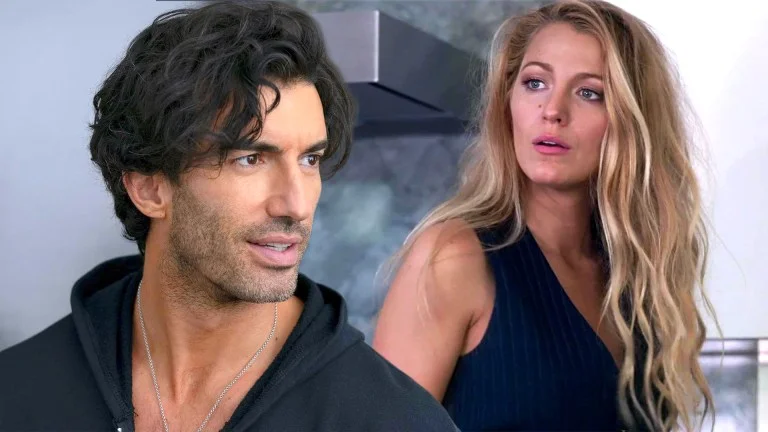
After nearly two years of legal maneuvering, public accusations, and media firestorms, the lawsuit between actress Blake Lively and her It Ends With Us director Justin Baldoni is finally heading to a jury. On April 2, 2026, Judge Lewis J. Liman of the U.S. District Court for the Southern District of New York issued a sweeping 152-page ruling that dismissed 10 of the 13 claims Lively had filed against Baldoni and his production company, Wayfarer Studios. The remaining three — breach of contract, retaliation, and aiding and abetting retaliation — survived and are now set to be heard at trial in May 2026.
Baldoni, 42, has denied all three surviving claims. Lively, 38, responded to the ruling on Instagram by expressing gratitude and noting that the core of her case remained intact and would be placed before a jury. For a lawsuit that has gripped Hollywood since the film's 2024 premiere, the road to a courtroom verdict is now just weeks away.
What the Judge Actually Decided — and Why It Matters Legally
Harassment Claims Dismissed on Technical, Not Substantive, Grounds
The dismissal of Lively's sexual harassment claims drew considerable attention, but legal analysts have been quick to caution against misreading the ruling as an exoneration of Baldoni. Judge Liman did not find that the alleged conduct never occurred. Instead, the harassment claims failed on two distinct procedural grounds.
First, the court determined that Lively was classified as an independent contractor rather than an employee at the time of the alleged incidents. That classification meant she was not entitled to pursue sexual harassment claims under Title VII of the Civil Rights Act of 1964, a federal statute that applies specifically to employees. Second, her California state law harassment claims were dismissed on jurisdictional grounds: Liman found that while Lively had sued under California law, the alleged wrongful conduct did not take place in California and lacked a sufficient legal nexus to that state.
In short, the claims were thrown out because of how Lively was classified and where events occurred — not because a judge evaluated the underlying allegations and found them without merit.
Retaliation Claims: The Heart of What Remains
The three claims that survived represent a distinct and arguably more novel legal theory. Lively alleges that Baldoni and his team enlisted crisis public relations professionals to launch a coordinated reputational campaign against her — a preemptive strike designed to neutralize accusations they feared she would eventually bring against him. This alleged smear campaign, Lively contends, constitutes unlawful retaliation.
Among the evidence that emerged during discovery was a text message attributed to one of Baldoni's publicists: "You know we can bury anyone." Legal commentary published by Bloomberg Law underscored that while a jury has yet to rule on whether the campaign legally constitutes retaliation, that phrase alone illustrates a mindset that could be enough to establish liability. Employment law experts have pointed to this case as a significant cautionary tale for employers: even when underlying harassment claims fail, exposure for retaliatory conduct — including reputational attacks — can survive and reach a jury.
Ryan Reynolds Breaks His Silence: 'I've Never Been More Proud'
Amid the legal proceedings, Ryan Reynolds, 49, has remained conspicuously quiet — until now. In an interview on Sunday Sitdown with TODAY, hosted by Willie Geist and aired on April 19, 2026, Reynolds offered his most candid public comments yet about the lawsuit that has upended his family's public life.
When Geist asked how he and Blake had managed the strain of an extended, highly public legal battle, Reynolds reflected on the gap between digital perception and reality. "You really see kind of the illusion behind so much of this stuff," he said. "Digital life versus real life."
He stopped short of addressing specific allegations or legal arguments, but his emotional investment was evident. "Without getting into too much, I'll just say, I've never in my life been more proud of my wife," Reynolds told Geist. "People have no idea what's really going on, you know? And I've just never in my life been more proud of someone with that level of integrity."
Reynolds, who co-founded the marketing company Maximum Effort with Lively and has been named in several of the legal documents connected to the case, has been a consistent presence in the background of this dispute. His comments are notable both for their rarity and for what they signal: that behind the legal proceedings, the couple views this moment as a test of character rather than simply a court battle.
The couple share four children: daughters James, 11, Inez, 9, and Betty, 6, as well as their youngest son Olin, 3.
Career Fallout and Reports of a Possible Move to the UK
Hollywood's Quiet Freeze-Out
Beyond the courtroom, the professional and personal costs of the lawsuit are coming into sharper focus. Multiple sources cited in a recent Daily Mail report — as covered by outlets including the Economic Times — suggest that Lively's career prospects in Hollywood have dimmed considerably since the Baldoni drama exploded into public view.
"Blake isn't getting the offers," one unnamed industry insider told the outlet. "There hasn't been anywhere near the same interest in her since the Baldoni drama exploded. She's burned bridges." The same reports describe both Lively and Reynolds as "tired" and "not as playful" as they once were, having pulled back from social engagements as the trial approaches. "They're just preoccupied," one source added.
A Life Reset Across the Atlantic?
According to the same reporting, the couple has been discussing the possibility of relocating to the United Kingdom. The idea, sources say, is not purely about escaping legal drama, but also about professional reinvention and family stability. Reynolds's deep affiliation with Wrexham AFC, the Welsh football club he co-owns, has given him a genuine connection to British culture — and a ready-made platform on the other side of the Atlantic.
One source suggested that a move could allow Lively to "rebrand" in a market less saturated by the controversy surrounding the Baldoni lawsuit, with access to acclaimed British and European filmmakers who might approach her work with fresh eyes. Any such decision, however, remains complicated by the couple's four children, whose schooling and social networks are rooted in the United States.
No formal announcement of any relocation has been made, and both Lively and Reynolds have upcoming obligations that tie them to the U.S., not least the trial scheduled for next month. Still, the reports add another layer to what has become an unusually prolonged and personally disruptive chapter in the lives of two of Hollywood's most high-profile figures.
The Bigger Picture: What This Case Signals for Workplace Misconduct Law
The Lively-Baldoni lawsuit has always been more than celebrity gossip. It has unfolded in real time as a live stress test of the legal frameworks governing workplace misconduct in entertainment — an industry long criticized for its opaque power structures and inconsistent protections for workers.
The case raises uncomfortable questions about the limits of Title VII when applied to project-based industries where the line between employee and independent contractor is routinely blurred. The fact that Lively's harassment claims were dismissed not because a judge found them implausible but because she was classified as an independent contractor illustrates a structural gap in workplace protections that affects thousands of workers in film, television, and other gig-adjacent sectors.
Equally significant is the survival of the retaliation claims. Legal experts have noted that the alleged use of crisis PR as a weapon — coordinated messaging designed to preemptively discredit a person raising misconduct concerns — represents an evolving frontier in employment law. Traditional conceptions of retaliation typically involve workplace actions: demotions, firings, exclusions. The Lively case tests whether a sophisticated, externally managed reputational attack can meet the same legal threshold. If a jury finds that it can, the implications for how companies and public figures respond to misconduct allegations could be considerable.
For HR professionals and legal departments across industries, Bloomberg Law's analysis of the ruling has been direct: the dismissal of harassment claims does not eliminate retaliation exposure. The lesson, simply stated, is that how an organization — or a production company — responds to a complaint matters as much as the underlying conduct.
What to Watch as Trial Approaches
With the May 2026 trial date now confirmed, the next several weeks will be critical. Jury selection, final pretrial motions, and the presentation of evidence — including those damaging text messages from Baldoni's PR team — will determine how the public and legal record of this case is ultimately written.
For Lively, a favorable jury verdict on the retaliation and breach of contract claims could provide both legal vindication and a potential narrative reset at a moment when her professional standing in Hollywood appears to be at a low ebb. For Baldoni, who has consistently denied the surviving claims and whose own defamation lawsuit against The New York Times has run parallel to these proceedings, the trial represents an opportunity to contest the version of events that has dominated coverage since late 2024.
Ryan Reynolds's rare public comments suggest the couple is prepared to see this through. Whether that resolve translates into a trial win — and whether a courtroom outcome can undo the career and reputational damage already sustained — remains to be seen. What is clear is that the case that began with the release of a romantic drama about domestic abuse has become one of the most consequential Hollywood legal battles in recent memory, with implications extending well beyond two celebrities and one film set.
Comments