
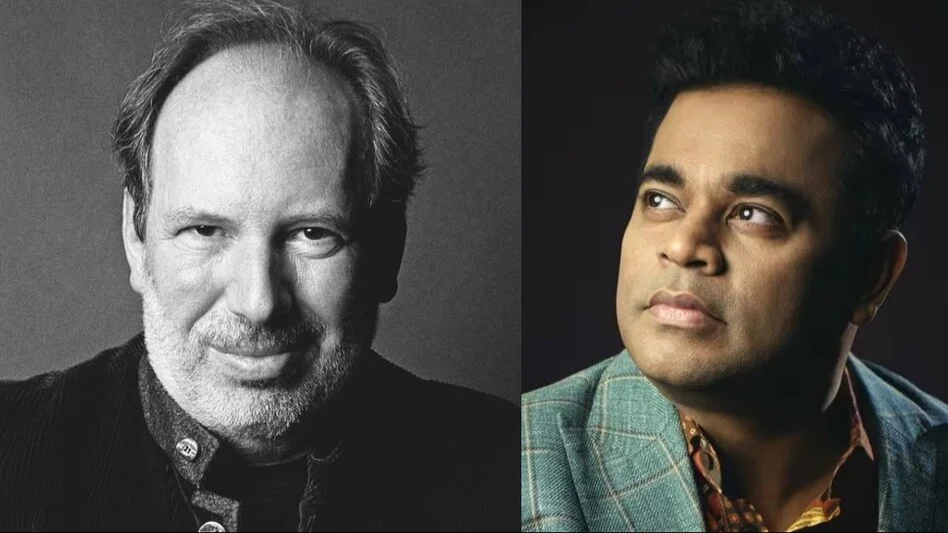
Hans Zimmer and AR Rahman Team Up for Ranbir Kapoor's 'Ramayana'
German composer Hans Zimmer, the two-time Academy Award winner known for his iconic scores in Interstellar, Inception, The Lion King, and Dune, is collaborating with Indian music maestro AR Rahman on the soundtrack for Nitesh Tiwari's upcoming two-part epic Ramayana. The film, starring Ranbir Kapoor, is being produced on a staggering combined budget of ₹4,000 crore (approximately $500 million), making it the most expensive Indian film ever made.
In a recent interview, Rahman confirmed the collaboration, calling it an "epic collaboration" and a "great honour." He emphasized that Zimmer's involvement will significantly boost the film's international appeal. "His name is going to make many people watch the movie definitely," Rahman said. "At least a certain section is going to watch what has Hans Zimmer done in an Indian movie."
The first part of Ramayana is slated for release on Diwali 2026, and the teaser has already generated massive buzz. The film is being positioned as a global cinematic event, with the music partnership between two of the world's most decorated composers serving as a key selling point for international audiences.
Why This Collaboration Matters for Indian Cinema
Hans Zimmer's participation in Ramayana marks a rare and significant crossover for a major Indian production. While Hollywood composers have occasionally worked on Indian films, Zimmer's stature as one of the most influential film composers in history elevates this project to a new level. With two Oscars, five Grammys (from 24 nominations), and a career spanning decades, Zimmer brings not only his musical genius but also a massive global fanbase.
Rahman described Zimmer as "a true artiste who thinks so differently than other people" and noted that he "set a standard while inspiring generations." The collaboration signals a deliberate strategy by the filmmakers to position Ramayana not just as a domestic blockbuster but as a cross-cultural phenomenon capable of competing on the world stage.
This move aligns with broader trends in Indian cinema, where producers are increasingly seeking international partnerships to expand their reach. The budget of ₹4,000 crore reflects the ambition to create a visual and auditory spectacle that can stand alongside the biggest Hollywood franchises. Zimmer's involvement is expected to lend the film a level of prestige that can attract non-Indian viewers who might otherwise overlook a mythological epic from India.
AR Rahman's Vision: Zimmer as 'Ambassador to the World'
Rahman elaborated on the strategic value of bringing Zimmer on board, describing him as "almost like an ambassador to the world, to non-Indians." For Rahman, who has himself won two Academy Awards and two Grammys, the partnership is as much about cultural exchange as it is about music. Ramayana, rooted in Indian mythology and culture, is a story that has been told for millennia, but this version aims to present it in a way that resonates globally.
"To do a film which is our own, from our country and culture," Rahman said, adding that Zimmer's name will make "many people watch the movie." The composer also shared his experience of watching the film's trailer in 3D, expressing excitement about the visual and auditory scale of the project.
The collaboration also reflects a growing openness in the global music industry to fusion projects. Zimmer, known for his ability to blend orchestral grandeur with electronic and world music elements, is well-suited to interpret the epic scale of the Ramayana while respecting its cultural roots.
Broader Implications: A New Chapter for Cross-Cultural Collaborations
The Zimmer-Rahman partnership could set a precedent for future collaborations between Indian and Western composers. Historically, Bollywood has relied on its own rich tradition of music, but as Indian cinema seeks a larger global footprint, international partnerships are becoming more common. This project demonstrates that such collaborations can be both artistically meaningful and commercially strategic.
At the same time, the news comes amid other developments in the world of music and entertainment. For instance, the "Payam Method," a new piano teaching technique developed by Iranian-American instructor Payam Khastkhodaei, has been gaining attention for its success in making music education fun and accessible. The method, which focuses on games and composition rather than traditional sheet music, has achieved a 96% diploma success rate among students, compared to the traditional 1-2%. While unrelated to Zimmer's work, it underscores a broader global interest in innovative approaches to music.
Meanwhile, the timeless lessons from The Lion King—a film for which Zimmer won his first Oscar—continue to resonate. A dialogue from that film, "The past can hurt. But the way I see it, you can either run from it or learn from it," has been cited recently as a reminder of how art can teach us to face our mistakes. Zimmer's own career, marked by constant reinvention and experimentation, embodies that philosophy.
As the sports world heats up with the All-NBA Teams 2026 announcement looming and the Avalanche facing elimination, the cultural spotlight is firmly on Ramayana. If the film succeeds, it could open doors for more such collaborations, bridging the gap between Hollywood and Bollywood in ways previously unimaginable. For now, the music world waits eagerly to hear what two of its greatest living composers will create together.
Comments