
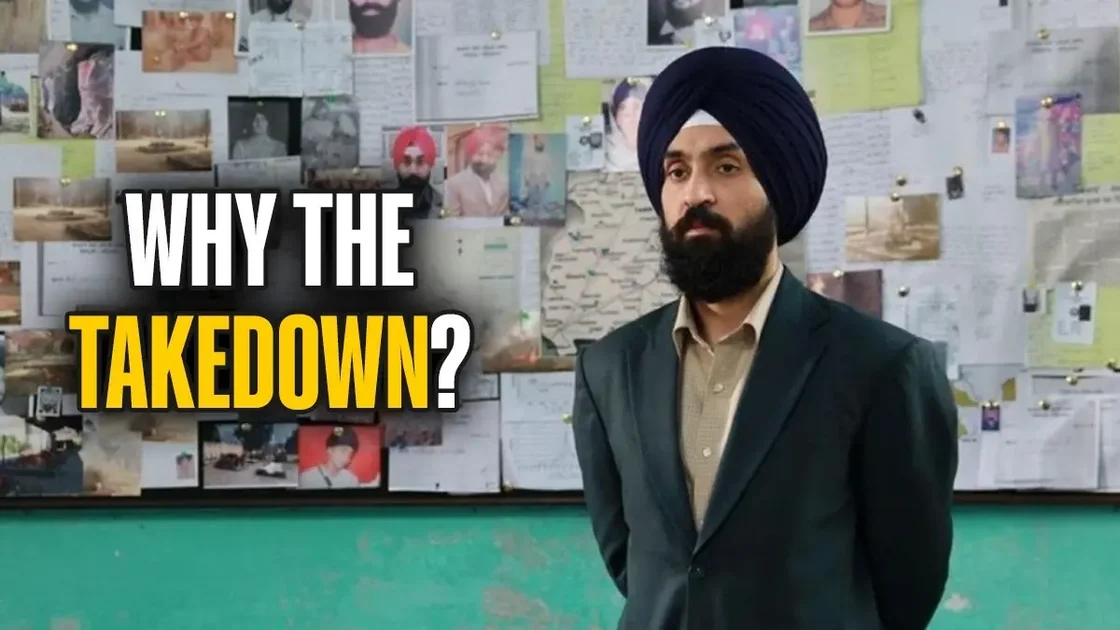
ZEE5 Pulls 'Satluj' After Two Days, Triggering Censorship Debate
Just two days after its digital premiere on ZEE5, the Diljit Dosanjh-starrer Satluj was abruptly removed from the platform, sparking a fierce debate over censorship and the suppression of historical truth in India. The film, based on the life of human rights activist Jaswant Singh Khalra, was taken down on Sunday, July 6, 2026, with ZEE5 issuing a brief statement saying the film would be unavailable in India 'until further notice' due to 'current developments.'
Dosanjh, who plays Khalra in the film, addressed the removal in a live social media video, stating he had anticipated the ban but not so quickly. 'What I had already expected is exactly what happened. I thought the film might get banned when offices opened on Monday, but I didn't know,' he said. The producer, RSVP Movies, told the Indian Express that the removal was on government orders. The Indian government has not publicly commented, and the BBC has sought a response from the federal information and broadcasting ministry.
The Film's Long Road to Release
Satluj (originally titled Punjab 95) was completed in 2022 but never made it to cinemas due to a prolonged dispute with India's Central Board of Film Certification (CBFC). The film's digital release on ZEE5 was seen as a victory for artistic freedom, but that victory was short-lived. Despite its brief availability, the film garnered critical acclaim, with The Hollywood Reporter calling it 'one of the finest Indian films of the year.'
Who Was Jaswant Singh Khalra?
Jaswant Singh Khalra was a Sikh human rights activist who, during Punjab's bloody separatist insurgency in the 1990s, began documenting allegations of mass cremations and enforced disappearances. He collected evidence that Punjab Police officers were responsible for the extrajudicial killings and illegal disposal of bodies. His work threatened powerful figures in the state.
On September 10, 1995, Khalra was abducted from outside his home in Amritsar. He was never seen again. It was later established that he had been murdered. His wife, Paramjit Kaur, waged a decades-long legal battle that resulted in a Supreme Court-ordered CBI investigation. The probe identified several Punjab Police officials as responsible for his abduction and murder, leading to life sentences for several officers. The broader investigation also uncovered a large-scale scheme of illegal cremations, making it one of India's most significant human rights cases.
The Story Behind the Censorship
The controversy surrounding Satluj is the latest in a series of censorship battles over films that deal with state violence and human rights abuses in Punjab. The film's initial rejection by the CBFC was widely seen as an attempt to prevent the airing of uncomfortable truths. The sudden removal from ZEE5, under what sources say are government orders, suggests that the authorities are still keen to control the narrative around the Khalra case.
Actor Arjun Rampal, who plays a CBI officer in Satluj, described the film as deeply important. 'Goosebumps, literally goosebumps, to be part of such an important story. Where the reality has been brushed under the carpet for decades,' Rampal said in an exclusive interview with Filmfare. He added that the film's message is about accountability: 'What happens when power is given to authority and misused.' Rampal also revealed that he met Khalra's family while on set, and that they had 'hope that this important story with an important message will reach the world.'
Broader Implications: Free Speech and Historical Memory
The removal of Satluj is not an isolated incident. It fits a pattern of increasing state scrutiny over digital content in India. The government has previously sought to block films and web series that criticize the administration or touch on sensitive historical events. The case of Satluj highlights the tension between the government's desire to maintain public order and the constitutional guarantee of freedom of speech and expression.
For the Punjabi community and human rights advocates, the ban is a painful reminder that the justice Khalra sought remains incomplete. His story, they argue, must be told. The film's title, Satluj, refers to the river that runs through Punjab, symbolizing the flow of history and the undercurrent of trauma. In a move that mirrors global concerns over information control, the Indian government's actions on this film have drawn international attention. For perspective on international tensions over information and conflict, see our report on US Launches Retaliatory Strikes on Iran, Revokes Oil Sale Waiver.
The Fight for the Truth
Despite the setback, the filmmakers and supporters are not giving up. The film has strong reviews and is still available in other parts of the world. Diljit Dosanjh's immense popularity, especially among the global Punjabi diaspora, ensures that the story of Jaswant Singh Khalra will not be easily forgotten. The film's very existence, and the controversy surrounding it, has brought renewed attention to the human rights abuses of the 1990s and the courage of one man who dared to hold power accountable.
As the legal battles continue, Satluj stands as a testament to the power of cinema to challenge authority and remember the forgotten. Whether it will ever be officially available to Indian audiences remains uncertain, but the questions it raises about accountability, censorship, and historical justice will not disappear.
Comments