
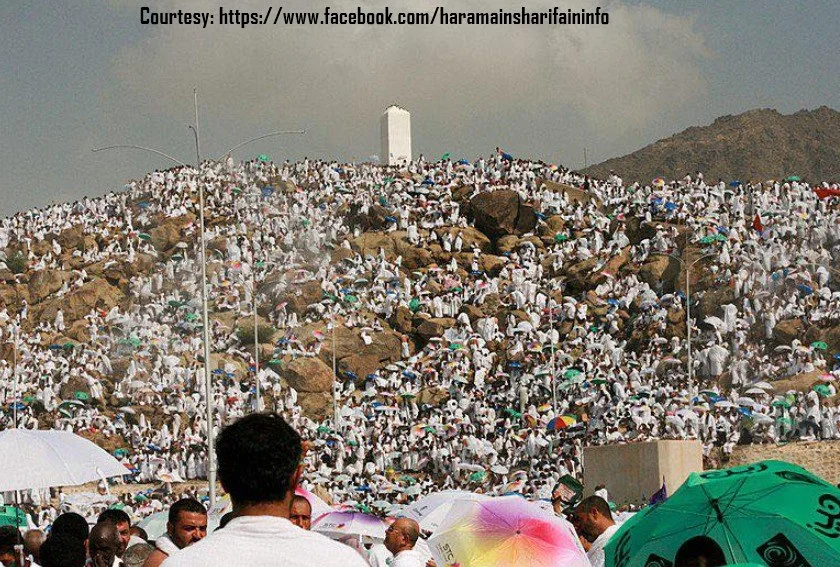
Hajj 2026 Reaches Spiritual Peak as Millions Stand at Arafat
Hundreds of thousands of Muslim pilgrims from around the world have converged on Mecca for the climax of the annual Hajj pilgrimage, with the Day of Arafah — the most pivotal moment of the journey — arriving on Tuesday, May 26, in Saudi Arabia and Wednesday, May 27, in India. Timelapse footage from the Grand Mosque shows worshippers performing Tawaf, the ritual circumambulation of the Kaaba, as temperatures in the holy city soared to 42°C (107.6°F).
According to Saudi authorities, roughly two million pilgrims are expected to participate in this year’s Hajj, one of the largest religious gatherings on Earth. The pilgrimage, which began on Monday, May 25, will continue through the Days of Tashreeq until May 29 or 30, depending on lunar sightings. The convergence comes just days after the start of Dhul Hijjah, the final month of the Islamic lunar calendar, was officially announced.
Day of Arafah: The Heart of Hajj
The Day of Arafah, falling on the 9th of Dhul Hijjah, is widely considered the spiritual summit of the pilgrimage. On this day, pilgrims gather on the Plain of Arafat, a barren expanse about 20 kilometers east of Mecca, to perform Wuquf — the act of standing before God in prayer and reflection from noon until sunset. Islamic tradition holds that without this ritual, the Hajj is invalid.
In Saudi Arabia, where the Dhul Hijjah crescent was sighted on May 17, the Day of Arafah is being observed on Tuesday, May 26. In India, the crescent was seen a day later, on May 18, placing the Day of Arafah on Wednesday, May 27. This one-day offset between the two countries results in Eid al-Adha falling on May 27 in Saudi Arabia and May 28 in India.
For Muslims who are not performing Hajj, fasting on the Day of Arafah is a highly recommended sunnah (prophetic tradition). It is believed to expiate sins for the past and coming year.
Why Hajj 2026 Matters: Stakes, Safety, and Geopolitical Context
Extreme Heat Poses Serious Risks
A major concern this year is the blistering heat. With temperatures hitting 42°C, Saudi authorities have deployed thousands of medical staff, set up cooling stations, and distributed water and umbrellas to pilgrims. The kingdom has expanded shaded areas around the Grand Mosque and on the routes to Mina, Arafat, and Muzdalifah. Despite these measures, heatstroke and dehydration remain significant risks, especially for elderly pilgrims.
This year’s extreme conditions align with a broader pattern of rising global temperatures. According to recent climate reports, including the Global Heat Wave Spikes Records, Child Deaths, and Ocean Alarm in May 2026, the Middle East is experiencing some of the fastest rates of warming on the planet. Saudi officials have acknowledged that heat management will be a defining challenge for future Hajj seasons.
The Iranian Conflict Casts a Shadow
The pilgrimage this year unfolds against a tense geopolitical backdrop. An ongoing conflict involving Iran has reverberated across the region. Speaking to the AFP news agency, Mohammed Chahada, an Egyptian pilgrim in his 50s, said as he walked out of the Grand Mosque: "The war in Iran has affected the entire world. Nobody wants wars or harm to countries and peoples."
While the Saudi government has not reported any direct security threats related to the conflict, heightened regional instability has led to increased surveillance and security measures. Pilgrims from Iran have faced logistical disruptions, though Saudi authorities confirmed that Iranian pilgrims are participating after bilateral agreements were reached earlier this year.
Fraud Warnings for Pilgrims
Authorities have issued fresh warnings about fraudulent travel packages. Any Hajj packages offered outside Saudi Arabia’s official online platform — the Nusuk Hajj portal — may be scams. Fraudsters commonly take payment and disappear or provide fake bookings, leaving pilgrims stranded. The Saudi Ministry of Hajj and Umrah reiterated that only registered and licensed operators can facilitate the pilgrimage.
India’s Massive Hajj Airlift and Return Travel Logistics
175,000 Indian Pilgrims Set for Return
India sends one of the largest national contingents to Hajj each year. In 2026, 175,025 Indian pilgrims are performing the pilgrimage, according to the Hajj Committee of India (HCoI). The return airlift — one of the largest single-origin pilgrim movements globally — is scheduled to begin on May 30 and run through June 30.
Return flights are organized in waves. The first group departs shortly after the Days of Tashreeq (11–13 Dhul Hijjah), which end around May 29. Pilgrims who initially arrived in Medina (known as "Lap 1" pilgrims) typically fly back from Jeddah, while those who came through Jeddah first return via Medina. Flight details are being communicated through the Haj Suvidha mobile app, the HCoI website, SMS, and WhatsApp.
18 Embarkation Points Across India
The HCoI has designated 18 embarkation airports for Hajj 2026, including major hubs such as Delhi, Mumbai, Hyderabad, Kolkata, Lucknow, Calicut, Chennai, Srinagar, Bengaluru, Ahmedabad, Cochin, Gaya, Guwahati, Indore, Jaipur, Kannur, Nagpur, and Vijayawada. Pilgrims are urged to confirm their departure points and flight schedules early to avoid last-minute confusion.
Impact on Airfares
For non-Hajj travelers flying between India and Saudi Arabia on Umrah or tourist visas during late May and June, seat availability is expected to be tight, and fares are likely to spike. The Hajj airlift absorbs most of the commercial seat capacity on these routes. The return wave, which lasts a full month, will continue to strain availability.
Broader Implications: What Hajj 2026 Changes
A Test of Saudi Arabia’s Vision 2030
Hosting nearly two million pilgrims under extreme heat conditions is a major logistical and reputational test for Saudi Arabia, which has invested billions under its Vision 2030 plan to expand religious tourism. The kingdom aims to increase Umrah and Hajj capacity to 30 million visitors annually by the end of the decade. New infrastructure — including the Makkah Mass Rail Transit, expanded air conditioning at the Grand Mosque, and smart crowd management systems — is being deployed for the first time at full scale this year.
Successful management of Hajj 2026 could boost Riyadh’s credentials as a stable host for global events, while any major incident could set back those ambitions.
Climate Change Reshapes Religious Practice
The persistent heat raises questions about the long-term viability of outdoor rituals during the hottest months. Because the Islamic calendar is lunar, Hajj moves backward by about 11 days each year on the Gregorian calendar. It will continue to occur in the summer for the next several years, meaning heat will remain a critical issue until the mid-2030s, when the pilgrimage shifts into spring.
Saudi universities and the Ministry of Health are researching heat-mitigation technologies, including personal cooling vests, misting systems, and reflective pavement coatings. Some scholars have called for more flexibility in the timing of certain rituals to avoid peak heat hours, though such changes would require broad religious consensus.
Geopolitical Reverberations
The conflict with Iran, while not directly impacting the pilgrimage site, has influenced the mood among worshippers and the security posture. Diplomatic tensions could affect future pilgrim quotas and bilateral agreements, especially if the conflict deepens. However, the shared experience of Hajj has historically served as a bridge between rival nations, and this year may reaffirm that role.
For Indian pilgrims, the return journey coincides with the Memorial Day 2026: Parades, Ceremonies and Festivals Across the U.S. holiday weekend, though the connection is largely coincidental. The back-to-back nature of international travel peaks — from Hajj returns to summer holidays — underscores the interconnectedness of global mobility.
The Spiritual and Cultural Significance Endures
Despite the heat, the geopolitical tensions, and the logistical challenges, the core of Hajj remains unchanged. Pilgrims from over 180 countries — ranging from wealthy Gulf nationals to subsistence farmers from West Africa — stand shoulder to shoulder in white Ihram garments, performing the same rituals that Muslims have performed for over 1,400 years. The sense of unity and submission to God remains the pilgrimage’s most powerful draw.
As the world grapples with division and conflict, the sight of two million people united in worship offers a counter-narrative — one that transcends borders, politics, and climate. For the pilgrims returning to their homes, the journey will leave marks not only on their bodies (sunburn, fatigue, and dust) but on their faith.
For those who could not make the journey, the days of Hajj provide an opportunity for reflection and community. Mosques around the world hold special prayers, and families gather to hear stories from returning loved ones. The end of Hajj also marks the beginning of Eid al-Adha, the Festival of Sacrifice, celebrated with feasts, charity, and prayers.
As one pilgrim told reporters near the Kaaba: "You leave everything behind — your ego, your money, your status. You come as a servant of God, and you hope He accepts you."
Hajj 2026 will conclude with the final Tawaf al-Wada (the farewell circumambulation), after which pilgrims return to their ordinary lives — transformed, exhausted, and grateful.
Comments