
GTA VI's Middle-Aged Players: A Generation's Violent Nostalgia Confronts Real-Life Guilt
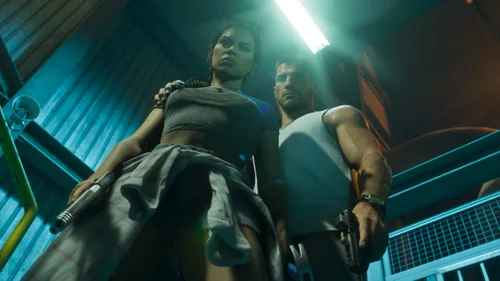
When Chris Ailey, 48, put his kids to bed last Thursday, he embarked on a virtual crime spree in Grand Theft Auto VI. He stole a van, crashed it, and hopped on a speedboat to collect a drug shipment—before being eaten by an alligator. "I'm pretty useless at doing the missions," he admitted. Ailey is one of many fortysomethings returning to the franchise after years away, only to find that the game's demands clash with their adult responsibilities and a sharper moral compass.
A Generation Comes of Age—But Can't Keep Up
GTA VI, released on November 19, 2026, has shattered sales records with $3.8 billion in day-one retail revenue, making it the biggest entertainment launch in history. Set in the fictional state of Leonida, a hyper-realistic take on Florida, the game has drawn in lapsed players like Ailey, who hadn't gamed seriously in 15 years. But these older fans are finding that the game competes with work, family, and a heightened sense of guilt over its violent themes.
BBC Radio 1 DJ Greg James, 40, echoed the sentiment: "The one thing I can't get my head around is how shit I am at it," he said, adding that he's spent more time watching GTA VI content than playing it. Ailey, too, struggles with the game's morality. "I struggled to find it in me to shoot and kill innocent people," he said, singling out a mission where you steal an elderly woman's mobility scooter. "The human in me feels bad while she's running after you."
The Time-Money-Energy Triangle
The experience of older gamers reflects a broader demographic shift. According to UK statistics, 47% of 35- to 44-year-olds play console games, while 33% of 45- to 54-year-olds do—but that number plummets to 4% for those over 65. These middle-aged players are the original GTA generation, having grown up with Vice City in 2002. Now they're ghosts at the online feast: eager to participate but constrained by bedtimes and school runs.
The result is a split-screen reality: some play in short late-night bursts, others live vicariously through YouTube streams, and many find themselves at odds with the game's crime-first missions. Ailey, a PR agency CEO, represents this paradox—a successful professional who once delighted in digital chaos but now hesitates at virtual cruelty.
The Psychology of Virtual Violence
Psychologists explain that GTA's appeal lies in escapism and identity exploration. "Games like GTA offer players an opportunity to temporarily step outside the boundaries of conventional social rules and experience a sense of freedom, power and control that may not be available in everyday life," said Dr. Saloni Seth Agarwal, an associate consultant in child and adolescent psychiatry at Max Vaishali. A 2006 study in Motivation and Emotion found that feelings of competence, autonomy, and relatedness drive enjoyment, while a 2010 study in the Journal of Communication explored moral disengagement in violent games.
But for older players, that disengagement may be harder to achieve. The realism of GTA VI—a 4K recreation of Vice City—blurs the line between game and reality, making the violence feel more personal. As Ailey noted, "The human in me feels bad."
A Franchise's Aging Audience—and Its Future
This tension isn't just about individual preferences; it signals a coming-of-age moment for the industry. The first generation of gamers is now in middle age, and their habits are reshaping the market. They have disposable income but limited time, and they crave experiences that fit their lives—not just their reflexes. Yet GTA VI, with its sprawling map and complex missions, demands hours of dedication that many can't spare.
Meanwhile, the game's launch has also sparked a wave of AI-driven attempts to create unofficial PC versions, with some projects facing takedown notices. And police departments across the US have issued reminders to keep virtual chaos off real streets. These developments underscore the game's cultural saturation—and the challenges it poses for players of all ages.
For now, older gamers like Ailey are left to microdose their nostalgia, sneaking in sessions after bedtime. They're not giving up on the series that defined their youth; they're just playing it differently. As Ailey put it, "I'm pretty useless at doing the missions"—but he's still trying, one alligator encounter at a time.
Comments