
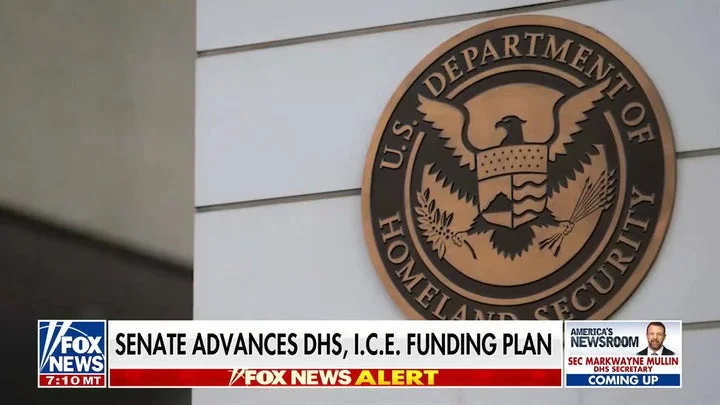
Senate Republicans Advance $72 Billion Immigration Bill After White House Drops Controversial Fund
Senate Republicans are pressing forward with a sweeping $72 billion immigration enforcement package after securing critical assurances from the Trump administration that it will abandon a divisive Justice Department "anti-weaponization" fund. The revised legislation, which funds the Department of Homeland Security's immigration agencies through fiscal year 2029, is expected to face a procedural vote Wednesday afternoon.
The breakthrough came after acting Attorney General Todd Blanche testified before a House committee Tuesday that the administration is "not moving forward with the fund," a program that would have provided taxpayer-funded payouts to individuals who alleged they were victims of political prosecutions. The fund, initially established through a $1.776 billion settlement between the president and the IRS, had sparked intense backlash from both Republican and Democratic lawmakers who questioned its constitutionality and lack of judicial oversight.
Senate Majority Leader John Thune expressed cautious optimism ahead of the vote, telling reporters at the Capitol that "most of our members feel pretty satisfied" with Blanche's testimony. "We're hopeful," Thune said, adding that he's "keeping fingers crossed." The vote on a motion to proceed is scheduled for 2:15 p.m. as part of a series of votes.
Revised Package Drops White House Ballroom Funding
The updated version of the reconciliation bill also jettisoned language that would have allocated $1 billion in security funding for the Secret Service, including funds for President Trump's East Wing renovation, which reportedly included plans for a massive ballroom. That provision had drawn intense scrutiny from a handful of Republicans, prompting senators to abandon it to ensure smooth passage of the immigration funding. The removal of the ballroom allocation marks a significant concession from the White House, which had sought the funds as part of broader security upgrades.
The immigration package itself is a cornerstone of the GOP's legislative agenda, providing long-term funding for Immigration and Customs Enforcement (ICE) and the Border Patrol through the budget reconciliation process, which requires only a simple majority vote in the Senate. This procedural maneuver allows Republicans to bypass the usual 60-vote threshold, making it a critical tool for advancing priority legislation in a closely divided chamber.
The Battle Over the DOJ Anti-Weaponization Fund
A Fund Born From Controversy
The anti-weaponization fund had been a flashpoint in Washington for weeks. Originally conceived as a mechanism to compensate individuals whom the president believed had been targeted by politically motivated prosecutions—including, notably, participants in the January 6, 2021, Capitol riot—the fund was established through a settlement between the White House and the IRS. Critics from both parties argued that the arrangement amounted to the president settling with himself, given his authority over the tax agency, and that the process for awarding victims lacked any judicial oversight.
A federal judge temporarily paused the fund's implementation last week, and Justice Department officials said they would comply with the court order. But that did little to quell concerns among Senate Republicans, who demanded more concrete assurances that the administration would not attempt to revive the program through other means.
GOP Skepticism Persists
Despite Blanche's public testimony, several Senate Republicans remained skeptical. Sen. John Kennedy of Louisiana told Fox News that while he appreciated the administration's statement, it didn't address whether the Justice Department planned to appeal the court ruling. "If your question is, is the weaponization fund impacting our ability to pass the reconciliation bill? The answer is yes," Kennedy said.
Sen. Chuck Grassley of Iowa was even more direct. "The only thing that’s gonna solve this problem—to get immigration funded and law enforced—is for the president to do away with the weaponization fund," he told reporters.
Sens. Thom Tillis of North Carolina and John Cornyn of Texas have also signaled that they remain unconvinced. Cornyn, who lost his primary last week after the president backed his opponent, shared a Wall Street Journal editorial Wednesday arguing that Congress should bar all funding for the anti-weaponization program. Tillis indicated he plans to offer an amendment on the reconciliation bill to address the fund, arguing that additional legislative action is needed to ensure its demise.
"I think even DOJ knows this is a problem," Tillis told reporters.
Why This Matters: Immigration Enforcement at a Crossroads
The reconciliation bill represents the most significant immigration enforcement funding package in years, allocating resources to expand detention capacity, increase Border Patrol personnel, and modernize technology along the southern border. Proponents argue that the funding is essential to address the ongoing flow of migrants and to deter illegal crossings.
For Republicans, the stakes are particularly high heading into the midterm elections. Immigration remains a top concern for the party's base, and passing the bill would deliver a major legislative victory that could galvanize voters. Conversely, failure to advance the package could be seen as an inability to govern effectively, potentially dampening turnout.
The controversy over the anti-weaponization fund threatened to derail this agenda, creating a rift between the White House and Senate Republicans at a critical moment. The fund had also given Democrats a powerful talking point, enabling them to paint the GOP as prioritizing payouts for January 6 rioters over border security. By forcing the administration to abandon the program, Senate Republicans have neutralized a key line of attack and cleared the path for the immigration bill.
The Role of the Courts and Congress
The federal court's temporary pause on the fund added legal pressure to the political calculus. While the administration could theoretically appeal, Blanche's testimony suggests that the White House has decided to cut its losses rather than risk further damage to its legislative agenda. However, some Republicans remain wary that the fund could be resurrected through administrative action or a future settlement.
Sen. John Kennedy summed up the lingering distrust: "It doesn’t tell me whether they’re planning on appeal. It doesn’t tell me whether the administration’s backing off the idea—it doesn’t tell me anything, except they’re gonna follow the law."
Broader Implications and What Comes Next
The Fragile Unity of the GOP Coalition
The standoff over the anti-weaponization fund underscores the delicate balancing act the White House must perform to maintain party cohesion. While President Trump retains significant influence over the Republican base, his impulses can sometimes collide with the priorities of Senate Republicans, who are more attuned to procedural and political realities.
The successful push to scrap the fund demonstrates that Senate Republicans are willing to challenge the White House when they believe it jeopardizes their legislative goals. This dynamic could resurface on other issues, from spending cuts to trade policy, as the midterms approach.
Implications for the Midterms and Beyond
Whether the immigration package ultimately becomes law will have ripple effects for both parties. For Democrats, the removal of the fund robs them of a potent campaign issue, forcing them to focus on other criticisms of the GOP's immigration approach. For Republicans, passing the bill could help inoculate members from attacks on border security while providing a concrete achievement to campaign on.
The vote Wednesday is just the first step. The bill must still clear a series of procedural hurdles and pass the House, where Republican leaders have signaled support but could face their own internal divisions. The removal of the ballroom funding may smooth the path, but other controversial provisions could still emerge.
A Turning Point for Budget Reconciliation?
The use of reconciliation to pass immigration funding is itself a significant development. Traditionally, reconciliation has been reserved for budget-related measures, but recent years have seen its scope expand to include policy changes with fiscal implications. This has prompted debates about whether the process is being stretched beyond its intended purpose.
If the immigration package advances, it could set a precedent for using reconciliation to fund other enforcement priorities, potentially reshaping how Congress approaches border security legislation. Critics argue that this undermines the traditional committee process and bipartisan negotiation, while supporters counter that the urgency of the border crisis justifies extraordinary measures.
What Happens Next
The Senate is expected to vote on the motion to proceed Wednesday afternoon. If successful, the chamber will begin debate on the bill, with amendments likely on a range of issues, including the anti-weaponization fund. Sen. Tillis has already signaled his intent to offer an amendment that would permanently bar funding for the program, a move that could force a recorded vote and put members on the record.
Thune expressed confidence that the votes are in place to move forward, but he acknowledged that final passage is not guaranteed. "We're hopeful," he said. "We'll find out."
In the meantime, the White House has signaled its willingness to work with Congress to ensure the bill's passage. The removal of the ballroom funding and the abandonment of the anti-weaponization fund suggest that the administration is prepared to make concessions to secure a legislative win.
For now, the focus is on the floor of the Senate, where Republicans are hoping to turn a contentious internal fight into a unified push toward a signature policy achievement.
Comments