
FPL Price Changes Now at Midnight: New Predictor Tool Shakes Up Transfer Strategy
Fantasy Premier League (FPL) managers are adjusting to a new nightly ritual this season: checking price changes at midnight UK time. For the first time, the official game has introduced a dedicated Price Change Predictor, a tool that uses live transfer data to show which players are closest to a price rise or fall. The shift marks a significant change in how the game's market operates and how managers plan their transfers.
As of August 25, 2026, the 2026/27 FPL season is underway, and prices are no longer locked. Unlike previous seasons when price changes were processed at 1:30 AM GMT (2:30 AM BST), the new cut-off is midnight UK time. This change was confirmed by multiple sources, including the Premier League's own announcement and fantasy football analysis sites like Fantasy Football Scout.
"Prices will now change at midnight UK time. This is different from the 1.30am GMT/2.30am BST cut-off of before," noted Fantasy Football Scout's guide. The earlier time gives managers a clearer checkpoint to monitor the market, but it also means less time to react after evening matches.
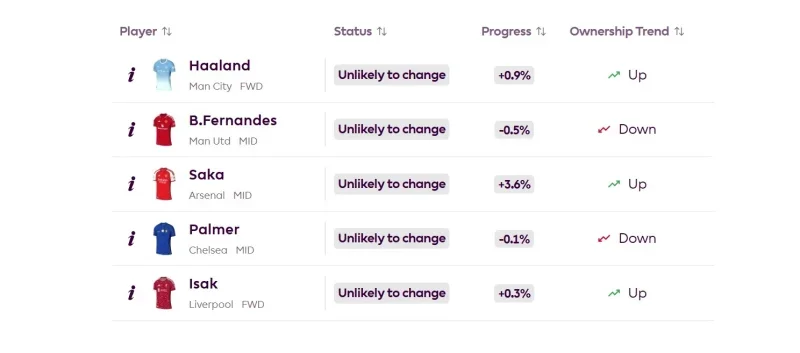
The Price Change Predictor, which can be found under the "Price Changes" tab on the FPL website, shows every player's progress toward a price change as a percentage. It updates every 15 minutes and uses official FPL data to track transfer activity. If a player reaches 100% (or -100% for a drop), they are expected to change in price at the next midnight update. The tool also includes colored labels like "Very Likely to Rise" (green) and "Likely to Drop" (red) to make it easier to scan.
"The data will always be a guide and doesn’t guarantee a price change," the Premier League emphasized. "But if you make a habit of checking the Predictor every day during the season, you can stay ahead of the curve." Despite this disclaimer, the tool has quickly become a must-visit page for serious managers.
Why the Change Matters
The introduction of the Price Change Predictor is not just a cosmetic addition. It represents a fundamental shift in how FPL manages its player pricing. Previously, price changes were somewhat opaque, with third-party sites using projections and community reporting to guess who was about to move. Now, the official game has taken control of the narrative, providing data that is both more accurate and more immediate.
The new timing also has practical implications. With the midnight deadline, managers who want to buy a player before they rise or sell before they drop need to be vigilant. The old 1:30 AM/2:30 AM cut-off was later, allowing managers to check after late-night matches and still have a few hours before the change. Now, the window is tighter: if a match ends at 10 PM, managers have just two hours to make a decision.
As El-Balad.com highlighted, "The move also reflects a more market-led system. Instead of prices being fixed for longer periods, FPL have taken price change predictions into their own hands." This means the nightly movement is now more central to how managers plan their transfers, especially in the early weeks of the season when player values are volatile.
Current Status: No Changes Yet
As of the evening of August 22, 2026, no player had yet triggered a price change. According to Fantasy Football Scout, "We’re still awaiting our first FPL price changes of 2026/27 – and it doesn’t look like we’ll get any on Saturday evening." The site reported that as of 20:20 BST, no player was anywhere near the 100% threshold for a rise or the -100% threshold for a drop.
The Predictor's data is calibrated over at least one Gameweek, meaning the tool's "predicted progress" percentage is still in its early stages. Managers are likely to see the first price movements within the next few days, as players who have been heavily transferred in or out start to approach the thresholds. For now, the market remains calm, but that will change quickly once the first wildcard is played or a player scores a hat-trick.
The New Tool in Action
The Price Change Predictor is visible not only on the dedicated page but also on player profile pages and in the transfer screens. Managers can filter the table by their own team or their watchlist, making it easy to see how their assets are trending. This is a major upgrade from previous seasons, where managers had to rely on external trackers.
One important caveat mentioned by the Premier League: "Anything over 100 per cent will indicate that the player is expected to surpass the threshold for an increase or decrease when the next set of price changes happen at 00:00 UK time." However, the data is updated every 15 minutes, so a player at 105% at 23:45 could still drop back below the threshold if there is a late surge of transfers out. Managers should therefore not assume that a 100%+ rating is a guarantee.
Fantasy Football Scout also warned that the tool is a guide, not a prediction. "The data will be updated in the page every 15 minutes. Anything over 100 per cent will indicate that the player is expected to surpass the threshold for an increase or decrease when the next set of price changes happen at 00:00 UK time," they reiterated.
Impact on Transfer Strategy
The new Predictor is likely to change how managers approach transfers. In the past, managers might wait until the last minute to make a transfer to avoid an injury or lineup surprise. Now, with price changes happening at midnight, there is a new incentive to act early if a player is closing in on a price rise. Conversely, knowing that a player is close to a drop might prompt a manager to sell before they lose value.
This dynamic is especially important in the early season, when player prices are still settling. A few quick rises can give a manager an edge in team value, which can be crucial later when funds are tight. As the Premier League's announcement put it, the tool helps managers "snap up in-demand players before they become more expensive."
For those who prefer to avoid the market madness, the Predictor can also provide peace of mind: if a player is nowhere near a threshold, there is no pressure to make a hasty transfer.
Broader Implications for FPL and Fantasy Sports
The move to a more transparent price change system reflects a broader trend in fantasy sports toward data-driven decision-making. In the past, price changes were a black box, and third-party sites like Fantasy Football Scout filled the gap by using models to estimate thresholds. Now, the official game is not only providing the data but also shaping the conversation.
This could have implications for the community of FPL analysts and content creators. Sites like Fantasy Football Scout still provide valuable context and analysis, but the Predictor reduces the need for speculation. "The Price Change Predictor will also be visible in other areas. Each player’s Fantasy profile page will show a status message on the likelihood of a price change," the Premier League said.
For new managers, the tool lowers the barrier to entry. No longer do you need to follow hundreds of Twitter accounts to know who is about to rise. The official game provides the information directly. This could make FPL more accessible and reduce the anxiety of missing out on a price change when you were not looking.
The midnight timing also aligns with a generation of fans who are used to checking their fantasy teams on their phones before going to bed. The old 1:30 AM/2:30 AM cut-off was less convenient for many, especially those in earlier time zones. Moving to midnight UK time is a subtle but meaningful improvement.
Looking Ahead
As the season progresses, the Predictor will become more accurate as the calibration period ends and the model incorporates more data. The first price changes are expected imminently, and managers will be watching the Predictor closely to spot the week's big movers.
Fantasy Football Scout's community is already discussing the implications. In their latest article, they noted that "It’ll likely be another day or two before we see our first price changes of the season, then." That was on August 22, so by August 25, the first changes may have already occurred. The dynamic nature of the market means that every day brings new opportunities.
For those who are new to FPL or just returning, the Price Change Predictor is a game-changer. It is not just a tool; it is a new way of engaging with the game. The days of guessing when a player will rise or fall are over. Now, managers can make informed decisions based on live data. That is a big deal for a game that often comes down to a few points and a few pounds.
The change also signals that FPL is willing to innovate to keep its millions of managers engaged. The game has grown enormously since its launch, and the addition of a price change predictor is a nod to the dedicated fanbase that has long requested such a feature. In a world where fantasy sports are becoming increasingly sophisticated, FPL is showing that it can lead the way.
As with any tool, there are risks. Some managers may become overly reliant on the Predictor and make impulsive transfers. But for most, it will help them play smarter. The key is to remember that the Predictor is a guide, not a guarantee. As the Premier League stresses, "The data will always be a guide and doesn’t guarantee a price change."
In the end, the new Price Change Predictor and the midnight timing are positive developments for FPL. They give managers more control and more information, which is always a good thing in a game where knowledge is power. Whether you are a seasoned pro or a rookie, embracing these changes will help you stay ahead of the curve and, hopefully, your mini-league rivals.
So as the clock strikes midnight on this new FPL season, check the Predictor, make your moves, and enjoy the ride.
Comments