
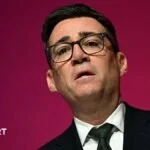
Premier League Clubs Alarmed by Burnham's Remarks
Senior figures at several Premier League clubs have expressed astonishment and concern over comments made by Prime Minister Andy Burnham regarding Manchester City's recent guilty verdict for financial rule breaches. Sources told BBC Sport that clubs are now worried about potential political interference in the independent appeal process, questioning what Burnham's remarks were designed to achieve.
The controversy erupted after Burnham, who served as Mayor of Greater Manchester from 2017 until becoming prime minister this summer, told the BBC he would be "really concerned" if Manchester City's Abu Dhabi owners decided to sell the club following the verdict. His comments appeared to downplay the severity of the breaches, prompting a swift backlash from across the political and football spectrum.
Clubs Question Motives Behind Comments
Senior club sources described the remarks as "absolutely bizarre," with one stating they were "at best naive and at worst quite manipulative, and that is not a good look." Another source labeled them "clumsy," while others expressed surprise that the prime minister had "misspoken." The comments have put the Independent Football Regulator in a difficult position, according to sources, and have raised questions about the independence of the disciplinary process.
An independent commission held a 42-day hearing in 2024, leading to last month's verdict that City "systematically broke Premier League Rules for nearly a decade." A sanctions hearing is still to come, and a separate independent appeal board will hear City's appeal. The club continues to deny any wrongdoing.
Despite clarification from Downing Street that Burnham's view is that no one is "above the rules," unease persists among senior Labour figures who fear the initial comments have had major cut-through with voters. The episode marks perhaps Burnham's biggest self-inflicted tangle since arriving in Downing Street in July.
Political Fallout Intensifies
Conservative leader Kemi Badenoch has demanded that No 10 release all details of meetings between the prime minister and senior figures at Manchester City. Burnham is already under increasing pressure surrounding his relationship with the club's Abu Dhabi ownership during his time as mayor of Greater Manchester.
The scrutiny extends beyond Westminster. Sir Richard Leese, former leader of Manchester City Council and honorary president of the club, has defended the council's decade-old deal with Abu Dhabi United Group (ADUG), calling it "good for the city." The partnership, formed in 2014, created a joint venture called Manchester Life, which planned to invest over £1bn in developing thousands of homes in Ancoats and New Islington.
However, a 2022 University of Sheffield report titled "Manchester Offshored" raised questions about the public value of the schemes and a lack of transparency around their finances. It highlighted the absence of affordable housing and noted that the joint venture companies were ultimately owned by ADUG through firms registered offshore. A 2015 deal gave ADUG first pick of land in Ancoats and New Islington, with the report arguing that land was leased at below comparable market rates.
Diplomatic and Geopolitical Dimensions
The row has diplomatic implications because Manchester City's ownership is closely tied to the Abu Dhabi state, a major UK ally. As BBC political editor Chris Mason noted, the extent to which City's ownership is separate from the Abu Dhabi state will be a central point of contention. The Premier League's conclusion that City systematically broke rules for nearly a decade matters not just for the club but for Manchester, the Premier League, and the UK's global image, given England's top flight is a colossal global brand.
Burnham's initial comments, followed by no fewer than two attempts to backtrack within 24 hours, have drawn sharp criticism. The Guardian's Barney Ronay described the situation as "football populism" colliding with "realpolitik," arguing that the prime minister's contortions over the verdict have landed him with an early test of what he wants to stand for. Ronay noted that previous governments have been thrown into crisis by war, scandal, and economic meltdown, but never by "the urgent need to overpay for Jack Grealish."
Background: Manchester City's Financial Breaches
The charges against Manchester City stem from a lengthy investigation into the club's financial dealings. The independent commission found that City "systematically broke Premier League Rules for nearly a decade," including the use of "sham" commercial contracts. The club has denied any wrongdoing and is appealing against the charges.
The case has been described as one of the most significant in Premier League history, with ramifications that extend far beyond the football pitch. As the BBC reported, senior figures are worried about Manchester City being in next season's Champions League even as the appeal process unfolds.
The Independent Football Regulator's Dilemma
The comments have placed the Independent Football Regulator in a precarious position. The regulator, established to oversee financial fair play and club governance, must now navigate a politically charged environment while maintaining its independence. Club sources have indicated that Burnham's remarks could undermine public confidence in the appeals process.
Pep Guardiola, Manchester City's manager, is set to attend the club's match against PSG next week, underscoring the ongoing football operations amid the legal turmoil. The club's appeal will be heard by a separate independent appeal board, and the sanctions hearing is still to come.
Broader Implications for Football and Politics
This episode represents a significant moment in the intersection of football and politics. Burnham, who has long positioned himself as "Mr Manchester" and a big football fan, now finds himself caught up in the controversy at local, national, and diplomatic levels. The row has sparked unease among some senior Labour figures who fear the initial comments have damaged the party's standing with voters.
As the BBC's Chris Mason observed, the rows circulating around Manchester City are "huge, and they are only going to get bigger." The case matters for Manchester, for the Premier League, and for the UK's image around the world. It also raises fundamental questions about the relationship between political leadership and independent sporting governance.
A Test of Values
The Guardian's Barney Ronay framed the situation as a test of what Burnham wants to stand for: "Realpolitik, or real values?" The prime minister's initial remarks, followed by backtracking, have left observers questioning whether his comments were designed to protect Manchester City's ownership, to curry favor with voters, or simply a misstep. Regardless of intent, the fallout has been substantial.
The controversy has also drawn attention to the broader issue of geopolitical influence in English football. The stormy Manchester City saga has made geopolitics up front and centre, with questions about state ownership and financial fair play now inextricably linked.
As the appeal process moves forward, all eyes will be on the Independent Football Regulator and the appeal board to see whether they can withstand political pressure. For Burnham, the episode serves as an early test of his leadership and his ability to navigate the complex interplay between football, politics, and diplomacy. The horse he rode in on, as Ronay put it, is now bucking his vibe.
Comments