
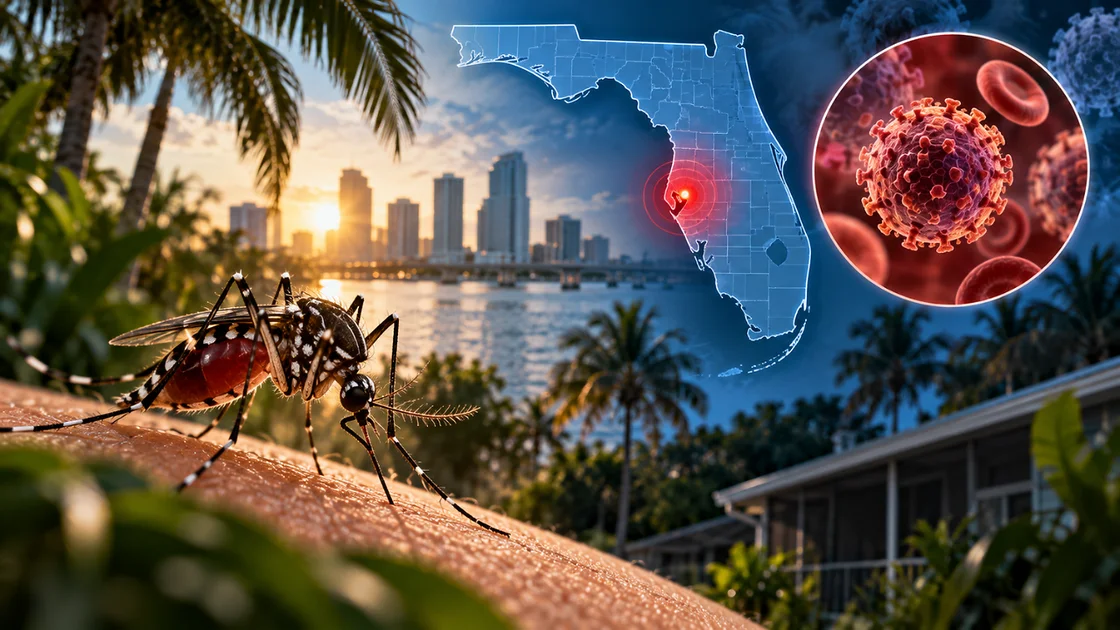
Florida Dengue Outbreak Turns Deadly
Florida health officials confirmed on Friday the state's first dengue fever death of 2026, marking a grim milestone in what has become one of the worst dengue outbreaks in the continental United States in decades. The victim, an elderly woman from Tampa, died on September 4, according to the Tampa Bay Times, which first reported the fatality. She is the first person to die from dengue fever in Florida in nearly a century.
The Florida Department of Health did not release further identifying details, citing privacy for the family. "To respect the privacy of the family during this difficult time, the Department will not be providing further identifying information," a spokesperson said in a statement.
Cases Climb in Hillsborough County
The death comes as Hillsborough County grapples with an unprecedented surge in locally acquired dengue infections. As of September 19, the county has reported 134 cases, according to the state health department. That figure represents the vast majority of Florida's 152 total cases this year. By comparison, Hillsborough County typically sees only a handful of dengue cases annually.
"This is wildly unusual for us," said Chris Wilkerson, a spokesperson for the county.
The current outbreak is centered just north of Tampa, where mosquito control crews have been spraying insecticide from trucks and helicopters day and night. Workers are also checking properties for standing water in tires, buckets, and other containers where mosquitoes might breed.
A Rare but Growing Threat
Dengue fever is caused by a virus spread by warm-weather mosquitoes, primarily the Aedes aegypti species. While most infected people either show no symptoms or experience mild flu-like illness, severe cases can lead to serious bleeding, shock, and death. Symptoms include severe headaches, muscle and joint pain, nausea, and vomiting.
For decades, most dengue cases reported in the United States were linked to travelers infected abroad. Local transmission was virtually unheard of outside of Puerto Rico and the Texas-Mexico border region. That changed in 2009-2010, when Key West reported the first locally acquired dengue cases in the continental U.S. outside the border area since 1945.
Florida's largest dengue outbreak prior to this year occurred in 2023, with nearly 200 cases. This year's total already ranks second, with 152 locally acquired cases reported so far — and the year is not over.
Climate Change Fuels Mosquito Expansion
Experts point to climate change as a key driver behind the expanding range of virus-carrying mosquitoes. Warmer temperatures and altered rainfall patterns have allowed Aedes aegypti mosquitoes to thrive in areas where they were previously rare. Recent weather conditions in Florida — including heavy rains and warm temperatures — created ideal breeding conditions for the insects.
Globally, the situation is far more severe. The World Health Organization reports more than 2.2 million dengue infections worldwide this year, with nearly 1,200 deaths. In the United States, the Centers for Disease Control and Prevention has recorded nearly 1,500 locally acquired cases, most of them in Puerto Rico.
What This Means for Public Health
The Florida death underscores a troubling trend: tropical diseases once considered exotic are becoming domestic health threats. While dengue is not transmitted person-to-person, an infected mosquito can spread the virus to multiple people, potentially amplifying an outbreak.
Health officials are urging residents to take precautions. Recommended measures include emptying standing water around homes, using insect repellent, and wearing long sleeves and pants when outdoors. Hillsborough County has ramped up its mosquito control efforts, though recent sampling has not detected the virus in local mosquitoes — a possible sign that new infections may be waning.
"The likelihood of new infections is waning," said Paolo Pecora, senior environmental scientist for Hillsborough County Mosquito Management Services.
Still, the outbreak serves as a reminder that mosquito-borne illnesses are a growing concern. As climate patterns continue to shift, experts warn that dengue and other tropical diseases could become more common in the southern United States. For now, Florida officials are focused on containing the current outbreak and preventing further deaths.
As the state enters the fall, health departments continue to monitor case counts and mosquito populations. Residents are advised to remain vigilant and report any symptoms to their healthcare providers. The death of the Tampa woman is a sobering reminder of the potential severity of a disease that many Americans once considered a distant threat.
Comments