
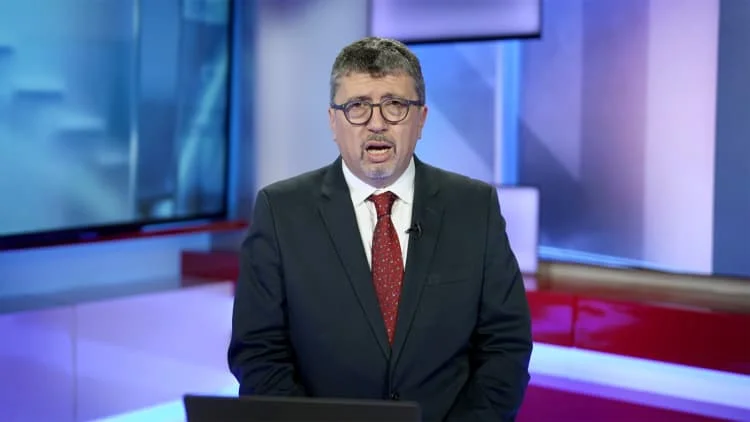
FOMC Holds Rates Steady as Three Dissents Surface in Split Decision
The Federal Open Market Committee (FOMC) voted to hold its benchmark interest rate steady at 3.5% to 3.75% on Wednesday, marking the fifth consecutive meeting without a change. The decision, announced at 2:00 p.m. ET, was widely anticipated but carried unusual drama: three committee members dissented, reflecting deep internal divisions over how to address inflationary pressures from the ongoing Iran conflict and artificial intelligence supply bottlenecks. New Fed Chairman Kevin Warsh, presiding over only his second policy meeting, inherited a committee that markets had priced with 64.2% odds of a hold — yet 35.8% of bond traders had braced for a surprise hike, according to CME FedWatch data.
The rate decision itself was a bare-bones statement, consistent with Warsh’s known preference for streamlined communication. The accompanying press conference, scheduled to begin shortly after the announcement, provides the first major test of his reforms, which aim to reduce the Fed’s reliance on forward guidance and restore a less transparent, more deliberative approach. "Warsh has repeatedly said he wants a 'good family fight' at FOMC meetings," noted Yahoo Finance, and Wednesday’s dissent-heavy outcome suggests he got one.
The Dissenters: A Rare Public Fracture
The identities of the three dissenters were not immediately disclosed, but the split underscores the uncertainty gripping the central bank. While the majority favored holding steady to assess lagging economic data, the hawkish wing argued that inflation risks from the Iran war — which has disrupted global oil shipments and pushed energy prices higher — justified an immediate rate hike. The Iran conflict, which escalated sharply in late June, has added a geopolitical premium to crude and refined products, complicating the Fed’s efforts to return inflation to its 2% target.
"The Fed's decision is opaque not only due to the balance of economic forces; it's also by design," reported Yahoo Finance. Warsh’s overhaul of communications includes fewer pre-meeting speeches by officials and shorter post-meeting statements, a break from the era of his predecessor Jerome Powell, who favored detailed press conferences and explicit forward guidance. Market participants, accustomed to reading tea leaves from every Fed utterance, now face a more unpredictable institution.
Why This Decision Matters: The Iran War Inflation Premium
The stakes of Wednesday’s hold go beyond the immediate rate level. The Iran war has injected a wild card into the U.S. economic outlook. Oil prices have climbed roughly 12% since hostilities intensified in late June, and shipping costs through the Strait of Hormuz remain elevated. This energy shock comes just as the Fed thought it had inflation mostly contained after a series of rate cuts in 2024 and 2025. Now, analysts worry that higher energy costs could bleed into core inflation, forcing the Fed into a tightening cycle that would cool the economy just as labor markets show resilience.
GDP growth remains robust, and the labor market continues to add jobs at a steady clip. "Entering the year, there were concerns that economic growth and employment could weaken, but the data so far has largely allayed those fears," Nachiketa Sawrikar, Fund Manager at Artha Bharat Global Multiplier Fund, told TradingView News. Yet consumer sentiment has soured, as wage gains are "being gobbled up by inflation," economic analyst Mark Hamrick said in a Business Insider interview. Higher rates could help tame prices but risk slowing hiring — a trade-off that leaves the FOMC deeply divided.
Consumer Impacts: Tight Credit, Squeezed Households
For American households, the rate hold means little immediate change. Credit card APRs, mortgage rates, and auto loan interest will remain near the elevated levels that have persisted since the Fed started tightening in 2022. "Consumers are feeling the impacts of continuing inflation pressures, which contribute to a broad range of affordability challenges," Hamrick said. Savings account yields, which had climbed during earlier tightening, are plateauing — good for savers but another sign that the easy-money era is firmly in the rearview.
A single rate decision rarely alters household finances overnight, but the cumulative effect of five holds — after a long tightening cycle — has locked in higher borrowing costs. Homebuyers face mortgage rates above 6.5%, and auto loan delinquencies have ticked up. The Fed’s stance "over time impacts credit cards, mortgage rates, auto loans, savings accounts, and company hiring patterns," Business Insider noted in its live coverage.
The Warsh Era: A Return to Less Communication
Chairman Kevin Warsh, a former Fed governor appointed in early 2026, is systematically rolling back the communications innovations of the Powell era. Where Powell held regular press conferences and published detailed economic projections, Warsh has signaled he will issue shorter statements and reduce the number of public appearances by FOMC members. His aim, according to Yahoo Finance, is to bring the Fed back to an era of "less communication with markets on the path of policy" — a philosophy that prizes discretion over transparency.
This approach has its defenders and critics. Supporters argue that excessive guidance encourages market dependency and reduces the Fed’s flexibility to respond to changing conditions. Critics counter that in an era of complex global shocks — from Iran to AI-driven supply constraints — more clarity helps businesses and investors plan. Wednesday’s terse statement and the subsequent press conference will offer the first real evidence of how Warsh’s style plays in a crisis.
Task Forces and New Priorities
Warsh has also created internal task forces to examine the Fed’s economic data collection and forecasting methods. Reporters are expected to ask about these task forces during the press conference, especially their leadership and methodology. The Iran war has highlighted the Fed’s difficulty in modeling geopolitical shocks, and Warsh’s reforms aim to improve the institution’s ability to parse noisy data. "He is likely to open with a birds-eye view of the economic situation and an update on the Fed's task forces," Business Insider noted.
AI Bottlenecks: The Other Inflation Driver
Beyond geopolitics, the Fed is wrestling with a second, more structural price pressure: artificial intelligence supply bottlenecks. The explosion in demand for AI chips, data center capacity, and specialized components has created shortages that are pushing up costs across the tech sector. Unlike oil price spikes, which are often transitory, AI-driven inflation could prove more persistent as industries race to adopt generative AI tools. The FOMC is grappling with whether this amounts to a one-time price level adjustment or a sustained trend that warrants a tighter policy stance.
Broader Implications: What This Changes for Markets and Policy
Wednesday’s hold, with its three dissents, signals that the Fed is not yet ready to pivot to easing — but is also not unified enough to hike again. Markets initially took the news in stride, with the S&P 500 holding steady as traders digested the statement. The real test will come during Warsh’s press conference, where his tone on inflation, Iran, and the outlook will shape expectations for the September meeting.
The Fed’s "wait-and-see approach" is likely to continue into the fall. "We expect Chairman Kevin Warsh to deliver a strong message reaffirming the Fed's commitment to bringing inflation back toward its target, while emphasizing that future policy decisions will remain data dependent," Sawrikar told TradingView News. "If inflation proves more persistent than anticipated, the Fed is likely to keep the option of further policy tightening on the table."
A Divided Global Picture
The U.S. rate decision also reverberates globally. Higher-for-longer rates in the world’s largest economy strengthen the dollar, putting pressure on emerging markets that must defend their own currencies. Meanwhile, the Iran war continues to roil energy markets, with implications for Europe and Asia. In the UK, a parallel debate over inflation and public spending is playing out, as noted in our coverage of the recent Burnham reshuffle signals Labour pivot as new poll shows party overtaking Reform. Similarly, geopolitical tensions are reshaping asylum and energy policies, from Trump asylum rule expedites deportations as Haiti TPS ends, Ohio GOP warns to the Ukraine drone blitz on Russian oil refineries deepens domestic fuel crisis.
The Path Ahead
For now, the Fed’s path remains hostage to events. If Iran de-escalates and AI bottlenecks ease, the central bank could resume the easing cycle that began in 2024. If inflation re-accelerates, Warsh may have to lead a divided committee into a rate hike — a move that would test his leadership and his reform agenda. The three dissents on Wednesday are a reminder that the "good family fight" Warsh has championed can produce real conflict, not just philosophical debate.
As the press conference unfolds, investors, economists, and consumers will be parsing every word for clues. But in Warsh’s new era, the Fed may choose to say less — and leave more to the imagination.
Comments