
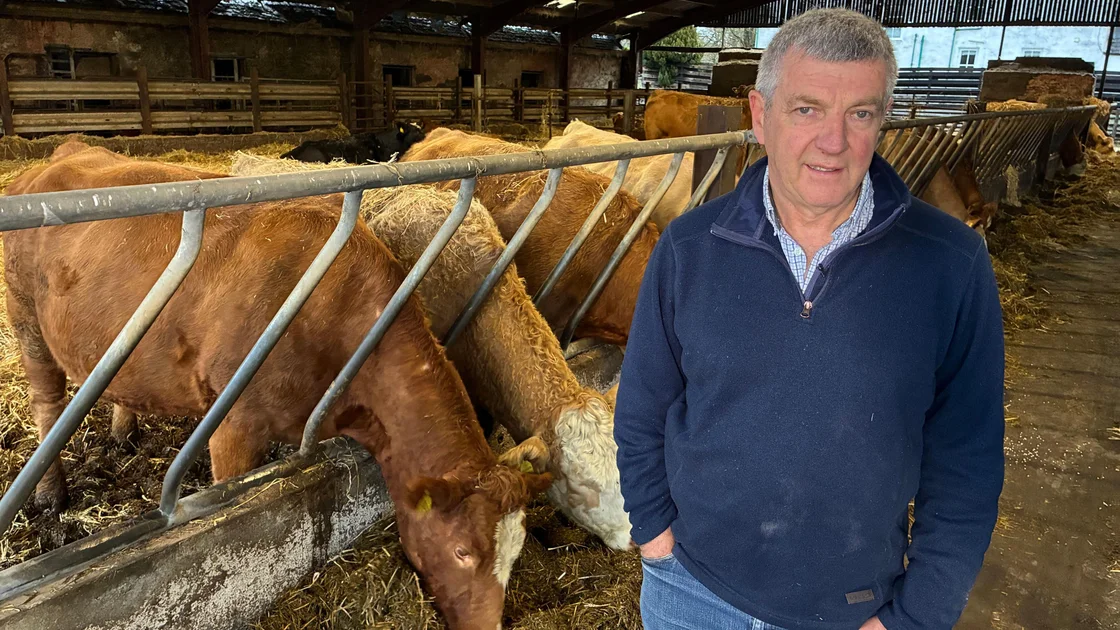
Falkland Estate to Slaughter 271 Cattle in Major Traceability Breach
A historic Fife estate has agreed to slaughter 271 cattle after a Scottish government inspection found the animals were unidentifiable and untraceable, in what experts say is one of the largest incidents of its kind in Scotland. The cull represents a financial blow of up to £500,000, with the estate also facing potential cuts to its farm support payments.
Scottish government inspectors will attend Falkland Estate to verify the slaughter, which follows a routine Cattle Identification and Traceability Inspection. The estate runs Aberdeen Angus and Belted Galloway cattle, two heritage breeds prized for their beef quality. A Scottish government spokesperson confirmed that non-compliance with regulations was discovered during the inspection, with all 271 animals deemed ineligible to enter the food chain.
"During the inspection, 271 animals were found to be unidentifiable and untraceable, which means they cannot enter the food chain and are placed under a permanent movement restriction," the spokesperson said. "In this case, the business has taken the difficult decision to slaughter the animals – Scottish Government inspectors will attend to verify the slaughter."
The Falkland Estate, which has not commented publicly, is believed to have accepted the necessity of the cull rather than attempt to resolve the identification issues retroactively. Under Scotland’s strict livestock traceability rules, untraceable cattle cannot be sold, moved, or used for breeding, leaving slaughter as the only viable option.
The Financial and Regulatory Toll
The financial consequences for Falkland Estate extend well beyond the loss of the animals themselves. The herd, valued at an estimated £500,000, will not be compensated by the government. The estate may also be required to cover the costs of slaughter and disposal, which can run into thousands of pounds for large-scale culls.
More significantly, the severity of the breach could result in a reduction of up to 100% in the estate’s farm support payments from the Scottish government. These payments, part of the Common Agricultural Policy framework, are crucial for many Scottish farms, subsidizing everything from land management to conservation work. Losing them entirely would compound the financial damage.
The case also carries reputational risks. Falkland Estate is a prominent Scottish landmark, known for its historic palace, gardens, and agricultural operations. A traceability failure of this magnitude raises questions about management practices, although it remains unclear whether the breach resulted from systemic neglect or a one-off administrative error.
Why Cattle Traceability Matters
Scotland’s livestock identification and traceability rules are among the most stringent in the world, designed to protect public health and enable rapid response to disease outbreaks. Under the ScotEID system, all cattle must be fitted with official ear tags, and farmers must report every birth, death, and movement to the national database.
How ScotEID Works
ScotEID is a centralized electronic database used by the Scottish government to monitor livestock from birth to slaughter. Every animal receives a unique identifier linked to its holding of origin. When cattle are sold, moved to a new farm, or sent to an abattoir, the keeper must update the database within a set timeframe. Calves must be tagged within specific deadlines, with stricter rules for dairy herds than for beef herds.
The system allows authorities to trace an animal’s entire history – including its parentage, movements, and health records – within hours. This capability is essential during disease outbreaks such as foot-and-mouth, bovine tuberculosis, or bluetongue, where rapid containment can prevent catastrophic economic losses.
Consequences of Non-Compliance
When inspectors find cattle whose tags are missing, illegible, or whose movements have not been recorded, the animals are classified as untraceable. This immediately places them under a permanent movement restriction. They cannot be sold, exported, or slaughtered for human consumption. In practice, this leaves farmers with few options: either the animals remain on farm indefinitely at significant cost, or they are euthanized and disposed of.
Scottish government guidance notes that inspection action can include movement restrictions, slaughter notices, subsidy reductions, or even legal proceedings. The Falkland Estate case appears to represent the most severe end of this enforcement spectrum, given the sheer number of animals involved.
The breach comes amid heightened awareness of food safety and supply chain integrity. Consumers increasingly demand transparency about where their food comes from, and traceability failures can undermine confidence in the entire agricultural sector. The Falkland Estate incident is a stark reminder of what happens when records fall short.
A Record Cull: Scale and Context
While individual cattle identification errors are not uncommon in Scotland, the scale of the Falkland Estate breach is extraordinary. The Scottish Farmer reported that it is believed to be “one of the largest incidents of its kind in Scotland.” The BBC also noted that the slaughter of 271 animals could be among the biggest in recent memory.
Previous Incidents
Smaller traceability breaches occur periodically, typically involving a handful of animals with missing tags or incomplete movement records. In most cases, farmers are able to rectify the issue by providing additional documentation or re-tagging the cattle, provided the animals can still be traced to their original holding. However, when the entire herd is found to be unidentifiable, there is no way to prove their origin or health status.
One notable precedent was the 2012 cull of around 50 cattle in Dumfries and Galloway after a similar traceability failure. That case drew criticism from farming unions, who argued that the rules were overly rigid. However, the Scottish government maintained that public health protections must take priority.
The Falkland Estate case dwarfs that earlier incident. The loss of 271 animals – roughly equivalent to a medium-sized herd – raises the question: how could so many animals become untraceable simultaneously? While the estate has not commented, possibilities include a failure to tag calves at birth, a breakdown in record-keeping over an extended period, or a systemic problem with the ear tags themselves.
Industry Reaction
The farming community has reacted with a mixture of sympathy and concern. Many farmers express dismay at the financial hit to the estate, but also acknowledge that rules must be followed. A source close to the National Farmers Union of Scotland told FarmingUK that the incident highlights the need for rigorous compliance, even on well-established estates.
Some commentators have questioned whether the rules are too harsh, especially when non-compliance results from an administrative lapse rather than deliberate fraud. However, the Scottish government remains firm. As one spokesperson put it, “Identification and traceability regulations for livestock must be adhered with for disease prevention, control, eradication and the protection of public health.”
Broader Implications for Scottish Agriculture
The Falkland Estate traceability breach is more than an isolated incident; it signals growing pressure on Scottish farms to maintain impeccable records or face severe consequences. As the agricultural sector undergoes digital transformation, the gap between those who comply and those who slip is widening.
The Costs of Compliance
Modern livestock farming requires significant investment in record-keeping. Farmers must tag calves quickly, log movements, and update ScotEID – often while juggling other responsibilities. For smaller farms, this can be a burden. However, the cost of non-compliance, as Falkland Estate is discovering, is far higher.
Technology offers potential solutions. Electronic ear tags, which can be read by scanners, are becoming more common. Some farms use smartphone apps to record births and movements in real-time, syncing automatically with the national database. But adoption is uneven, and older systems remain prevalent.
The Scottish government is encouraging digital solutions, but it has not yet mandated electronic tagging for cattle. The Falkland Estate case may accelerate that discussion. If a historic estate with substantial resources can fall so far behind, policymakers may wonder how many other farms are at risk.
Support Payments Under Threat
One of the most potent deterrents for non-compliance is the threat of subsidy cuts. Scottish government payments to farmers are tied to strict cross-compliance rules, which include animal identification and welfare standards. A serious breach can trigger a reduction of up to 100% in support payments for the year.
For Falkland Estate, this could mean losing tens of thousands of pounds in annual subsidies, on top of the slaughter and disposal costs. The prospect of such financial pain is meant to incentivize compliance across the industry. However, it also raises concerns about the viability of farms that make mistakes.
Farming unions have long argued for a more graduated penalty system, where minor errors result in warnings rather than massive financial hits. The Scottish government has defended its approach as necessary to maintain consumer confidence and meet international trading standards.
Consumer Confidence and Trade
Ultimately, the traceability system exists to protect the integrity of Scottish beef. Scotland exports beef to markets as diverse as the EU, the US, and the Middle East, all of which demand proof of origin and health status. A single high-profile breach could risk access to these markets if it undermines trust.
The Falkland Estate case has already attracted national media attention, including coverage from the BBC, The Herald, and The Scottish Farmer. While the incident is contained to one farm, it serves as a cautionary tale for the entire sector. As the saying goes, “you are only as strong as your weakest link.”
What’s Next for Falkland Estate?
Slaughter is expected to take place in the coming days, with Scottish government inspectors present to ensure that all animals are humanely euthanized and disposed of according to regulations. The estate will then face the task of rebuilding its herd, assuming it intends to continue cattle farming.
Rebuilding will require not only new animals but also a complete overhaul of record-keeping systems. The estate may need to invest in new tagging protocols, staff training, and possibly digital tools to prevent a recurrence. The financial and reputational damage, however, may take years to repair.
Falkland Estate has not publicly indicated whether it plans to challenge any aspect of the enforcement action. Legal avenues exist but are rarely pursued, given the government’s clear mandate and the difficulty of overturning animal health decisions.
For the wider farming community, the message is unmistakable: traceability is non-negotiable. As one commentator noted, “If Falkland Estate can fall foul of these rules, any farm can.” The industry will be watching closely to see how the estate responds, and whether the Scottish government uses this case to send an even stronger signal about enforcement.
In the meantime, the 271 cattle at the heart of this story will be destroyed, their value lost, and their history unknown – a sobering outcome for a system designed to leave no animal untraced.
Comments