
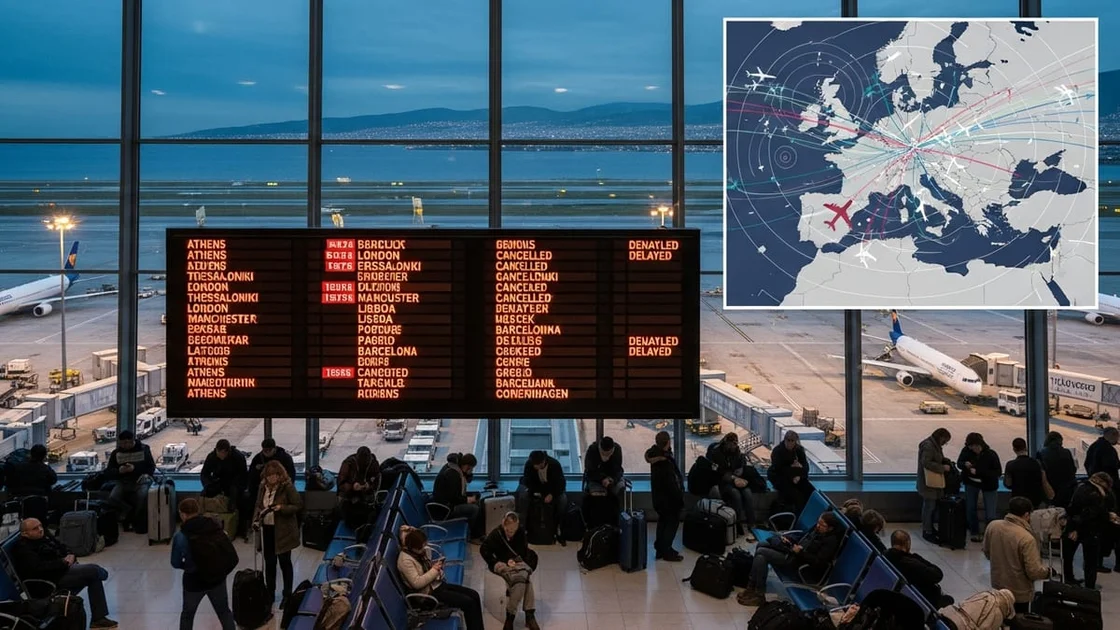
EU border system triggers chaos as airports warn of six-hour queues
The head of Europe’s airports trade body has bluntly declared that the European Union’s new digital border system is “not working”, amid warnings that passengers could face six-hour queues at peak travel times this summer.
Stefan Schulte, president of ACI Europe and chief executive of the company that owns Frankfurt Airport, told an industry event in Prague that politicians should “stop pretending … that EES is working just fine. It is not.” His comments, reported by the BBC, come as airports across the Schengen Area report significant delays, missed flights and growing frustration among travellers.
Schulte warned that at peak traffic times, passengers are already queueing for hours. “I just do not know how we will be able to cope in the coming weeks with the expected increase in traffic,” he said.
The Entry-Exit System (EES), which became fully operational across the Schengen Area on April 10, 2026, requires travellers from outside the EU — including British citizens — to register biometric information such as fingerprints and facial images when entering most European countries, with the data checked again upon departure.
While the system has been working smoothly in some locations, it has caused major disruption at others. Airports Council International Europe has recorded waits of up to three and a half hours during peak periods. The International Air Transport Association (IATA) projects that queues could stretch to six hours during the busiest summer months, according to Spanish media reports.
Budget airlines impose stricter check-in deadlines
Low-cost carriers are already adapting to the new reality. Ryanair announced it will close its airport check-in and bag-drop services an hour before scheduled departure, compared with 40 minutes previously, from November 10. The airline said the change is designed to give passengers more time to get through security and passport checks, which have become “unpredictable” under EES.
Jet2 has told passengers that check-in desks will open exactly three hours before departure and will not open earlier, even with the new border checks. The airline advised travellers not to arrive at the airport earlier than this, warning that early arrivals may be asked to wait to prevent congestion.
Wizz Air’s UK managing director, Yvonne Moynihan, has urged British holidaymakers to arrive at European airports three hours before their flight home departs. “When you land in the destination … you need to give yourself extra time,” she said.
Passengers left stranded
The disruption is already having real consequences. Earlier this month, dozens of Ryanair passengers were left stranded in Athens after their flight to London Luton departed without them. Ryanair blamed border delays, while the airport cited congestion linked to “additional processing requirements” — though neither directly attributed the incident to EES. In April, passengers flying from Milan Bergamo and Milan Linate to Manchester also missed their flights amid similar chaos.
Why the EU Entry-Exit System matters
The EES is a major component of the EU’s broader effort to strengthen its external borders. By digitally recording entry and exit data for non-EU travellers, the system aims to identify overstayers, enhance security, and reduce the use of manual passport stamping. It was originally scheduled to launch in 2022 but faced repeated delays due to technical and political hurdles.
For UK travellers, the system marks the end of friction-free travel to the continent following Brexit. British citizens now face the same biometric checks as other third-country nationals when entering the Schengen Area.
The system’s rollout has been phased. After several delays, the EU declared EES fully operational on April 10, 2026. Yet two months in, the results are mixed. While some airports — particularly smaller or better-prepared hubs — have reported smooth operations, major gateways such as Frankfurt, Milan Bergamo, and Madrid-Barajas have experienced persistent congestion.
The stakes for summer travel
Summer 2026 is the first real test of EES under peak demand. IATA’s projection of six-hour queues is a worst-case scenario, but even the current three-and-a-half-hour waits are causing significant operational strain. Airlines are losing revenue from missed connections and increased ground staff costs. Passengers face the risk of missing holidays or business trips.
The travel industry is calling for urgent intervention. ACI Europe has asked the European Commission to allow more flexibility in how biometric data is collected, including the possibility of pre-registration outside the EU. Some member states have already begun testing mobile apps that let travellers submit their data before arrival, but these are not yet widespread.
Perspective: A system under pressure with no quick fix
The EES controversy raises broader questions about the EU’s ability to implement large-scale digital infrastructure projects while maintaining the free movement of people and goods. The system is designed to be a security upgrade, but its operational failures risk undermining public confidence in EU border management.
For the travel industry, the situation is a test of resilience. Airlines are adjusting schedules and check-in procedures; airports are hiring additional staff and investing in queuing infrastructure. But many industry insiders believe the problem will persist until the system itself is improved.
Stefan Schulte’s blunt warning — that pretending the system is working is unsustainable — reflects a growing consensus among airport operators. They argue that the European Commission has been slow to acknowledge the severity of the delays and to provide practical support.
The European Commission has been contacted for comment but has not yet responded publicly to Schulte’s remarks. Earlier this year, a Commission spokesperson said the EES would bring “long-term benefits for security and efficiency,” but acknowledged that the transition period would be challenging.
What this means for passengers
For now, the advice to travellers is to plan for delays. Allow extra time at airports, check airline requirements carefully, and be prepared for queues. Those flying with Ryanair, easyJet, Wizz Air, or Jet2 should note the new check-in deadlines and consider completing online check-in as early as possible.
The situation may worsen before it improves. With peak summer season approaching, the industry is bracing for the worst. Whether the EU can respond quickly enough to prevent widespread disruption remains an open question.
In the meantime, the controversy has also drawn attention to other current events. For instance, as travellers plan their summer getaways, extreme weather is also making headlines: Thunderstorms and 40°C Heatwave: London Braces for Extreme Weather Chaos could further complicate travel plans. Meanwhile, sports fans may be following Hamilton 40 points ahead of Leclerc: Ex-F1 boss warns of 'maturity' test at Ferrari as the summer calendar unfolds.
Looking ahead
The EES is unlikely to be scrapped, given the political and security investments behind it. But the current crisis may force the EU to accelerate improvements: allowing pre-registration, increasing staffing levels, and deploying technology that speeds up the biometric process.
Until then, travellers and airlines alike must navigate a system that, in the words of its sharpest critics, is simply not working as intended.
Comments