
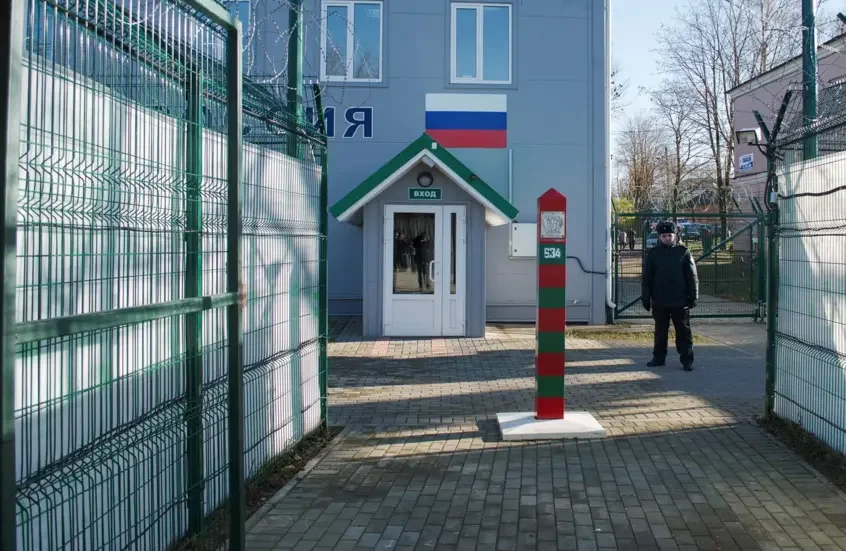
Estonia to Close Russian Border Crossings After Foiled Drone Factory Arson Attack
Estonia announced Sunday it will close all its border crossing points with Russia starting December 1, following a suspected sabotage attack on an Estonian defense company that Tallinn attributes to Moscow's military intelligence. The move marks a significant escalation in tensions between the NATO member and its eastern neighbor.
Foreign Minister Margus Tsahkna said on X that Estonia has "clear evidence" that Russia's GRU ordered the attack on Threod Systems, a manufacturer of reconnaissance and attack drones, on Saturday night. "Russia must understand that hostile actions against Estonia come with consequences," Tsahkna wrote. "Attempts to intimidate, destabilise, or undermine our security will not go unanswered."
Foiled Attack and Arrests
Prime Minister Kristen Michal said the sabotage attempt occurred in Viimsi, north of the capital Tallinn, and that extensive damage was averted due to heightened security measures and a swift law enforcement response. Eight individuals living in Latvia were arrested in connection with the plot, according to Chief Prosecutor Astrid Asi.
Michal characterized the incident as "part of Russia's broader hybrid war against Europe, with the aim of decreasing support to Ukraine and pressure on Russia." He added, "We will not be intimidated."
The closure will affect Estonia's three open border crossings with Russia at Narva, Luhamaa, and Koidula. Tsahkna said the decision aims to reduce Russia's ability to conduct hostile activities in Estonia and strengthen efforts to prevent sanctions circumvention. He did not specify how long the closure would last.
Estonia has informed its Baltic and Nordic neighbors—Finland, Latvia, and Lithuania—of the decision. Latvian Interior Minister Janis Dombrava thanked Estonia's Internal Security Service on X, noting that several Latvian citizens and non-citizens were among those arrested. "Since the collapse of the USSR, there have been people among us who are willing to commit serious crimes in Russia's interests," Dombrava wrote.
Context: A Pattern of Hybrid Attacks
The foiled attack is not an isolated incident. In August, the Tallinn-based defense subcontractor Milrem was targeted in an attempted arson attack, and Latvian nationals were arrested in that case as well. The repeated targeting of Estonia's defense sector underscores what officials describe as a sustained campaign of sabotage and intimidation.
Marko Mihkelson, chairman of the Estonian Parliament's Foreign Affairs Committee, told Al Jazeera that the arrests demonstrated Estonia's preparedness to respond swiftly. "It is essential that Russia's state-sponsored campaign of terror does not remain merely a matter of diplomatic protests, either in Estonia or among our allies elsewhere," he said. "Russia is waging a shadow war to divide Europe and undermine support for Ukraine. European countries must respond with asymmetry."
The border closure also follows a broader pattern of Russian pressure on NATO's eastern flank. In recent months, Ukraine has struck Russian military and industrial sites, including the Akhtubinsk airfield and the Baltic Fleet missile ship Naro-Fominsk in Ust-Luga port, highlighting the widening scope of the conflict. Meanwhile, Zelenskyy warned Sunday that restrictions on Ukraine's Starshield satellite communications system are hindering its ability to intercept Russian drones, potentially weakening defenses around energy infrastructure ahead of winter.
Perspective: A New Front in the Shadow War
Estonia's decision to close its border with Russia represents a hardening of NATO's eastern frontier and signals that member states are prepared to take concrete measures beyond diplomatic protests. The move could disrupt trade and travel but is seen as necessary to curb what Tallinn perceives as a growing security threat.
Russia's Foreign Ministry spokeswoman dismissed the plans as "yet another bout of aggressive and unrestrained Russophobia," according to state news agency TASS. Moscow has regularly denied involvement in sabotage operations.
The closure raises questions about the broader European response to Russia's hybrid tactics. While NATO has increased its presence in the Baltic region, individual member states are increasingly taking unilateral steps to protect national security. Estonia's action may pressure other countries to follow suit, particularly those sharing borders with Russia.
As winter approaches and Ukraine's defenses face new challenges, the incident highlights the interconnected nature of European security. The foiled attack on a drone factory—a key supplier to Ukraine—demonstrates how Russia's campaign extends beyond the battlefield, targeting the supply chains and civilian infrastructure that sustain Kyiv's war effort.
Estonia's border closure is set to take effect on December 1, pending any last-minute diplomatic developments. For now, Tallinn is sending a clear message: hostile actions will not go unanswered.
Comments