
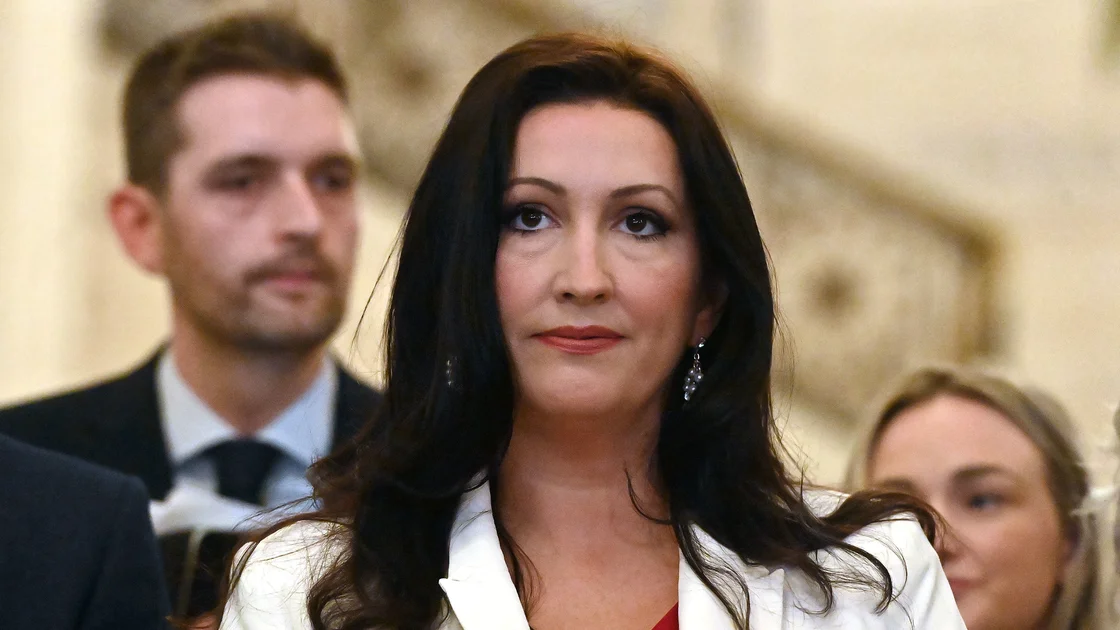
Little-Pengelly at the centre of two political storms
Northern Ireland’s Deputy First Minister Emma Little-Pengelly has found herself at the heart of two major, and very different, political flashpoints this week. On one side, she is navigating the fallout from the worst public disorder in Belfast in years — nights of anti-migrant violence that saw homes torched and a water cannon deployed. On the other, she is locked in a bitter Executive battle over the Good Jobs Bill, a sweeping employment rights overhaul that she has branded “half-baked” and accused Sinn Féin of trying to “bully and bounce her” into supporting.
Speaking in the Assembly on Monday, Little-Pengelly said the proposed legislation had “no support among the business community” and offered to back it only if Economy Minister Caoimhe Archibald agreed to split the bill and remove the new trade union rights. Archibald refused, saying her Good Jobs Bill provided important rights for all workers and she would not “be leaving anyone behind.” The standoff has deepened divisions at Stormont just as the wider political mood in Northern Ireland darkens.
Just hours after Little-Pengelly’s Assembly remarks, hundreds took to the streets in Newtownabbey, Coleraine, and Belfast. Objects were hurled at police lines; a two-month-old baby was among those rescued by officers from burning homes. By Wednesday, police had fired a water cannon to disperse a crowd in east Belfast. The violence followed a knife attack on Monday in which Stephen Ogilvie lost his left eye. The suspect, Hadi Alodid, a 30-year-old Sudanese man who was granted refugee status in 2023, has been charged with attempted murder and remanded in custody. Far-right elements have been blamed for exploiting the attack to mobilise anti-migrant protests.
The Good Jobs Bill: a half-baked plan or a vital reform?
What the bill proposes
The Good Jobs Bill is the centrepiece of Sinn Féin Economy Minister Caoimhe Archibald’s agenda. It aims to overhaul Northern Ireland’s employment laws by restricting zero-hours contracts, giving workers greater job security, and — most controversially — granting trade unions a “right to request” access to workplaces to recruit and represent workers. Currently, unions generally only have a right to enter if they are already recognised by the employer. Under the bill, access would not be automatic, but employers would not be permitted to “unreasonably” withhold it.
The DUP’s opposition
Little-Pengelly’s criticism has been sharp. Speaking in the Assembly, she accused Archibald of trying to “bully and bounce” her into supporting the legislation. The Deputy First Minister argued that the bill as a whole had “no support among the business community” and risked damaging Northern Ireland’s ability to attract investment. She offered a compromise: split the bill and remove the trade union access clauses. “If the minister is serious about good jobs, she will take the parts that everyone can agree on and leave the divisive elements behind,” Little-Pengelly said.
That offer was swiftly rejected. Archibald accused the Democratic Unionist Party (DUP) of “turning their backs” on more than a million workers and said she would not water down protections. The trade unions, for their part, have criticised the DUP’s position as a betrayal of working people. The stalemate leaves the Good Jobs Bill in legislative limbo, with no agreement around the Executive table. Sinn Féin has accused the DUP of blocking reforms that would improve conditions for the lowest-paid and most precarious workers.
Business versus workers’ rights
The row reflects a deeper tension that is not unique to Northern Ireland. Across the UK, debates over flexible working, zero-hours contracts, and union access are intensifying. Business groups argue that the bill would impose unnecessary red tape, increase costs for employers, and deter multinational investment at a time when the region is trying to rebuild its post-Brexit economic reputation. Unions, meanwhile, say that the current system leaves too many workers vulnerable to exploitation and that the bill would bring Northern Ireland closer to the standards seen in the Republic of Ireland and much of continental Europe.
Belfast riots: violence, condemnation, and underlying anger
What happened on the streets
On Tuesday and Wednesday nights, Northern Ireland witnessed scenes it had hoped were consigned to the past. In north Belfast, a crowd went door to door, forcing families from their homes and setting fire to cars and a bus. In Newtownabbey, around 200 people gathered as objects were thrown at police lines. Glass bottles, bricks, and fireworks were used. Police deployed extra officers, public transport finished early, and a water cannon was used for the first time in years to break up a crowd in east Belfast.
Chief Constable Job Boucher confirmed that a two-month-old baby was among the family members rescued by officers. “This has got to stop,” Boucher said, appealing for calm. The violence was widely condemned by political leaders across the spectrum. First Minister Michelle O’Neill said: “We say no to racism and hatred.” UK Prime Minister also called for calm, saying: “We should all be calling for calm.”
Little-Pengelly’s response: condemnation and nuance
Little-Pengelly was unequivocal in her condemnation of the violence. “I want to condemn any and all violence or thuggery that we witnessed on the streets in places across Northern Ireland last night,” she said. “It is completely unacceptable. I think most people waking up this morning, if they didn’t see it on their screens last night, will be truly appalled, all of us were completely appalled by what happened, horrified by what happened in north Belfast on Monday night.”
But she also struck a more nuanced note, acknowledging the anger driving some of the protests. “Immigration is not a degenerate issue in Northern Ireland,” she said. “What happened on Monday night absolutely appalled and terrified people. I have been listening to people — people are and have safety concerns. People do not want dangerous people to be living in our communities. What I’m saying very clearly is that I hear that people are angry, I hear that people are concerned. People want to be listened to. That is entirely separate from violence and thuggery, that is entirely unacceptable.”
The distinction she drew — between legitimate concerns about safety and the inexcusable violence — reflects the delicate balancing act required of political leaders in the aftermath of such unrest. On one hand, they must not appear to condone the disorder. On the other, ignoring the underlying grievances risks fuelling further anger. The family of Stephen Ogilvie, the victim of the knife attack, has also urged calm, saying in a statement: “Unrest is not welcome, and peaceful protest is the only way forward.”
Economic backdrop: good news on jobs sits uneasily alongside political strife
Kainos: 340 new jobs in AI
Amid the political and social turmoil, Little-Pengelly was also on hand for a brighter announcement. On Wednesday, she joined First Minister Michelle O’Neill and Economy Minister Caoimhe Archibald — the very minister she is at loggerheads with over the Good Jobs Bill — to announce that Kainos, the Belfast-founded technology company, is creating 341 new jobs over the next three years. The roles will be split between Belfast and Derry~Londonderry and will support the company’s expansion into artificial intelligence capabilities in response to growing global demand.
“This is great news for Northern Ireland and a real testament to the strength of our tech talent pipeline,” Little-Pengelly said. “The creation of over 340 new jobs, including graduate and early career opportunities, shows that young people here do not need to look elsewhere to build ambitious, rewarding careers.” The announcement was a rare moment of cross-party unity, with O’Neill and Archibald also praising the investment.
The wider economic picture
The Kainos jobs are part of a broader push by the Executive to position Northern Ireland as a hub for tech and AI investment. But the political infighting over employment law — and the instability triggered by the riots — risks undermining investor confidence. Business leaders have warned that prolonged uncertainty over legislation like the Good Jobs Bill, combined with the perception of rising social unrest, could deter the very companies the Executive is trying to attract.
The contrast could hardly be starker. One day, the Deputy First Minister is standing alongside her political opponents celebrating high-skilled jobs; the next, she is condemning the burning of homes and rejecting a key piece of legislation. The dual workload reflects the unique pressures of Northern Ireland’s power-sharing Executive, where Sinn Féin and the DUP must govern together — and frequently disagree.
Broader implications: what this tells us about Northern Ireland in mid-2026
The fragility of Stormont’s consensus
Northern Ireland’s political institutions were restored in early 2024 after a two-year boycott by the DUP over post-Brexit trading arrangements. Since then, the Executive has struggled to find common ground on a range of issues, from health reform to housing. The Good Jobs Bill is the latest and most visible manifestation of those tensions. Little-Pengelly’s refusal to back the bill without major changes — and Archibald’s refusal to compromise — suggests that the power-sharing partners remain deeply divided on economic and social policy.
Social unrest: a persistent undercurrent
The violence in Belfast this week was not an isolated incident. It is the second night of unrest in Northern Ireland in as many days, and follows a pattern seen in other parts of the UK, where far-right groups have mobilised around anti-immigration sentiment following high-profile crimes. The fact that the suspect in the knife attack was a Sudanese refugee has been exploited by those seeking to stoke fear. But the response from political leaders — including Little-Pengelly’s careful balancing act — shows a determination to prevent the violence from escalating into a wider sectarian or racial crisis.
For Little-Pengelly personally, the week has been a test of her political dexterity. As Deputy First Minister, she must defend the DUP’s negotiating position on employment law while also projecting unity and authority in the face of public disorder. Her condemnation of the riots has been firm; her defence of her party’s stance on the Good Jobs Bill has been equally resolute. Whether either position will earn her lasting credit with the public — or with her political rivals — remains to be seen. But one thing is clear: Northern Ireland in June 2026 is a place of deep contrasts, where job creation and street violence, political co-operation and legislative deadlock, all coexist uneasily.
Meanwhile, leaders across the UK are watching closely. The Prime Minister has called for calm, and the Judge Denies Bid to Block $1.8B Anti-Weaponization Fund, Warns DOJ Not to ‘Play Possum’ decision underscores how security and legal frameworks are being tested elsewhere. In Northern Ireland, the coming days will reveal whether the Executive can turn a week of crisis into an opportunity for genuine reform and reconciliation.
Comments