
EEOC Files Religious Discrimination Lawsuit Against Hatch Trick Chick-fil-A Operator
The U.S. Equal Employment Opportunity Commission (EEOC) has filed a federal lawsuit against Hatch Trick, Inc., a franchisee that operates multiple Chick-fil-A locations in the Austin, Texas area, alleging the company engaged in religious discrimination and wrongful termination. The lawsuit, announced on May 15, 2026, centers on a former delivery driver manager who was fired after requesting to observe the Saturday Sabbath in accordance with her faith.
According to the EEOC complaint, the employee was a practicing member of the United Church of God, a Christian denomination that observes the Sabbath on Saturdays. During her job interview in August 2023, she explicitly informed Hatch Trick management that her religious beliefs prevented her from working on Saturdays. The company initially accommodated this request, but in February 2024, management reversed course and demanded she work on Saturdays, the agency alleges.
The employee, who managed delivery drivers at one of the Austin Chick-fil-A locations, worked 45 to 50 hours per week, Monday through Friday, with additional Sunday hours. She met with company officials multiple times to propose alternative accommodations that would allow her to maintain her managerial role while observing her Sabbath. These included having another driver cover the dispatch role on Saturdays and working only after sundown on that day, according to the EEOC.
Hatch Trick rejected each proposal, the EEOC says, and instead offered the employee a demotion to a non-managerial delivery driver position with lower pay, reduced benefits, and fewer hours. When she refused to accept the reassignment, the company fired her.
"The duty under federal law to provide reasonable accommodation of religion reflects an acknowledgement by our society of the importance of faith in workers' everyday lives and an abiding respect for those who observe religious practices as an expression of that faith," said acting EEOC Dallas Regional Attorney Ronald L. Phillips in a statement. "Just as adherence to the dictates of one's own conscience is not optional, so too an employer's duty under Title VII is obligatory, and the EEOC stands ready to enforce that legal duty."
The lawsuit, EEOC v. Hatch Trick, Inc., was filed in the U.S. District Court for the Western District of Texas. The EEOC said it attempted to reach a pre-litigation settlement with Hatch Trick through its administrative conciliation process before filing the suit. Neither Hatch Trick nor Chick-fil-A's corporate office has publicly responded to the lawsuit as of this writing.
Legal Stakes Under Title VII of the Civil Rights Act
This lawsuit underscores the legal obligations employers face under Title VII of the Civil Rights Act of 1964, which prohibits discrimination based on religion in the workplace. The law requires employers to provide reasonable accommodations for employees' sincerely held religious beliefs or practices unless doing so would cause an "undue hardship" to the business.
The EEOC defines reasonable accommodations to include flexible scheduling, voluntary shift substitutions, job reassignments, and modifications to workplace policies or practices. In this case, the employee's proposed alternatives—such as having another driver manage dispatch on Saturdays—fell squarely within those categories, the agency argues.
Hatch Trick's alleged response—demanding the employee accept a demotion to a lower-paying role with reduced hours—may signal the company's position that accommodating her Saturday Sabbath would impose an undue hardship. However, legal experts note that the bar for proving undue hardship is high. Under federal law, an employer must demonstrate that the accommodation would require more than a de minimis (minimal) cost to the business, a standard that courts have interpreted narrowly.
"The EEOC's decision to pursue this case publicly sends a clear message: employers cannot simply offer a lesser position as a substitute for a reasonable accommodation," said employment law attorney Sarah Chen, speaking generally on the case. "If the accommodation existed—as the employee suggested through shift swaps—then the company must consider it seriously."
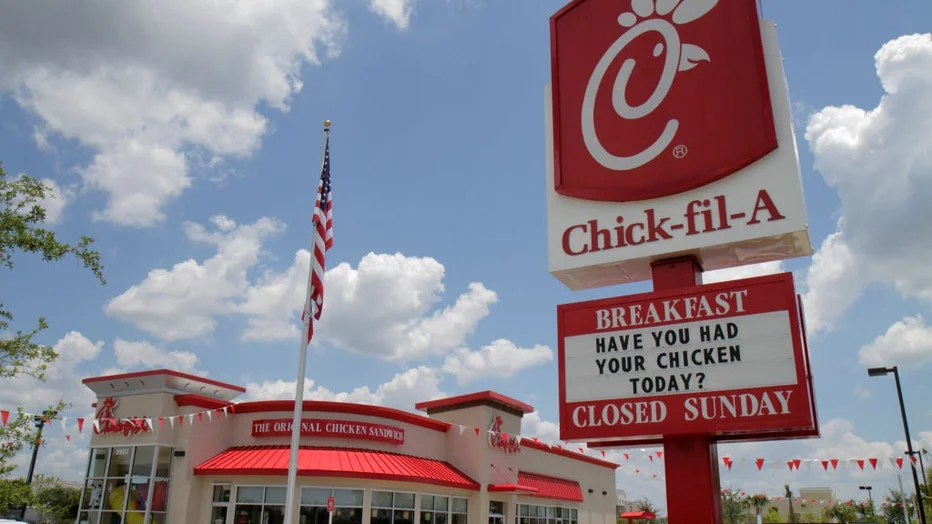
The lawsuit also raises questions about the franchise model. As a franchisee, Hatch Trick is an independent operator responsible for its own employment practices, but corporate brand standards and policies can influence operational decisions. Chick-fil-A is widely known for closing all its restaurants on Sundays, a policy the company says allows employees time to rest and worship. The irony of a company built on Christian principles facing a religious discrimination lawsuit over Sabbath observance has not been lost on observers.
The Employee's Account and Proposed Accommodations
According to court documents obtained by the EEOC, the employee managed delivery drivers at one of Hatch Trick's Austin Chick-fil-A restaurants. She was paid hourly and worked 45 to 50 hours per week, Monday through Friday, with additional Sunday hours. Her role required her to be present during the restaurant's busiest delivery periods, which included Saturdays.
When Hatch Trick informed her in February 2024 that she would be required to work Saturdays, she immediately appealed. Over several meetings, she proposed specific accommodations:
- Having a fellow delivery driver temporarily assume the dispatch role on Saturdays
- Working only after sundown on Saturdays, which for the United Church of God marks the end of the Sabbath
- Adjusting her schedule to work extra hours on other days to cover any perceived gaps
The EEOC alleges Hatch Trick rejected each of these proposals. Instead, company officials told the employee that the only way she could avoid Saturday work was to accept a demotion to a delivery driver position—a role with significantly lower pay, reduced benefits, and fewer hours. The employee declined and was subsequently terminated.
The EEOC's San Antonio Field Office Director Norma Guzman emphasized the agency's commitment to protecting religious rights in the workplace. "Religious discrimination in the workplace is unlawful, and employers must make reasonable accommodations for employees' sincerely held beliefs," Guzman said.
Broader Implications for Faith-Based Businesses
The case against Hatch Trick comes at a time when religious accommodation requests in the workplace are increasing. According to EEOC data, charges alleging religious discrimination have risen steadily over the past decade, with the agency receiving over 2,600 such charges in the most recent fiscal year. The COVID-19 pandemic further complicated the landscape, as employees cited religious objections to vaccine mandates, remote work policies, and scheduling changes.
For companies like Chick-fil-A, which brands itself on Christian values and closes on Sundays, the lawsuit presents a potential reputational challenge. The company's Sunday closure policy is often cited as a core value, but critics argue that the accommodation applies only to one specific Christian tradition (Sunday worship) and may not extend to employees who observe different religious practices.
"This case highlights the tension between a company's public faith identity and its obligation to accommodate diverse religious practices among its workforce," said Dr. Michael Torres, a professor of employment law at the University of Texas. "If an employer can reasonably adjust schedules for one set of religious beliefs—like closing on Sundays—it sets a precedent that similar accommodations for other beliefs should also be feasible."
The lawsuit also reflects broader cultural debates about religious freedom in the workplace. While Title VII protects employees from discrimination based on religion, it does not require employers to accommodate any and all requests. The key question in the Hatch Trick case will likely center on whether the proposed accommodations were, in fact, reasonable and whether granting them would have imposed an undue hardship on the business.
Chick-fil-A declined to comment on the lawsuit but directed inquiries to a statement provided to ABC News affiliate KVUE: "It's important to know that, as a franchise, Hatch Trick is independently owned and operated. We have always been committed to treating every team member with dignity and respect, and we take any claims of discrimination seriously."
What This Case Means for Employers and Employees
The Hatch Trick lawsuit serves as a reminder to employers of all sizes that religious accommodation requests must be handled carefully and in good faith. The EEOC's decision to sue indicates the agency believes Hatch Trick failed to engage in the "interactive process" required under Title VII, where both parties must work together to find a reasonable solution.
For employees, the case illustrates the importance of documenting accommodation requests and proposing specific alternatives. The former manager in this case did exactly that—articulating her religious needs upfront during the interview and later presenting multiple workable solutions—which may strengthen the EEOC's argument that Hatch Trick acted in bad faith.
Legal proceedings in the U.S. District Court for the Western District of Texas are expected to move forward in the coming months. The case could set a precedent for how courts evaluate religious accommodation claims in fast-food and service industry settings, where Saturday availability is often considered critical.
As this case unfolds, it joins a growing body of litigation testing the boundaries of religious accommodation under Title VII. The outcome could have ripple effects for franchise operations nationwide, particularly those with strongly identified religious or cultural brands.
For readers interested in other legal developments, check out our coverage of how the Warriors Coaching Shake-Up: Terry Stotts, Jerry Stackhouse Depart After Kerr Extension is reshaping NBA coaching dynamics, or the latest on Elon Musk's Grok AI Faces Stagnant Growth and Technical Setbacks in the tech industry.
Comments