
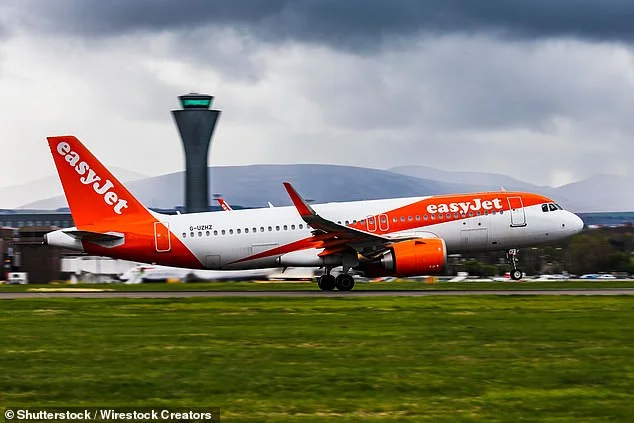
EasyJet Flight Turns Back to Tenerife After 10-Person Mid-Air Brawl
An easyJet flight bound for Liverpool was forced to return to Tenerife South Airport on Tuesday evening after a mass brawl involving approximately 10 passengers erupted mid-flight, according to Spanish air traffic controllers and the airline. The incident occurred on easyJet flight EZY3352, which departed Tenerife South at just before 8:00 p.m. local time and was scheduled to arrive in Liverpool. Flight tracking data shows the aircraft turned back roughly 30 minutes after takeoff, landing back at the same airport at 9:05 p.m.
Police met the plane upon arrival and removed eight passengers from the 186-seat aircraft, all of whom were British nationals. Despite the removal, no arrests were made, a Civil Guard spokesperson confirmed. The flight later continued to Liverpool, arriving several hours behind schedule. The airline emphasized that the safety of passengers and crew was its top priority and that disruptive behavior would not be tolerated.
What Happened Onboard: Crew Decision to Return
A Fight That Endangered the Flight
According to a statement from Spanish air traffic controllers, the captain of flight EZY3352 made the decision to return to Tenerife after a group of around 10 passengers started a physical fight onboard. The controllers reported that the crew informed them about 30 minutes into the flight that they needed to return and requested a police presence upon landing.
“A group of around 10 passengers had started a fight on board, and the captain decided to turn back because of the danger this posed to the safety of the flight,” the air traffic control statement read. “We expedited their return as much as possible while coordinating with the airport to ensure a police presence. They landed and vacated runway 07 without incident.”
The statement also expressed support for crews and passengers who, it noted, “are having to endure these situations more and more often.”
Airline Response: ‘We Do Not Tolerate Disruptive Behaviour’
EasyJet confirmed the diversion in a statement to the media. “Flight EZY3352 from Tenerife to Liverpool yesterday returned to the airport and was met by police due to a group of passengers behaving disruptively. The flight then continued onto its final destination,” a spokesperson said.
The airline added: “Our cabin and ground crew are trained to assess all situations and to act quickly and appropriately to ensure that the safety of the flight and other customers is not compromised at any time. We take these incidents very seriously and do not tolerate disruptive behaviour towards our staff. The safety and wellbeing of customers and crew is always our highest priority.”
No Arrests, But Eight Removed
A spokesperson for the Spanish Civil Guard said: “Eight people were removed from the plane who had been travelling to Liverpool.” No further details on the nature of the altercation or whether charges might be filed later were provided. Police have confirmed that all those involved were British.
The incident has sparked online commentary, with one Spanish social media user remarking: “I'm amazed by the number of flights departing from or arriving in the UK that experience security problems like this. What a disgrace.”
Context: A Summer of Aviation Disruptions
The Tenerife-Liverpool diversion is the latest in a string of summer travel headaches, adding to a growing list of mid-flight incidents that have raised concerns about passenger behaviour, aviation safety, and airline protocols. While the easyJet brawl was resolved without injury, other recent events have been far more alarming.
Ryanair Window Incident: A Narrow Escape
Just days earlier, a Ryanair flight made headlines when a passenger was nearly sucked out of a broken window mid-flight. Ljubisa Karović, a 61-year-old passenger on a flight from Thessaloniki, Greece, to Memmingen, Germany, was pulled headfirst toward the window after an engine failure sent debris smashing through the acrylic pane. His wife, Svetlana Grković, held onto his legs and, with the help of two other passengers, managed to pull him back inside.
Ryanair’s group chief financial officer, Neil Sorahan, said the airline’s crew “did a phenomenal job” and that “everyone bar none walked off the aircraft.” The airline has been in touch with the family and said it is cooperating with an investigation led by the U.S. National Transportation Safety Board (NTSB). Sorahan reassured travellers that Ryanair’s fleet remains safe, noting that neither the FAA nor the European Union Aviation Safety Agency has required operational changes.
KLM Diversion to Tenerife for Medical Emergency
Also this week, a KLM flight from Rio de Janeiro to Amsterdam made an unscheduled landing at Tenerife South Airport following a “possible medical situation” involving a passenger or crew member. That flight, KLM KL706, diverted on Monday morning after roughly seven hours of its 11-hour transatlantic journey. The aircraft landed safely and was expected to resume its journey after a one-hour stopover.
Broader Trend: Rising Disruptive Behaviour Onboard
Air traffic controllers in Spain noted that crews and passengers are “increasingly having to endure these situations,” suggesting a trend that aviation authorities have been tracking since the post-pandemic travel surge. The International Air Transport Association (IATA) has reported a rise in unruly passenger incidents globally, with many cases linked to alcohol consumption, flight delays, and heightened tensions among travellers.
The easyJet incident, occurring on a popular holiday route from the Canary Islands to the UK, underscores the challenges airlines face in maintaining order at 35,000 feet.
Perspective: What This Means for Air Travel
The recent spate of incidents—from the easyJet brawl to the Ryanair window failure and the KLM medical diversion—highlights a broader landscape of aviation safety challenges. While each event has distinct causes, together they paint a picture of an industry grappling with both mechanical and human factors.
The Human Factor: Alcohol and Air Rage
The Tenerife-Liverpool fight is a textbook example of what aviation professionals call “air rage”—aggressive behaviour often exacerbated by alcohol. Tenerife is a major holiday destination for British tourists, and flights to the UK frequently see passengers who have consumed alcohol at airports or onboard. Airlines have tightened policies on alcohol service, but enforcement remains inconsistent.
EasyJet’s response—turning the plane around rather than continuing to Liverpool—reflects a zero-tolerance approach. Industry experts say such a decision, while costly and inconvenient, sets a necessary precedent. “It sends a message that disruptive behaviour has consequences,” one aviation analyst noted. “It also prioritises safety over schedule.”
Mechanical Risks: Engine Failures and Structural Flaws
The Ryanair incident, meanwhile, raises questions about aircraft maintenance and the resilience of cabin components. Although rare, engine debris striking a window can have catastrophic consequences. The NTSB investigation will likely focus on the engine failure and the window’s structural integrity. Ryanair’s insistence that its fleet is safe echoes similar assurances from other carriers after high-profile incidents, but passengers may remain wary.
Medical Emergencies: The Unpredictable Variable
Medical diversions, like the KLM case, are among the most common reasons for unscheduled landings. While less dramatic than a brawl or a window failure, they represent a significant operational challenge. Airlines must balance the needs of an ill passenger against the impact on hundreds of others.
The Cost of Disruption
For easyJet, the Tenerife return flight meant additional fuel costs, landing fees, and compensation for delayed passengers. For passengers, the delay could mean missed connections, lost holiday time, and frustration. The airline did not disclose the financial impact, but analysts estimate a single diversion can cost tens of thousands of pounds, not including potential legal liabilities.
The incident also comes amid wider travel turbulence in 2026, including geopolitical tensions affecting airspace and rising ticket prices. As reported by industry sources, the aviation sector is under pressure to improve safety and passenger experience while controlling costs.
For a broader look at how geopolitical and economic uncertainties are affecting consumer sentiment and travel, see Silver Price Today 2026: Rallies Past $59 Amid Geopolitical Tensions.
Meanwhile, on the regulatory front, there is growing discussion of stricter penalties for disruptive passengers. In the UK, proposals to increase fines and ban abusive travellers from flying for longer periods have been debated in Parliament, though no new laws have been passed yet. The easyJet incident could add pressure for legislative action.
What Passengers Can Expect
Travellers flying this summer should be prepared for heightened security and stricter enforcement of behavioural rules. Airlines are increasingly training crew to de-escalate conflicts and are coordinating with law enforcement at key airports. Passengers are advised to remain calm, avoid excessive alcohol, and report disruptive behaviour to crew immediately.
In the meantime, for those following other travel disruptions, the latest developments can be found in the Man Utd Transfer News: Summerville Snub, Kone Talks, Sarr Admission as sports travel and logistics continue to be affected by broader industry trends.
The easyJet incident is a reminder that while flying remains the safest mode of transport, human behaviour can introduce risks that no amount of engineering can eliminate. As one air traffic controller put it: “Our full support goes to the crews and passengers who are having to endure these situations more and more often.”
Comments