
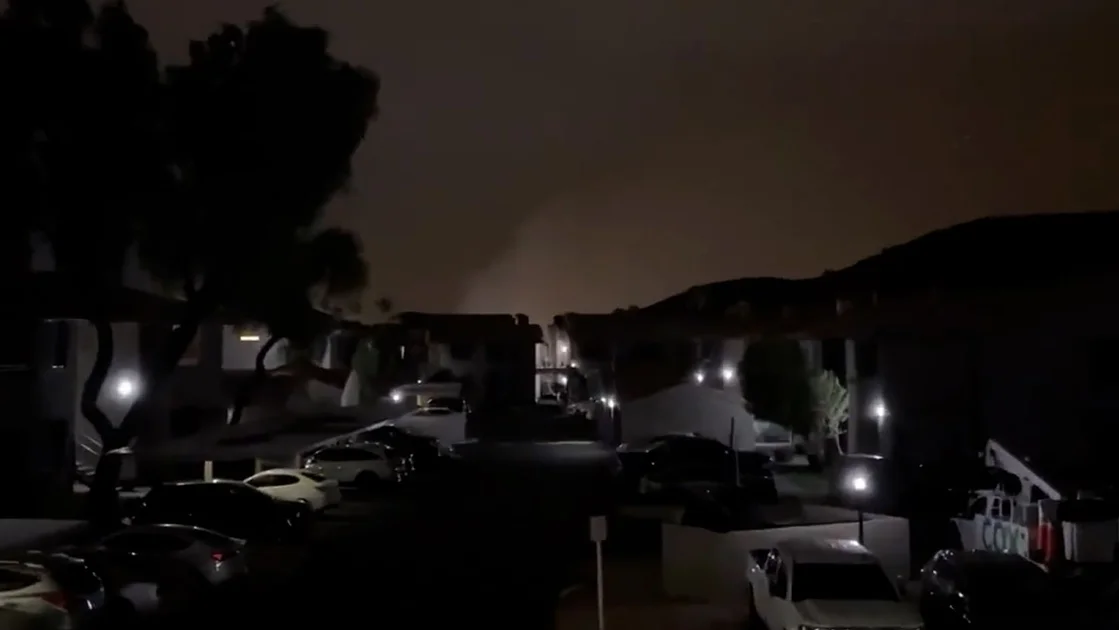
Dust Storm Warning Issued for Phoenix Area Amid Severe Storms
PHOENIX – The National Weather Service (NWS) issued a dust storm warning for parts of the Phoenix metro area and Pinal County on Wednesday evening, as a severe storm watch covered much of southern Arizona. The warning, in effect until 8:45 p.m., cautioned residents in Queen Creek and surrounding areas of a wall of dust moving northwest at 25 mph, with visibility expected to drop to a quarter mile or less.
The severe storm watch, which included the Phoenix metro and much of southeast Arizona, remained in place until 11 p.m. Meteorologists warned of wind gusts up to 70 mph, isolated hail, and frequent lightning. Ryan Worley, a meteorologist with KTAR News, said the main concern for the Valley was severe winds capable of downing trees and snapping power poles. A blowing dust advisory was also issued for southern and far western parts of the metro.
Storms Cause Damage and Power Outages
The overnight storms delivered on their threat. A wall of dust and strong winds swept through the East Valley around 9:30 p.m., accompanied by heavy rain and 714 lightning strikes, according to the NWS. Arizona State University classified the dust storm as a Category 2, meaning widespread and long-range, though rain that followed helped keep dust concentrations lower.
Thousands of customers lost power across Maricopa and Pinal counties. At the peak, Salt River Project (SRP) reported approximately 17,000 customers without electricity in Maricopa County and more than 1,000 in Pinal County. By Thursday afternoon, SRP had restored power to all but about 500 customers. APS reported only a handful of outages in Surprise.
The storm tore part of the roof off a Mesa apartment complex near U.S. 60 and Dobson Road. Downed trees were reported in Gilbert and Phoenix, and heavy rain flooded at least one car near 48th Street and Warner Road in Ahwatukee. In Tempe, crews worked overnight to repair damage at Marcos de Niza High School, where the auditorium remained closed pending further assessment. Wind gusts reached 68 mph in parts of the East Valley.
Understanding Haboobs: Arizona's Monsoon Dust Storms
Dust storms, also known as haboobs, are a common feature of Arizona's monsoon season, which runs from June through September. They form when cold downdrafts from thunderstorms hit the hot desert floor and spread outward, kicking up loose dust and pushing it forward as a massive wall that can stretch for miles and reach thousands of feet high. The term "haboob" comes from the Arabic word for "big, blasting winds," according to Andrew Deemer, a meteorologist and former linguist with the NWS in Phoenix.
The NWS urges motorists to never drive into a dust storm. The official advice: "PULL ASIDE STAY ALIVE!" Visibility can drop to zero in seconds, making driving extremely dangerous.
Recent Dust Storm Warnings in Pima and Maricopa Counties
On Sunday, the NWS in Tucson issued a dust storm warning for central Pima County, effective until 6:45 p.m. A wall of dust was detected moving west at 10 mph, bringing visibility under a quarter mile and winds exceeding 50 mph. The warning covered areas including Sells, Three Points, and Kitt Peak, affecting highways Route 86 and Route 286.
These events highlight the persistent and hazardous nature of monsoon weather across Arizona. Just last week, the Phoenix area was under an extreme heat warning, with highs up to 113 degrees, and forecasters had warned of the potential for storms.
Broader Implications: Monsoon Season's Growing Impact
The recurrence of dust storm warnings and severe storm watches underscores the need for residents to stay alert and prepared. Meteorologists note that monsoon activity is often unpredictable, with one day of active storms often followed by a quieter day. Ryan Worley explained that if a day is active, the next day tends to be a "down day." However, the potential for storms remains a constant through the summer.
The damage from Wednesday's storm—roofs torn, trees down, and thousands without power—serves as a reminder of the power of these weather events. ASU's dust storm ranking system, which measures dust concentration, helps researchers better understand and predict these phenomena, potentially leading to improved warnings and safety measures.
As the monsoon season continues, residents are advised to monitor local forecasts and heed all warnings. For up-to-date weather alerts and safety tips, follow KTAR News and AZFamily. The NWS emphasizes that when a dust storm warning is issued, the safest action is to pull off the road, turn off lights, and wait for the storm to pass.
For more on extreme weather preparedness, you might also read about Liverpool's thunderstorm warning.
Comments