
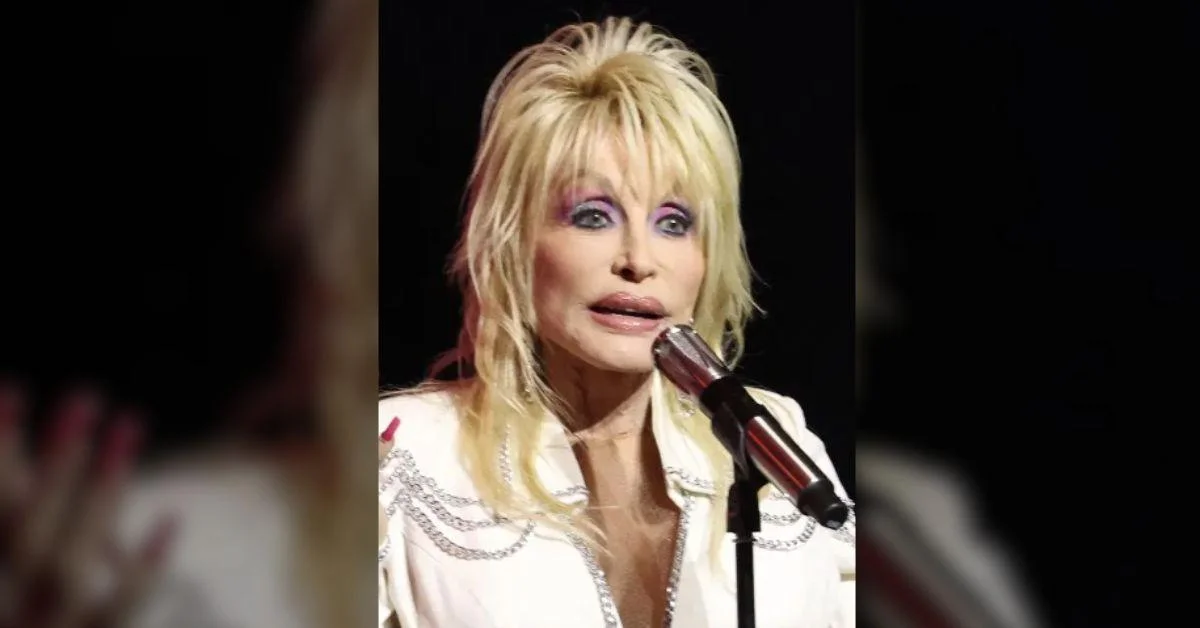
Dolly Parton’s Health Crisis Forces Cancellation of Las Vegas Residency
Dolly Parton, the 80-year-old country music legend, has been forced to cancel her rescheduled Las Vegas residency due to a devastating health setback that has left doctors and fans deeply concerned about her ability to ever perform on stage again. The news, which broke via an emotional Instagram video, marks the latest chapter in a year of personal and physical trials for the “9 to 5” singer.
In the video, a visibly fatigued but characteristically upbeat Parton revealed that ongoing medical treatments were leaving her too “swimmy-headed” to go on with the shows slated for September at the Colosseum at Caesars Palace. “Of course, I can’t be dizzy carrying around banjos, guitars and such on five-inch heels,” she confessed, offering a glimpse of her trademark humor even as she delivered the difficult news.
The cancellation comes after Parton had already postponed the residency multiple times. While she insisted that she’s “responding really well to meds and treatments” and “improving every day,” she admitted, “It’s gonna take me a little while before I’m up to stage-performance level.” For the millions of fans who had held onto tickets or simply hoped to see her perform one more time, the message was a sobering reminder of the fragility of a career that has spanned seven decades.
Doctors’ Dire Warning: ‘Choose Between Health and Career’
The severity of Parton’s health situation has drawn warnings from medical experts who have not treated her but have reviewed reports of her condition. Dr. Gabe Mirkin, a longevity specialist, stated, “It’s good to keep moving, but she has to cut back on the time and pressures of her work if she wants to extend her life.” New York internist Dr. Stuart Fischer was even more blunt: “She has to choose between health and career if she wants to survive.”
Parton’s recent medical history is indeed alarming. Shortly after the March 2025 death of her beloved husband of 58 years, Carl Dean, at age 82, the Nashville icon was diagnosed with kidney stones and a related infection. That diagnosis forced her to cancel multiple engagements, including an in-person appearance at the Governors Awards in November to accept the Jean Hersholt Humanitarian Award. Now, those closest to Parton report that the once-indefatigable performer is a shadow of her former self. “Dolly is devastated that she’s letting her fans down. It was the last thing she wanted to do,” a source shared, highlighting the emotional toll the health crisis has taken alongside the physical one.
Parton has been open about the fact that her digestive and immune systems got “all out of whack” over the last three years. The combination of grief, infection, and the rigors of a demanding performance schedule has created a perfect storm. Doctors who have weighed in on the situation stress that while Parton’s spirit remains strong, her body is telling a different story. For an artist who has built her brand on tireless work and an almost superhuman energy, the need to slow down represents a profound shift.
The Weight of Grief and a Legacy of Resilience
To understand the full scope of Parton’s current crisis, one must look back at the crushing loss that preceded it. Carl Dean, Parton’s high school sweetheart and fiercely private husband, passed away in March 2025. The couple had been married for 58 years, an almost unheard-of marriage in the often-turbulent world of entertainment. Dean’s death was a blow that Parton has struggled to process publicly.
“She’s been a pillar of strength for everyone else her whole life, but this has been different,” a longtime friend confided. The grief, combined with the physical demands of managing kidney stones and the subsequent infection, has taken a toll that goes beyond any previous health scare. Parton, who famously turned down Elvis Presley’s request to record “I Will Always Love You” to retain publishing rights, has always been a fierce steward of her own career. Now, she is being forced to become a steward of her own health in a way she never has before.
The irony is not lost on her fans. Parton has always seemed invincible—a woman who could write a hit song, run a business empire, and manage a massive philanthropic portfolio (her Imagination Library has given away over 200 million books) without breaking a sweat. Yet even icons are mortal. The cancellation of the Vegas residency feels, for many, like the end of an era, a moment when the indomitable Dolly Parton must finally reckon with the limits of her own body.
Ashley McBryde, the Grammy-winning country singer who once worked for Parton, recently shared a touching anecdote that illustrates the warmth and generosity Parton has always shown. McBryde recalled that Parton once gave her a stick of ChapStick, which she kept for 20 years, using it only on special occasions. “I got to use my Dolly Parton ChapStick,” McBryde said, laughing, in a recent interview. She also recounted a story where she saved Parton’s house from burning down by unplugging a flaming microwave and running it outside. Parton’s response: she gifted McBryde the microwave and taught her how to get the “stink out.” These small moments of kindness are the fabric of Parton’s legend—a legend that now faces its most serious challenge.
The Duets That Defined a Generation
Parton’s artistry has always been defined by her ability to collaborate and blend her voice with others. The 1983 duet with Kenny Rogers, “Islands In The Stream,” remains one of the most iconic country-pop crossovers of all time. But her duet catalog runs deep. Norah Jones brought Parton in for harmonies on “Creepin’ In,” a track inspired by Parton’s own bluegrass record, The Grass Is Blue. Jones once said of Parton, “Just making jokes and being as sweet and funny as she can be. I’ve never seen anyone like that go into that deep, dark diva place.”
Brad Paisley and Parton teamed up for “When I Get Where I’m Going,” a song about heaven that resonated deeply with audiences who have suffered loss. And her re-recording of “I Will Always Love You” with Vince Gill adds a layer of melancholy that the Whitney Houston version, for all its power, does not capture. Parton famously let Houston record the song after declining Elvis, a decision that made her “enough money to buy Graceland.”
These duets are more than just songs; they are markers of Parton’s influence and her unique ability to cross genre boundaries while remaining authentic. As she fights to regain her health, the music world is left to wonder whether there will be more such collaborations in the future. For now, the playlist of her greatest duets serves as a poignant backdrop to the uncertainty.
A Long Road Ahead: What This Means for Fans and the Legacy of an Icon
The cancellation of the Las Vegas residency is not just a financial loss for Caesars Palace or a disappointment for ticket holders. It represents a major inflection point in Parton’s career. At 80, she is no longer a young woman with endless reserves of energy. The medical advice she has received is clear: if she wants to extend her life, she must prioritize her health over her career.
This medical directive comes at a time when the entertainment industry has seen several legendary figures struggle with the decision to retire or scale back. Unlike the hasty retirements that sometimes follow scandals or waning popularity, Parton’s situation is a genuine crisis of health and mortality. The public, which has loved her for so long, now faces the difficult reality that every remaining performance could be the last.
Fans have taken to social media to express their support but also their anxiety. Many are sharing stories of having seen Parton in concert decades ago, or of the impact her music has had on their lives. Some have pointed to the 2024 release of a new version of “Puppy Love,” the first single she released at age 13 in 1959, as a full-circle moment that now feels bittersweet. The song, which she wrote with her uncle Bill Owens, features the lyrics, “Oh, you pull my pigtails, makes me mad / When you kiss me, makes me glad.” To hear Parton revisit that innocent tune just a year before her health crisis adds a layer of nostalgia that is hard to ignore.
The broader implications of Parton’s condition extend beyond one artist. She is a pillar of the country music industry, one of the few figures who bridges the gap between the old guard and the new. Her philanthropy, especially through the Imagination Library, has made her a beloved figure far beyond the music world. If she is forced into an effective retirement, a void will be left that no one else can fill.
For now, Parton remains defiant. She has not announced a complete retirement, only a temporary pause to focus on recovery. The medical community urges caution. “She has to listen to her body now, not her ambition,” one specialist noted. But for those who know Parton, the idea of her sitting still for long seems almost impossible. She is, after all, the woman who famously said, “Find out who you are and do it on purpose.”
As doctors continue to monitor her condition, the music world holds its collective breath. The next chapter of Dolly Parton’s life is being written not on a stage in Las Vegas, but in recovery rooms and doctors’ offices. If her past is any guide, she will face this challenge with the same courage and humor that has defined her career. But even the strongest voices must sometimes rest. For now, the legacy of Dolly Parton rests on a quiet hope: that the woman who gave the world so many songs may yet have a few more to sing.
The Unstoppable Spirit Endures
Parton has never been one to stay down for long. Even in her Instagram video announcing the cancellation, she managed to smile and joke about her condition. That spirit is what has carried her through poverty, rejection, and the loss of her husband. It is what will carry her through this.
The road ahead may be long, but if any artist can find a way to turn a crisis into a song, it is Dolly Parton. As she heals, she continues to remind the world that even a legend needs time to rest. The stage will wait. The banjos and guitars will wait. And so will the millions of hearts that beat along with hers.
Comments